

Attend a Quantum Hackathon with Me

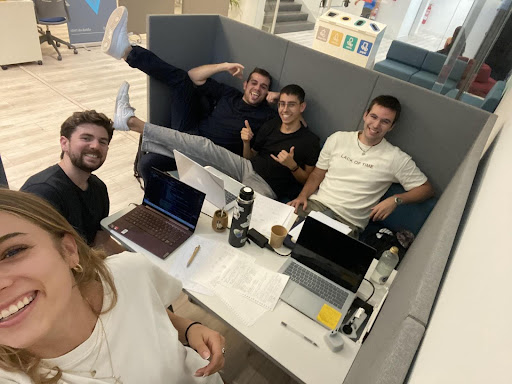
Hello! My name is Serena and I’m currently a master’s student in theoretical and computational chemistry as a part of the Erasmus Mundus Joint Master’s program in Europe. A few weekends ago, some classmates and I decided to venture out of our comfort zone and participate in IBM’s Qiskit Fall Fest 2025 Hackathon. The purpose was to use Qiskit, a quantum software development kit from IBM, to solve a problem using quantum computation instead of classical computers over the course of four days. 

Day 1 – Introduction & Talks

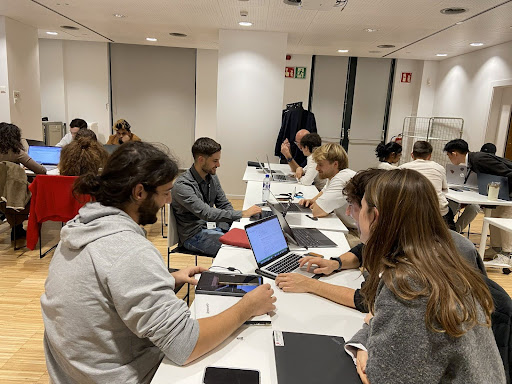
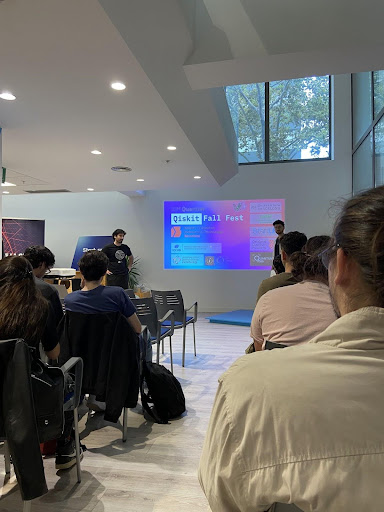
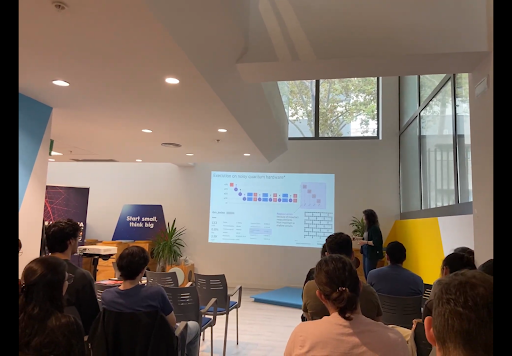
First task—meeting everybody. The first day, we gathered in the physics faculty at the University of Barcelona to introduce ourselves to each other and to the new quantum concepts we would be using. Artur Garcia gave the first talk from the Barcelona Supercomputing Center; he discussed tensor networks for circuit simulation and a little bit about the difference between classical supercomputing and quantum computing. He was followed by Niccolo Baldelli, also from the Barcelona Supercomputing Center, who gave a great presentation on simulating quantum circuits.

Day 2 – Set Up

The next day, we were on our own; we had to install the Qiskit package on our computers and complete an exercise to familiarize ourselves with the software. They sent the instructions over Discord, which included a link to IBM’s YouTube channel that walked you through the entire setup procedure and one practice problem. By the end of the night, I was ready and nervous; I was about to spend 48 hours doing something I had never done before. 

Day 3 – Hacking!

Joana Fraxanet from IBM came in the morning to kick us off with a presentation on quantum algorithms and their applications (shoutout quantum chemistry!). She gave us more information about the connection between high performance computing and quantum computing, and advised us on the quantum algorithms we would use. Then it was time for the challenges!


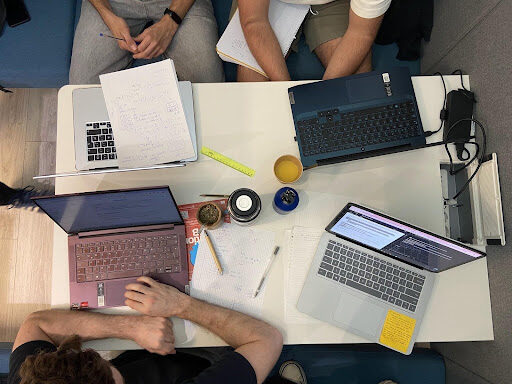
My group chose the intermediate challenge of the three options called “The Queen’s Problem”. Although none of us had ever used Qiskit before, we thought trying a challenge that interested us was the way to go: the best motivator is genuine curiosity! At about 11:00, we set out for a full day of coding (eight hours!), stopping only at 2:00 pm for a quick lunch break.  
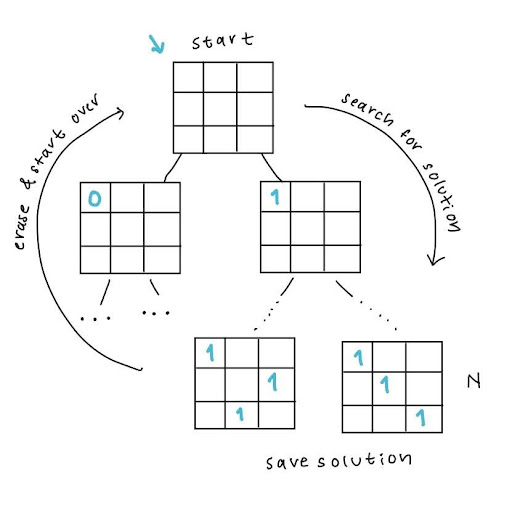
The challenge we had selected was this: find the maximum number of queens you can place on a chessboard so that no two queens can attack each other. For the first part of the challenge, we had to use a classical algorithm, or a brute-force method, to find the answer to this question. We started with a blank chessboard, filled in the first eligible space with a piece, and then had the code find all the possible solutions from there. After it saved all the solutions from that starting point, it saved them, wiped the board, and started again. 

The next part of the challenge used a quantum algorithm to transform the problem into a physics one: we were going to use a “lowest energy state” to find a board with no pieces attacking each other. The lowest energy state in physics just means the point in the system with the lowest energy. If our system is a ball teetering at the top of a valley, the highest energy state is going to be the ball at the top, while the lowest energy state is going to be the ball at the bottom. If you give that teetering ball a push, where is it going to go? That’s our lowest energy state. 

The quantum algorithm would basically do the same thing with the arrangement of the board; if it placed pieces that could attack each other, that would be a high-energy state, and if they couldn’t, it would be a low-energy state. The goal was to have the algorithm place pieces to find, like our ball rolling down the hill, in the lowest possible energy state. 

The hardest part about this challenge for me was translating my logic into code. I could answer the question on paper, and on paper it seemed so simple, but then I had to execute it using Qiskit–something I had never done before. It was a lot of trial and error (and a lot of asking for help), but by the end of the day, we were getting the hang of it. 

Day 4 – Presentations & Results

The next day, I was back to hacking after coffee and breakfast. We took our seats and dove back into where we left off. The day before, we had completed the challenge for the rook and bishop pieces. Today was about putting it all together to solve the queen’s question. 

By lunch, we were almost finished, but had to shift our attention to designing our presentation. In terms of the competition, how we presented our solutions was almost as important as what those solutions were. 

Finally, at five, all eight teams were ready to present. We watched as groups presented their solutions for the various challenges, and presented as they listened to ours. Our group successfully completed the part of the challenge that used classical computers to solve the queens’ problem, but only got about two-thirds of the way through the quantum one. We wrote the quantum algorithm we needed to solve it, it just wasn’t giving us the right answers! Still, not bad for a group of chemists among physicists. 

In the end, the prize went to a very deserving team that worked on the hardest challenge, the Phase Recognition Challenge, which had to do with identifying the phase of a quantum state, or how a quantum state evolves over time. 

My biggest takeaway from the event was: ‘I should have done this sooner’. In college, I always prioritized the acquisition of knowledge over its use. Even though I’m technically learning programming as a part of my curriculum right now, I learned so much in just 48 hours by being forced to use and apply it. Doing it with my friends and working on a real problem I found interesting helped too. 

So, if you are interested in learning quantum mechanics, my advice is to get involved: go to an event or try out some online resources. Even better to do it with a friend. 

If you’re interested in learning more about quantum computing or checking out Qiskit for yourself, here are some of the resources we used over the weekend:

Serena Krejci-Papa is a first-year master’s student at the University of Barcelona, studying theoretical and computational chemistry with the Erasmus Mundus program. She writes about complex science topics in a way that makes people laugh. You can find more about her at Sciencewithserena.com.

How Does Quantum Help Us Understand Chemistry?

We talked before about how the word “quantum” often appears alongside the word
“physics,” but that quantum science is also important to fields like chemistry. Is quantum science used in chemistry?

That’s a great question! A lot of people learn about chemistry in school without understanding that quantum science lies at the heart of how and why atoms stick together to form molecules and materials. For example, consider the simplest and smallest atom, hydrogen. If you have a bottle filled with just hydrogen gas, the hydrogen atoms in the bottle aren’t bouncing around by themselves; they like to pair up with each other to make hydrogen molecules.

Yes, that’s the difference between a hydrogen atom and a hydrogen molecule; the molecules are paired-up atoms. The same thing is true of oxygen, too, isn’t it?

That’s right—oxygen molecules in the air around us that we breathe are bound together in pairs. In addition to hydrogen atoms sticking together and oxygen atoms sticking together, you can also get combinations of hydrogen and oxygen atoms.

Illustration by Serena Krejci-Papa

I know one: water! H₂O—two hydrogen atoms and one oxygen atom form chemical bonds with each other to make one water molecule.

Exactly. There’s one other compound you can make out of hydrogen and oxygen, hydrogen peroxide, which is a combination of two hydrogen atoms and two oxygen atoms, H₂O₂, and is used to bleach things, like paper, to make them white. This compound isn’t as stable as water; in fact, over time, it tends to fall apart, and any other combination you make of hydrogen and oxygen will quickly fall apart.

Why is this? Why does one oxygen atom like to stick to exactly two hydrogen atoms and not just one, three, or seven? Why do oxygen atoms like to pair up with each other rather than be apart or in groups of three or some other number?

These are excellent questions that have puzzled chemists for many years. Elements like hydrogen and oxygen were first isolated and named in the late 1700s. The 1800s saw the development of the idea that all compounds were whole-number combinations of chemical atoms; however, a mystery remained as to why certain combinations of atoms were allowed and others seemed forbidden.

So, did it just seem random which combinations worked and which ones didn’t?

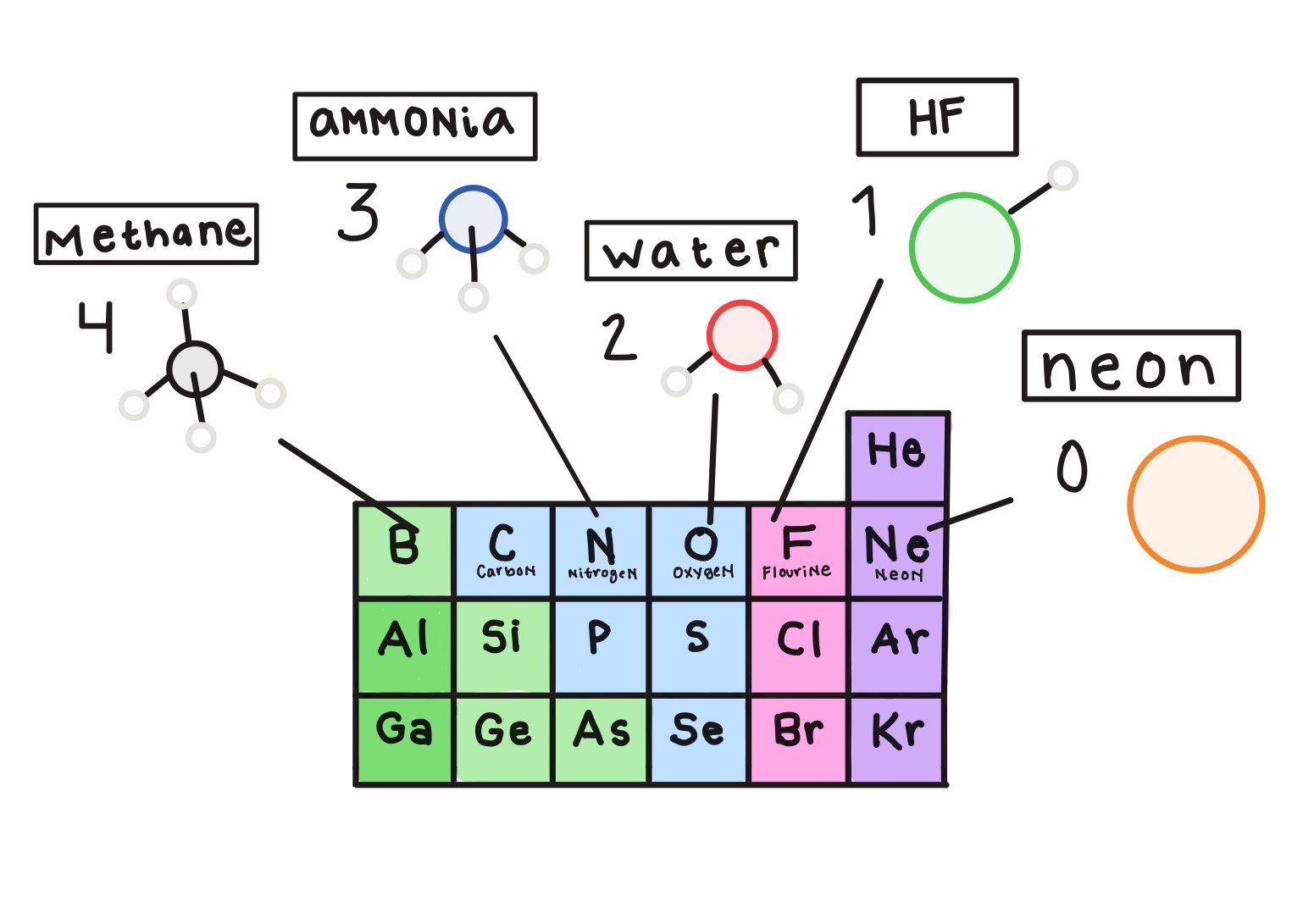
Not at all. From doing experiments and combining elements, chemists noticed certain patterns about how atoms combined. For example, when the elements were organized into the periodic table according to similar chemical behavior, the fact that there are eight elements in the second row matched up with the observation that elements along this row liked to make a certain number of bonds depending on their position in the row. For example, carbon, which is the 4th element in the row, likes to make four bonds; nitrogen, which is the 5th element, likes to make three bonds; oxygen, which is the 6th element, likes to make two bonds; fluorine, which is the 7th element, likes to make one bond; and neon, which is the last element in the row, doesn’t like bonding to anything.

Illustration by Serena Krejci-Papa

So oxygen, in the 6th position, likes to make bonds with two hydrogens to make water. I see the pattern you’re talking about: 6 + 2 = 8. Why eight?

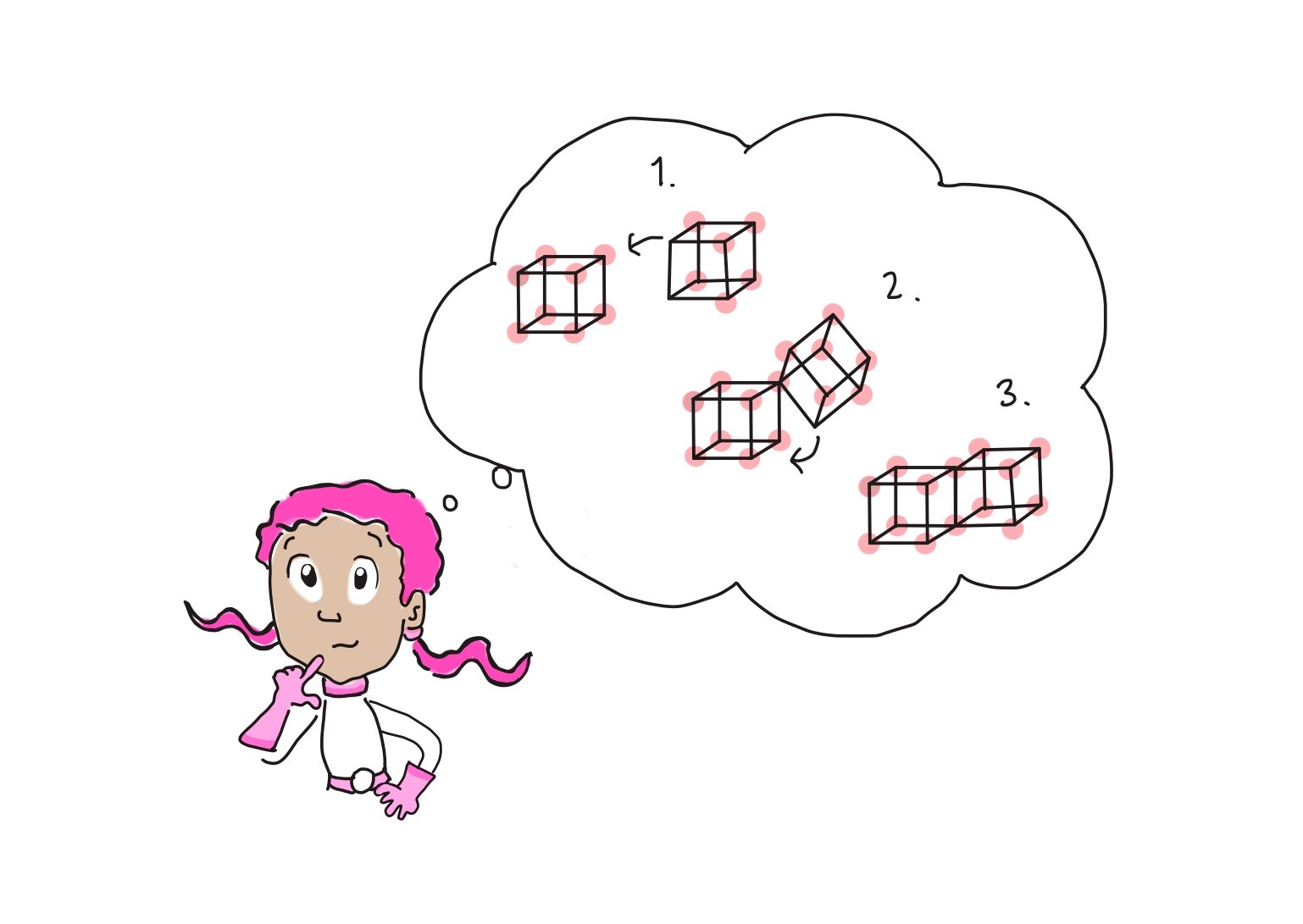
This is exactly the question chemists were pondering at the start of the 20th century. There was clearly some reason behind this rule of eight, or “octet rule,” but no one understood where this eight came from. One interesting idea was that a cube had eight corners, so maybe there was something cubical about atoms that made them want to have one electron at each corner of the cube, which they could achieve by sharing electrons. But there was no evidence that there was anything cubical about the arrangement of electrons in atoms, so that model wasn’t the solution to the puzzle about the rule of eight.

So what did solve the puzzle, then?


Quantum mechanics! Almost as soon as quantum mechanics was developed, starting one hundred years ago, scientists saw how applying it to the problem of how atoms were structured—a positively charged nucleus attracting electrons to it—led directly to the patterns of the periodic table. It explained not only the rule of eight, but all sorts of other rules for how and why atoms chemically bond together. Soon, chemists not only had a quantum understanding of why oxygen likes to bond to two hydrogens to form water, but also used quantum science to find rules governing chemical combinations, compounds, and bonds that they hadn’t previously understood.

But how did quantum mechanics explain this rule of eight?


Remember that the “quantum” in quantum mechanics means something you can count. A hallmark of quantum science is showing how there are sometimes countable aspects to things that don’t seem on the surface like there’s anything there to count. In the case of atoms and bonds, the attractions and repulsions of electrons and nuclei seemed like a problem where there wouldn’t be anything countable about the possible arrangements of the electrons and the bonds they form. It was only with a quantum understanding of the wave-like nature of electrons that the hidden counting of these arrangements was revealed.

So, thinking about it, every single bond between every single atom, holding together all the materials and objects, is governed and described by quantum mechanics.

Exactly, not only all the things around us, but us as well! We wouldn’t understand how the atoms in our bodies stick together without quantum mechanics. Quantum mechanics solved some of the mysteries from a century ago about how simple compounds work, but even today, researchers are actively using quantum mechanics to reveal how more complicated materials and molecules work – including many of the ones that make up you and me.


Written by Paul Cadden-Zimansky, Associate Professor of Physics at Bard College and a Global Coordinator of IYQ.

IYQ mascot, Quinnie, was created by Jorge Cham, aka PHD Comics, in collaboration with Physics Magazine
All rights reserved.

Illustrations: Serena Krejci-Papa

Featured image: Electronics factory worker, Cikarang, Indonesia © ILO/Asrian Mirza

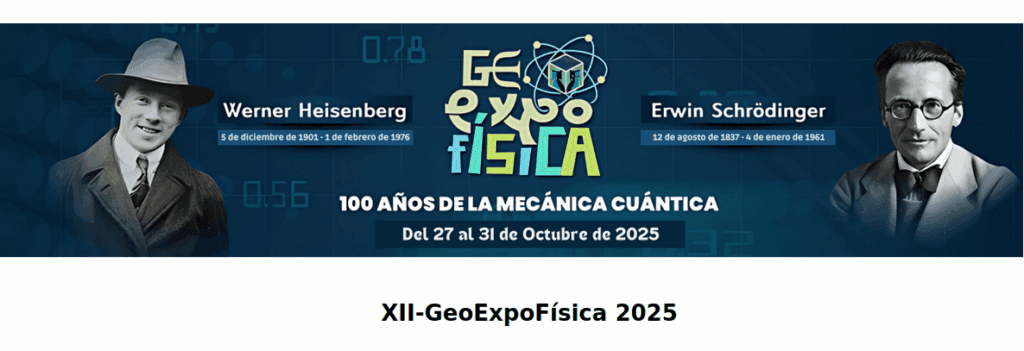
XII-GeoExpoFísica 2025

At the 12th edition of GeoExpoFísica, and its third hybrid (virtual-in-person) edition, we are opening a space for students from different regions of Colombia and several international institutions, along with engineering and geology students from the Universidad del Norte, to present their projects.

These projects, designed and developed by them, seek to solve everyday problems by applying concepts from various branches of physics: mechanics, electromagnetism, heat and waves, modern physics, biophysics, and geophysics.
Along with the exhibitions, we will have guest lectures on quantum science and technology to bring participants closer to these topics and celebrate the 100th anniversary of quantum mechanics.

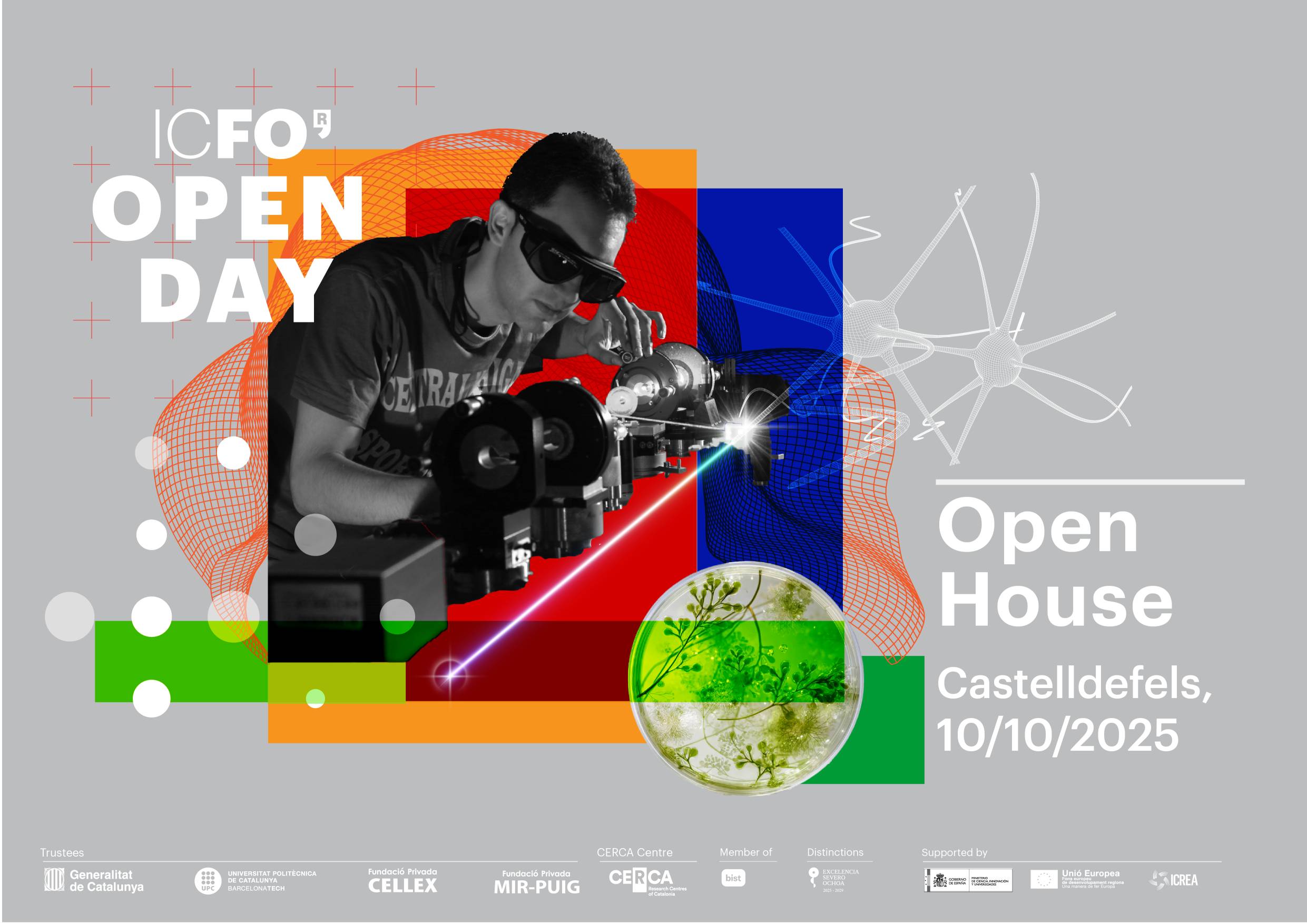
The Institute of Photonic Sciences (ICFO) Open Day

The ICFO Open Day is a very special occasion when we open the doors of our research center to bring science closer to everyone. It’s a day dedicated to society, when schools, families, and the general public can discover what we do at ICFO from the inside.

You will have the chance to visit our labs and facilities, explore activities designed to spark curiosity, and meet the scientists and professionals working on cutting-edge photonics research.

The event is completely free and takes place on Friday, October 10, 2025, at ICFO’s facilities in Castelldefels. There will be three visiting slots throughout the day:

09:30 – 12:15: ICFO Open Day for Schools
14:30 – 17:15: ICFO Open Day for Schools & Families
18:00 – 21:00: ICFO by Night (general public)

It’s a great opportunity to learn more about how light is shaping the future in fields such as health, energy, communications, and the environment. Come and discover the science that builds the future!

National Science Seminar

National Science Seminar 2025, a flagship event of the National Council of Science Museums (NCSM), will be held on 30th October 2025 at the Visvesvaraya Industrial & Technological Museum (VITM), Bengaluru, India. This year’s theme is “The Quantum Age Begins: Potentials and Challenges.” The seminar aims to inspire young minds and prepare them to contribute towards positioning India as a leader in the rapidly emerging field of quantum technologies.

QC101: Quantum Computing and Industry Use Cases

The Future Starts Here. Quantum computing has moved beyond theory—and QC101 is designed clearly to explain the core concepts and introduce practical use cases in partnership with industry leaders Classiq and Q-CTRL.

Learners will receive full licenses to access the Classiq Platform and Black Opal, and will earn a professional certificate.

With its hands-on and industry-oriented nature, the program is perfectly tailored for professionals and executives looking to take part in the quantum revolution.

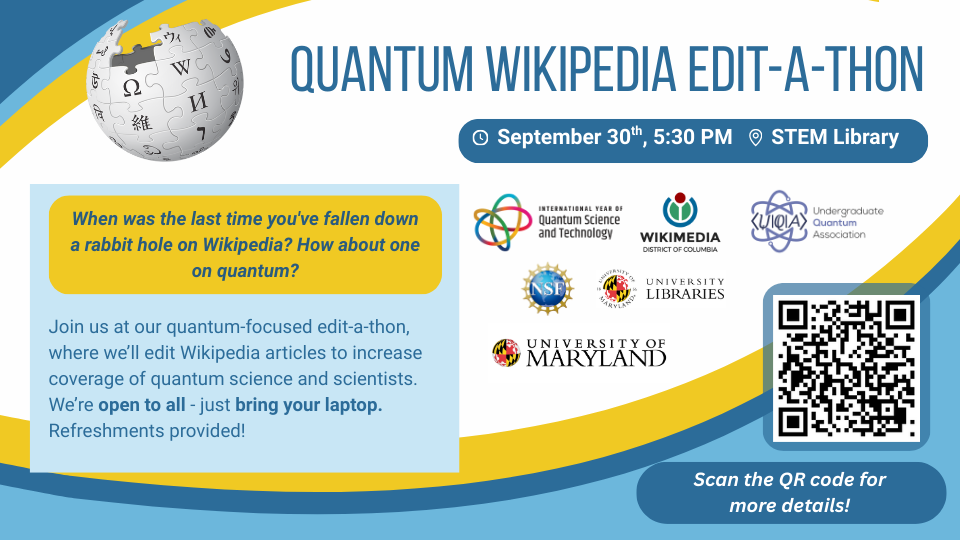
Quantum Wikipedia Edit-a-thon

When was the last time you fell down a rabbit hole on Wikipedia? How about one on quantum?

Join the University of Maryland, in collaboration with Wikimedia DC and the UMD Undergraduate Quantum Association, at its Quantum Wiki Edit-a-thon on September 30th, 2025. Supported by the National Science Foundation, the edit-a-thon will bring students together to edit Wikipedia articles to increase coverage of quantum science and scientists.

This in-person event is open to all, and no prior background is needed – just a desire to contribute! Refreshments will be provided.

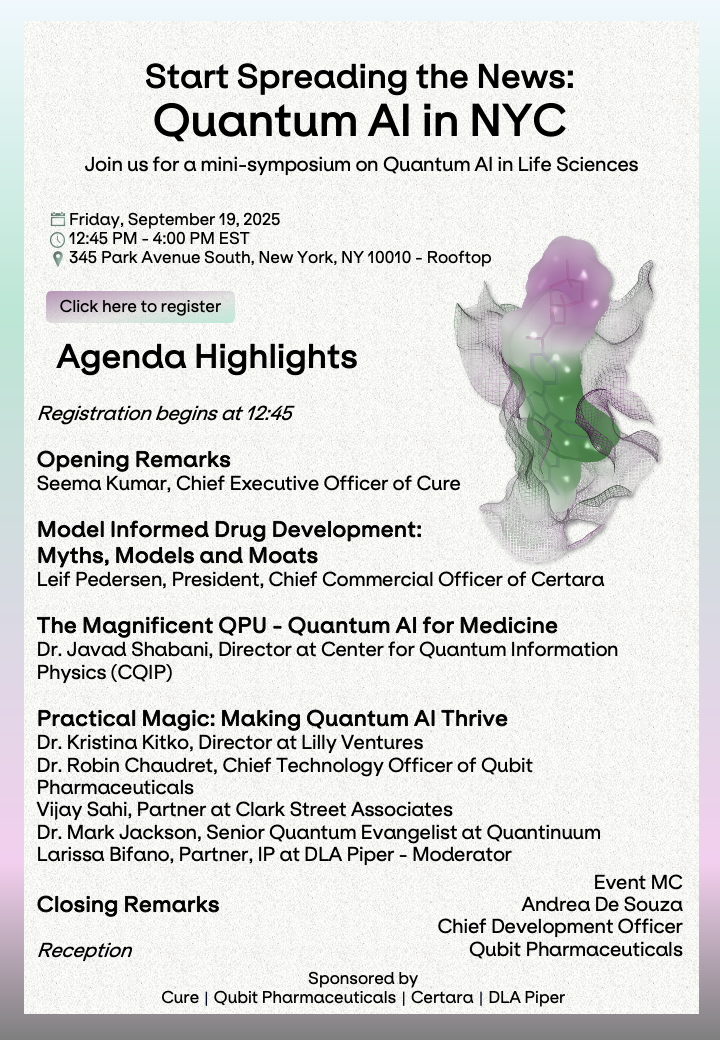
Start Spreading the News – Quantum AI in NY City

As the world celebrates 2025 as the UN Designated Year of Quantum Science and Technology, Cure Leadership in New York, in partnership with Qubit Pharmaceuticals, Certara, and DLA Piper, is sponsoring a Quantum AI Event for the Life Sciences Ecosystem. This event, structured as a mini-symposium, includes two invited talks from computational leaders and a panel discussion around quantum AI.

Researchers’ Night 2025- PICO project

PhysICs fOr all – PICO – aims to support all citizens to increase their awareness of fundamental, cutting-edge physics and of the impact that discoveries in this field have on their everyday lives, with a specific focus on equity, diversity, inclusion, and gender equality, which will be pervasive to all PICO events and activities. Among other countries and venues, PICO coordinates the Researchers’ Night activities in Ellinogermaniki Agogi, Pallini, Greece.

The main ERN event will take place on 26/09/2025 in person, with a remote component to open the door to world-famous laboratories and research infrastructures that participate in international collaborations.

Through dedicated events and exhibits on quantum mechanics, including educational labs on quantum mechanics experiments (double-slit experiment, photoelectric effect, Franck Hertz experiment) enhanced with augmented reality applications, virtual labs, and hands-on activities, the event seeks to engage citizens and students in quantum mechanics and foster a deeper understanding of physics and its relevance to society and technology.