QuSantiago IV

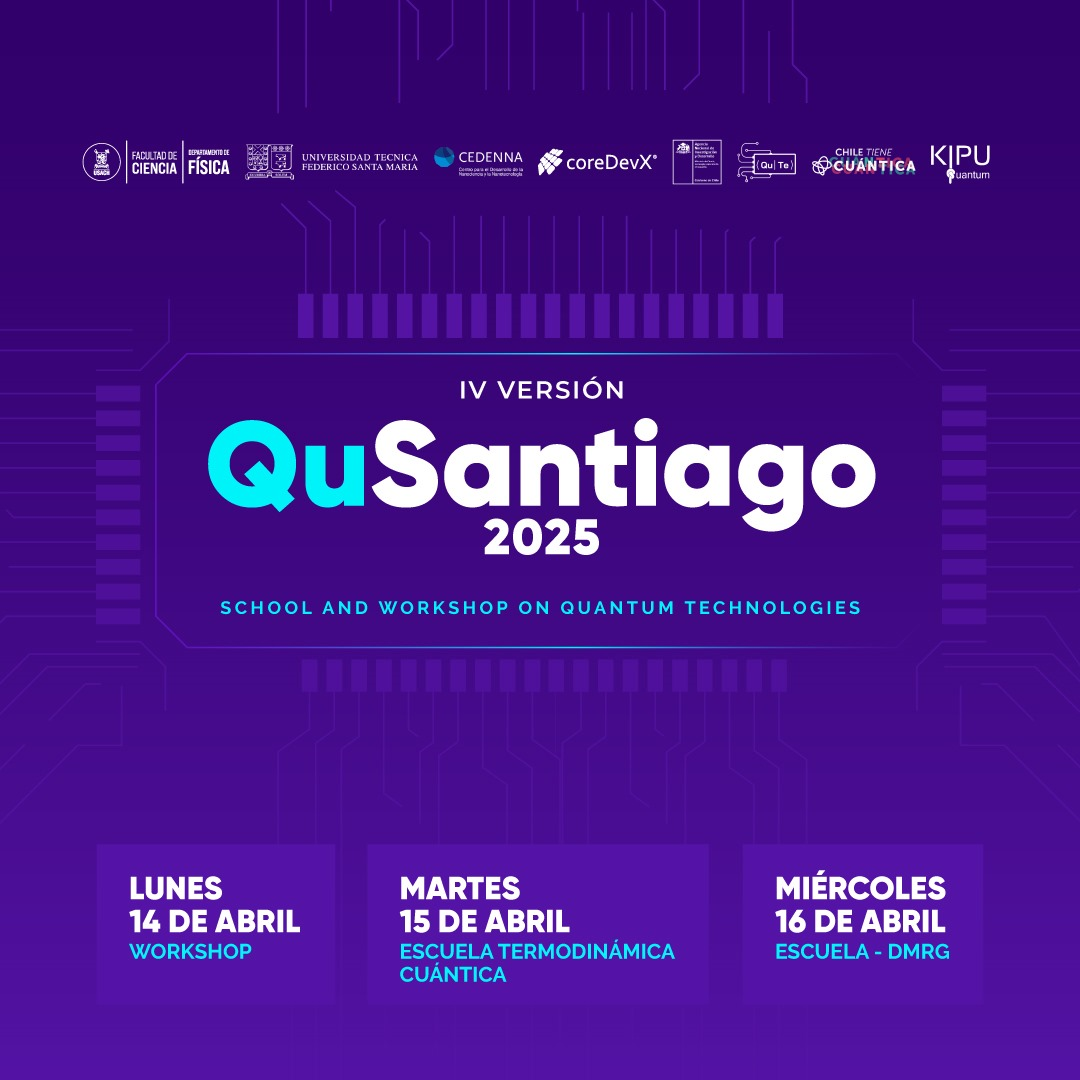
En esta edición especial del QuSantiago, el encuentro dedicado a la investigación y desarrollo en tecnologías cuánticas, nos complace en anunciar su realización durante el presente año, reafirmando su compromiso con la excelencia académica y el avance científico. Este evento, que se llevará a cabo en conjunto con la Universidad Federico Santa María (Campus San Joaquín) y la Universidad de Santiago de Chile (USACH), representa una oportunidad única para el intercambio interdisciplinario entre instituciones de alto prestigio.

Enfoque Temático

En esta edición se abordarán dos ejes temáticos de alta relevancia en la investigación cuántica:

Sistemas Cuánticos Abiertos (USM)

Exploraremos las bases de computación cuántica y topología para entender la relevancia del anuncio de Microsoft y su nuevo chip Majorana. Además de comprender las bases de otra de las áreas más contraintuitiva como la termodinámica cuántica, donde se abordarán aspectos fundamentales para entender los ciclos termodinámicos básicos y su relevancia en máquinas y baterías cuánticas.

Técnicas para el Cálculo de Sistemas de Muchos Cuerpos (USACH)

Técnicas para el cálculo de sistemas de muchos cuerpos: Con la limitación de los computadores cuánticos actuales, técnicas para el estudio de sistemas de muchos cuerpos como Tensor Network tienen gran relevancia en estos días. En esta instancia abordaremos los aspectos básicos para cálculos que involucren Hamiltonianos de muchos cuerpos, como los es la técnica de Density Matrix Renormalization Group y cómo esta evoluciona a tensor network.

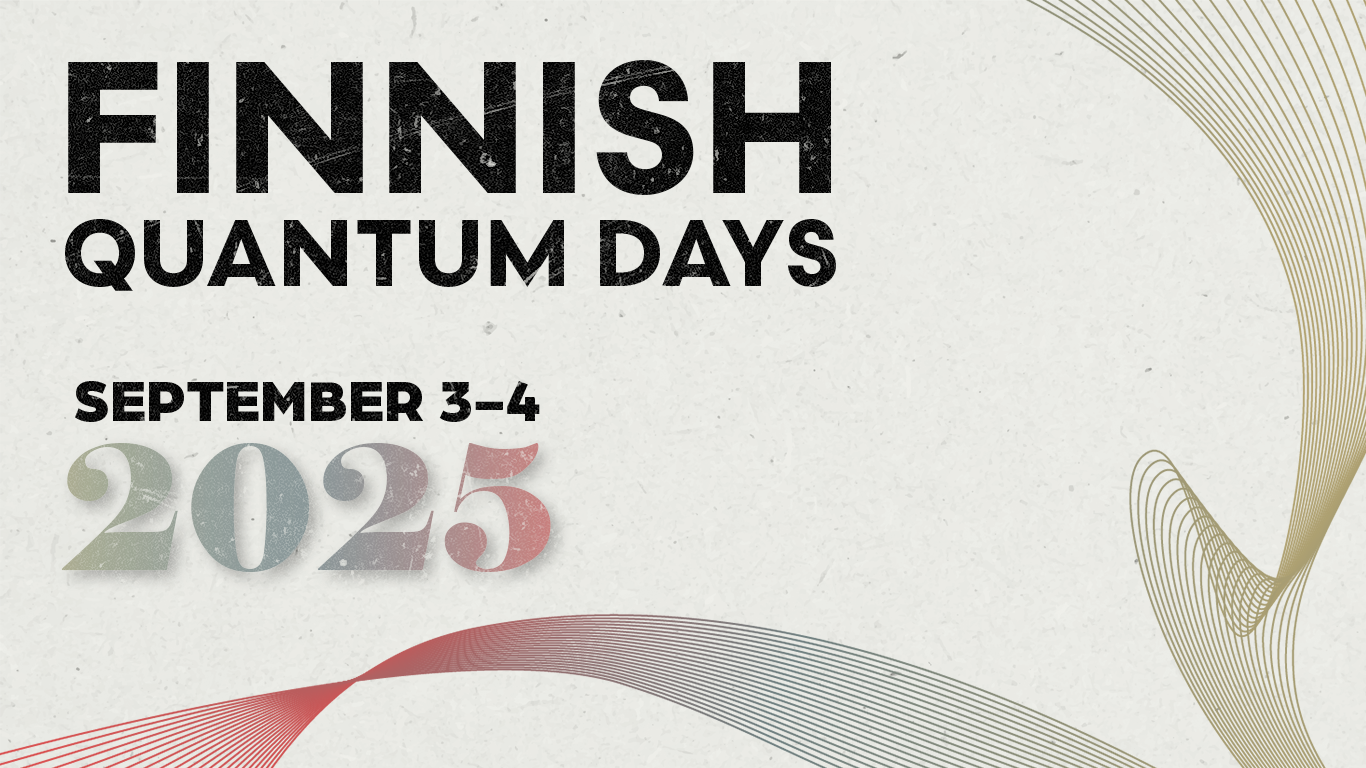
Finnish Quantum Days 2025

Welcome to Finland’s largest quantum ecosystem gathering to date! Finnish Quantum Days (FQD) 2025, hosted by InstituteQ and the Finnish Quantum Flagship, celebrates 60 years of low-temperature quantum science and technology in Finland, marks the official co-launch of the Finnish Quantum Strategy with the Finnish government, and honors UNESCO’s International Year of Quantum.

FQD 2025 features thought-provoking keynotes and panel discussions and promises to provide invigorating invited and contributed talks, bringing together junior and senior scientists, industry leaders, and policymakers from national, Nordic, and global quantum ecosystems! The event also hosts a dynamic Three Minute Thesis (3MT) quantum pitching competition.

Talks and posters will span a wide spectrum, from quantum technologies in computing, sensing, and communication to fundamental research in quantum materials and quantum algorithms. Panel discussions will explore challenges and opportunities in quantum policy, quantum technology investment, and quantum workforce training.

Join us to discover Finland’s thriving quantum ecosystem, build new partnerships, and contribute to shaping a quantum-ready future!

Use the Force (… of Light)

What do LASIK, the beginning of the universe, and the world’s smallest tweezers have in common?

They are all connected by the fact that particles of light – called photons – can exert enough force to move matter. Through the study of this phenomenon, scientists have uncovered why comets have tails, developed lasers, detected the shockwaves leftover from the Big Bang, and even manipulated single atoms at will – and that’s just the beginning.

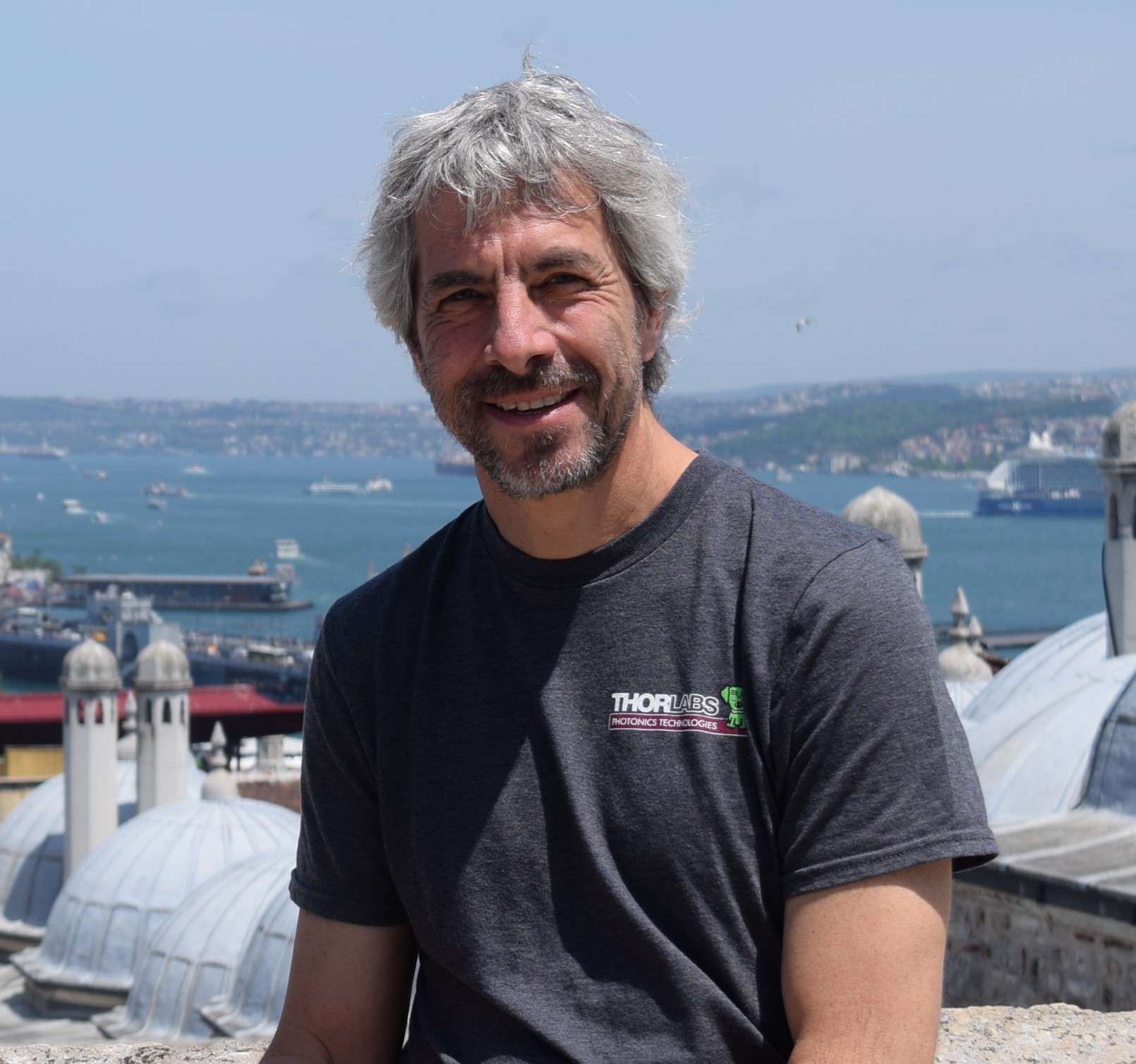
Join Professor Fainstein from the Balseiro Institute of Argentina for a special talk to explore the fascinating story of this force of light and the surprising applications it has inspired, including his work developing a type of laser that emits sound, instead of light!

TÅ«hura and our partners at Te Whai Ao – Dodd-Walls Centre are excited to offer this talk free of charge, in celebration of 2025 – UNESCO’S International Year of Quantum Science and Technology.

A Century of Quantum Mechanics: How 100 Years of Quantum Mechanics Changed our Perspective on Reality

Aotearoa New Zealand’s first event to commemorate the International Year of Quantum Science and Technology will be a lecture and panel hosted by the MacDiarmid Institute and supported by Te Whai Ao – Dodd-Walls Centre.

Join us to hear the famous American theoretical physicist Gordon Baym talk about his part in the history of the world’s most successful and mysterious description of reality. Professor Baym is an expert in everything from condensed matter to the physics of elementary particles, and the formation of neutron stars in supernova explosions.

Next, Professor Smitha Vishveshwara will describe how advances in quantum physics have required imaginative leaps, and in turn have inspired creative works.

Finally, our expert panel will debate the development and future of quantum mechanics. Jessa Barder will lead a discussion between Professor Laura Greene, Dr Ratu Mataira, Dr Jacob Ngaha, and others.

IV Gincana Cultura e Esportiva do Colégio Santa Luzia – 100 anos de Quantum

A IV Gincana Cultural e Esportiva se propõe a ser um projeto transformador, adaptado aos princípios da responsabilidade social, da filantropia e da interação, atendendo aos requisitos da BNCC. Este projeto visa proporcionar momentos repletos de atividades que incentivem o aprendizado, a criatividade e a integração entre os alunos, destacando a importância do papel de cada estudante na sociedade.
As atividades propostas irão: Ampliar conhecimento científico; promover a responsabilidade social: através de ações de solidariedade Fomentar a filantropia, incentivando os alunos a praticar a compaixão e a generosidade. Estimular a interação: A gincana proporcionará momentos de integração entre os alunos de diferentes séries e segmentos, fortalecendo os laços de amizade. Sendo um importante projeto para o desenvolvimento das competências gerais da BNCC – Base Nacional Comum Curricular para o Ensino Fundamental Anos Finais e Ensino Médio a saber: conhecer e explorar diferentes práticas de linguagem; utilizar diferentes linguagens, mídias e ferramentas digitais em processos de produção coletiva; compreender as linguagens como construções históricas, sociais, científicas, culturais e humanas; utilizar linguagens diferentes, como verbal, corporal, visual, sonora e digital. Portanto, a gincana será muito mais do que uma atividade recreativa, será uma experiência de aprendizado significativa, que contribua para a formação integral dos estudantes, preparando-os para serem cidadãos mais conscientes, responsáveis e engajados na construção de uma sociedade mais justa e equitativa.

A UNESCO celebra 2025 como o Ano Internacional da Ciência e das Tecnologias Quânticas. E esse será o tema da nossa gincana. A escolha do tema “A UNESCO celebra 2025 como o Ano Internacional da Ciência e das Tecnologias Quânticas” se justifica pela relevância atual dessas áreas no avanço da ciência e da tecnologia. Este tema permitirá que os alunos se familiarizem com conceitos e inovações que podem moldar o futuro, como computação quântica, criptografia quântica e novos materiais. Além disso, o estímulo ao interesse científico com a inclusão desse tema na gincana pode despertar a curiosidade e o interesse dos alunos pela ciência, incentivando a busca por conhecimento em um campo que está em expansão e que possui um grande potencial para transformar diversas indústrias. As tecnologias quânticas interagem com várias disciplinas, como física, matemática, informática e engenharia. Isso permite que os alunos integrem conhecimentos de diferentes áreas e desenvolvam uma visão mais holística sobre como a ciência pode ser aplicada em diversas situações. Trabalhar com temas complexos como a ciência quântica estimula o desenvolvimento de habilidades do pensamento crítico e criatividade.

Os alunos precisarão encontrar formas de entender e apresentar essas ideias de maneira acessível e interessante, promovendo um aprendizado ativo. Celebrar um ano internacional dedicado a um tema científico ajuda a promover valores como colaboração e um compromisso global com a ciência para o bem comum, alinhando-se com a missão da UNESCO de fomentar a paz e a segurança por meio da educação, ciência e cultura. A gincana pode ser uma excelente oportunidade para os alunos trabalharem em equipe, desenvolvendo projetos e atividades baseados nas tecnologias quânticas, o que promove habilidades de colaboração e trabalho em equipe. Discutir as ciências quânticas também permite uma reflexão sobre o futuro das carreiras científicas, inspirando os alunos a considerar seguir caminhos na pesquisa e desenvolvimento neste campo promissor. Ao adotar o tema do Ano Internacional da Ciência e das Tecnologias Quânticas, a gincana do Colégio Santa Luzia não só se torna uma plataforma de diversão e cooperação, mas também um espaço de aprendizado e reflexão sobre o papel da ciência na sociedade moderna.


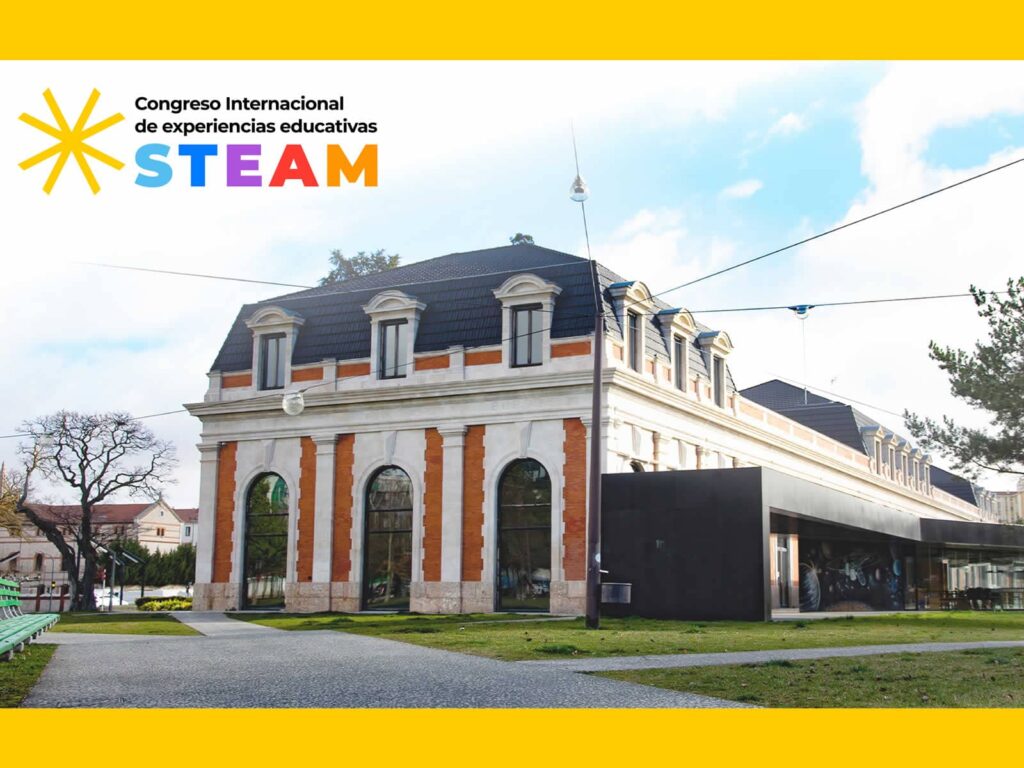
II International Congress of STEAM Educational Experiences

The International Conference of STEAM Educational Experiences aims to be a forum for all education professionals of all educational stages, people and institutions interested in education, and people who have started their teaching or educational research careers. It aims to be a meeting point for the exchange of experiences and reflections and the creation of synergies between professionals and institutions. There will be many presentations and workshops, both in-person and online. There will be dedicated spaces for: – Educational programming and robotics. – Climate Change. – Citizen Science. – Augmented Reality, cultural heritage, and STEAM. – Quantum Science and Technology (QST) in Education.

Academic Exchange and Student Conference on Advancements in Physics (AESCAP)

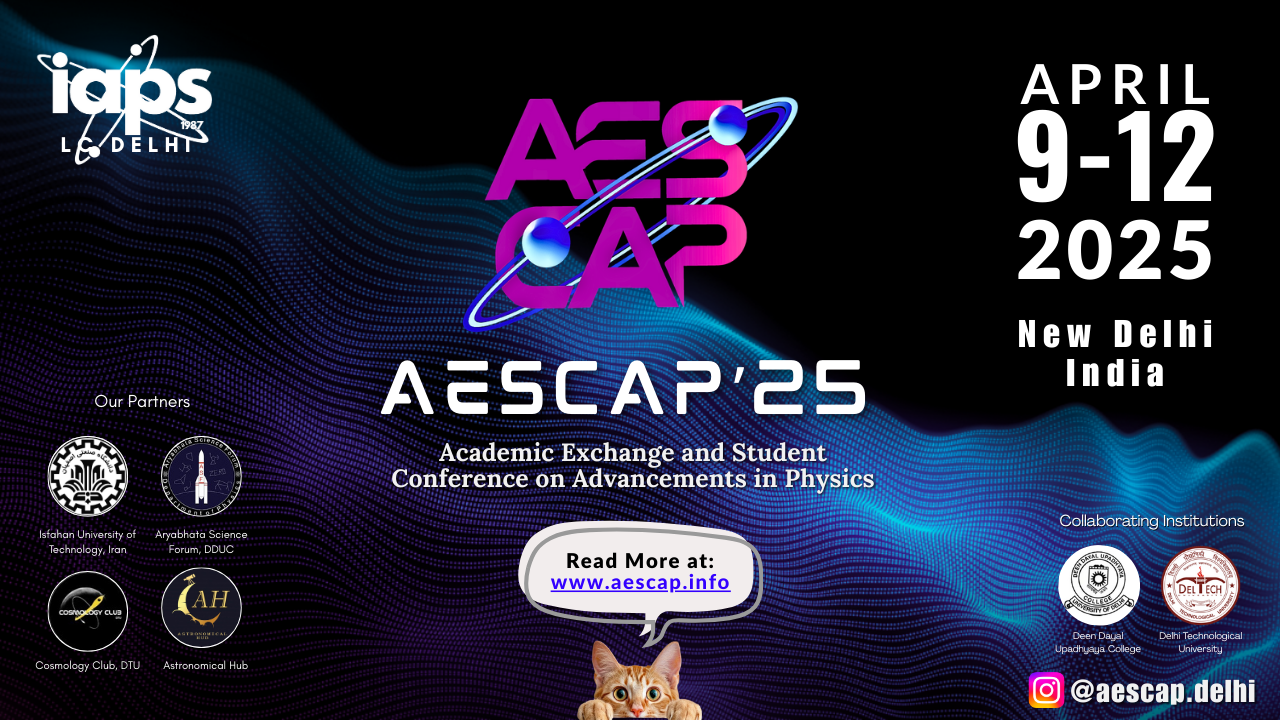
The student organization LC Delhi, representing the Member Committee India under the International Association of Physics Students (IAPS), is proudly presenting the Academic Exchange and Student Conference on Advancements in Physics (AESCAP). This four-day event will take place from April 9th to 12th, 2025, in Delhi. Hosted by Delhi Technological University and Deen Dayal Upadhyaya College (University of Delhi), AESCAP aims to engage undergraduate and master’s students, both national and international. The conference is expected to attract up to 200 participants, providing a platform for academic exchange and discussions on the latest advancements in quantum science and physics.

The event will focus on the rapidly evolving field of quantum computing, quantum information, and their applications. The program will cover foundational topics such as the basics of qubits, quantum computing, quantum information, introduction to quantum gates, as well as hands-on workshops for using Qiskit and quantum CCD techniques. It will also explore India’s quantum future, quantum cryptography, and the role of AI and machine learning in academia and society. We will also have famous science communicators to discuss our quantum future and discuss the importance of science communication. Beyond technical discussions, the event will address broader global challenges and initiate conversation on important topics through panel discussions on women in physics and climate change.

The event would also feature student talks and poster presentations, as well as fun interactive social events to provide networking opportunities for the attendees. It promises to be an engaging platform for learning, collaboration, and envisioning the future of quantum technology.

BarBQ Special Edition: BQ World Quantum Day

BarBQ is the open networking of Berlin Quantum: open to all quantum enthusiasts to join us at Leap Quantum tech Hub to talk about quantum and enjoy! This special edition commemorates the World Quantum Day (14th April). A motivational talk about this particular day, drinks, and snacks will be provided.

The Future Leaders in Quantum Hackathon

The Quantum Coalition and the International Telecommunication Union (ITU) proudly present the Future Leaders in Quantum (FLIQ) Virtual Hackathon, a global challenge designed to empower the next generation of quantum innovators.

As part of the UN International Year of Quantum (IYQ), FLIQ brings together students, mentors, and industry leaders from across the world to collaborate, compete, and create real-world quantum solutions. Whether you’re a technical problem solver, an aspiring quantum entrepreneur, or a creative storyteller, FLIQ is designed to be accessible, inclusive, and impactful helping you take your first (or next) step into the quantum world.

IYQST2025 Public Lecture

Faculty Lecture: Quantum Mechanics and Pure Mathematics

As part of the International Year of Quantum Science and Technology 2025 (IYQST2025), Nelson Mandela University Faculty of Science will host a faculty lecture on 11 April 2025, delivered by Dr. Martin Weigt from the Department of Mathematics.

The lecture will explore the historical and theoretical developments of quantum mechanics, focusing on Heisenberg’s matrix mechanics (1925) and Schrödinger’s wave mechanics (1926), and their influence on pure mathematics.

Dr. Weigt will also discuss quantum mechanics’ role in modern physics, including its connection to the quantum theory of gravity.