From Classical to Quantum Measurement Systems – IYQ

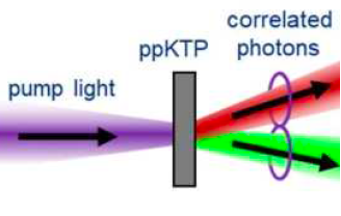
The event “From Classical to Quantum Measurement Systems” recognizes classical and quantum technology for different applications in measurement technology, including optical sensing and metrology, bioimaging and optogenetics, multimode fiber amplifier, high-speed data transmission, quantum sensing with undetected light, quantum computing, 6G-quantum communication, entangled photons for fiber communication.

Spring Series Talk: Molecular Self-Assembly: A Lego Movie through the lens of Quantum Mechanical Simulations

Chemistry Seminar: Sivanujan Suthaharan

Sivanujan Suthaharan, a master’s student from Illinois State University Department of Chemistry, will present a seminar titled “Molecular Self-Assembly: A Lego Movie Through the Lens of Quantum Mechanical Simulations” at 3 p.m. on Friday, March 7, 2025, in Julian Hall, room 225. Refreshments will be served prior to the seminar in Julian Hall, room 224.

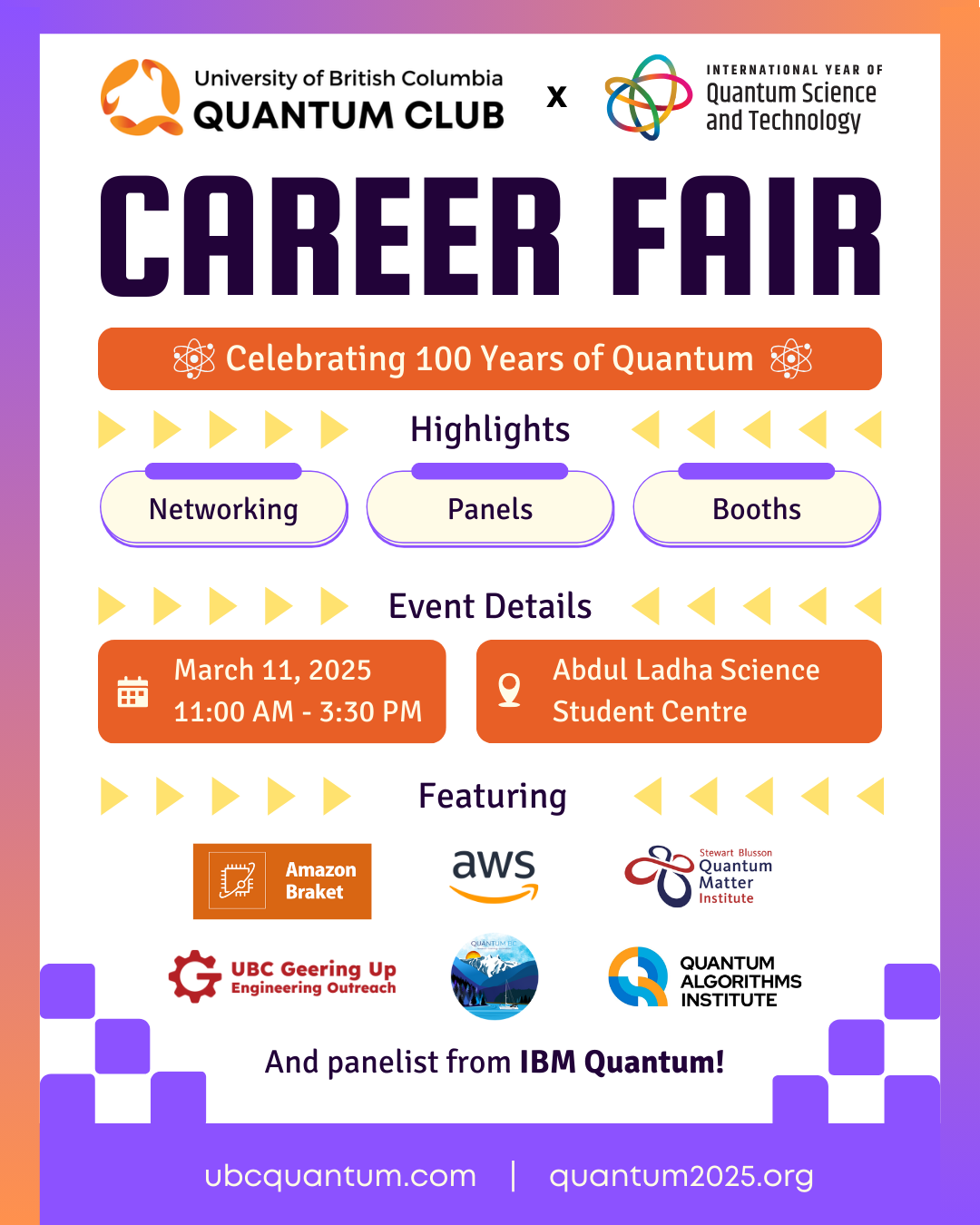
2025 UBCQ Career Fair

Celebrate the International Year of Quantum and 100 years of quantum mechanics at the 2025 UBC Quantum Career Fair! Open to all students, attend our event on March 11th, 11:00 am – 3:30 pm, at the Abdul Ladha Science Student Centre at the University of British Columbia for a day of networking, seminars, and panel discussions exploring quantum science and technologies in the real world. Joined by IBM, Amazon, QMI, and many more, come meet the industry leaders and academics at the forefront of quantum research!

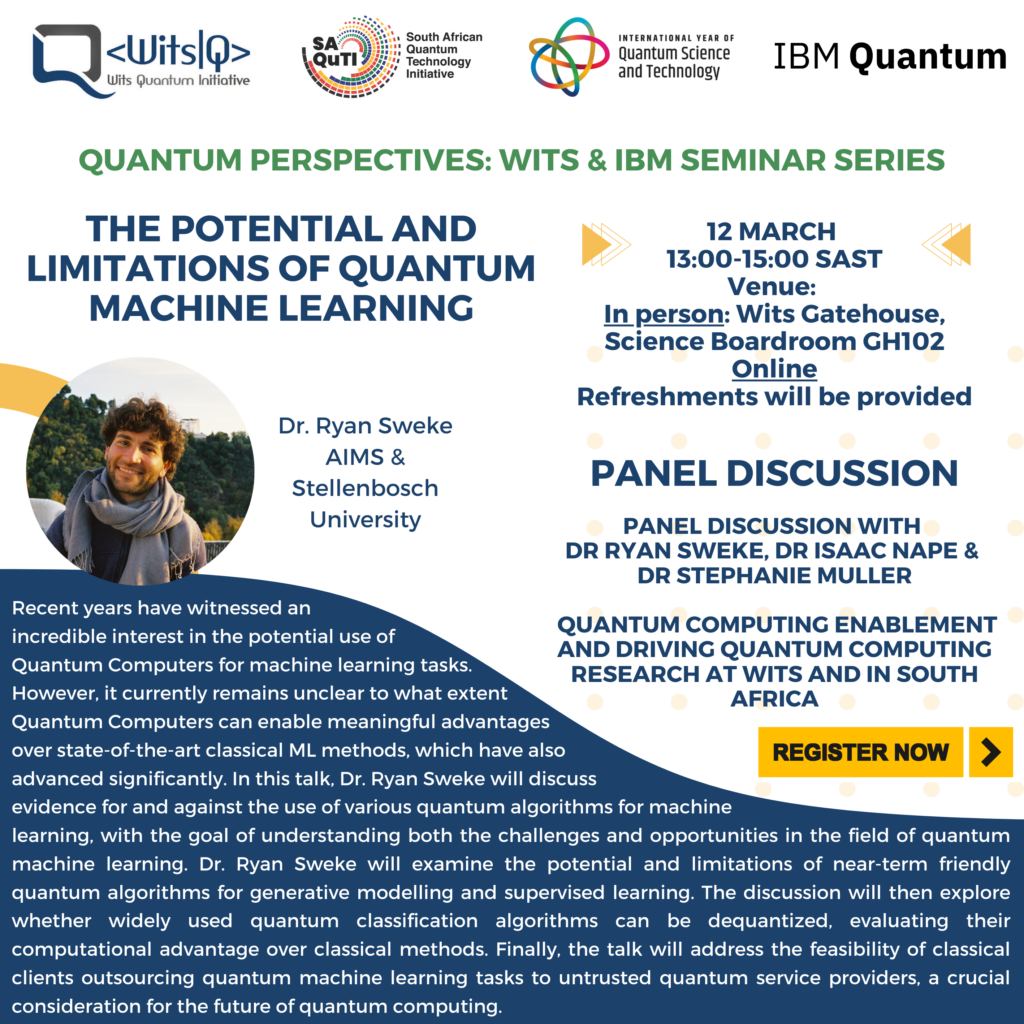
Quantum Perspectives: WITS & IBM Seminar Series

Seminar on the potential and limitations of quantum machine learning followed by a panel discussion on Quantum computing enablement and driving quantum computing research at Wits and in South Africa.

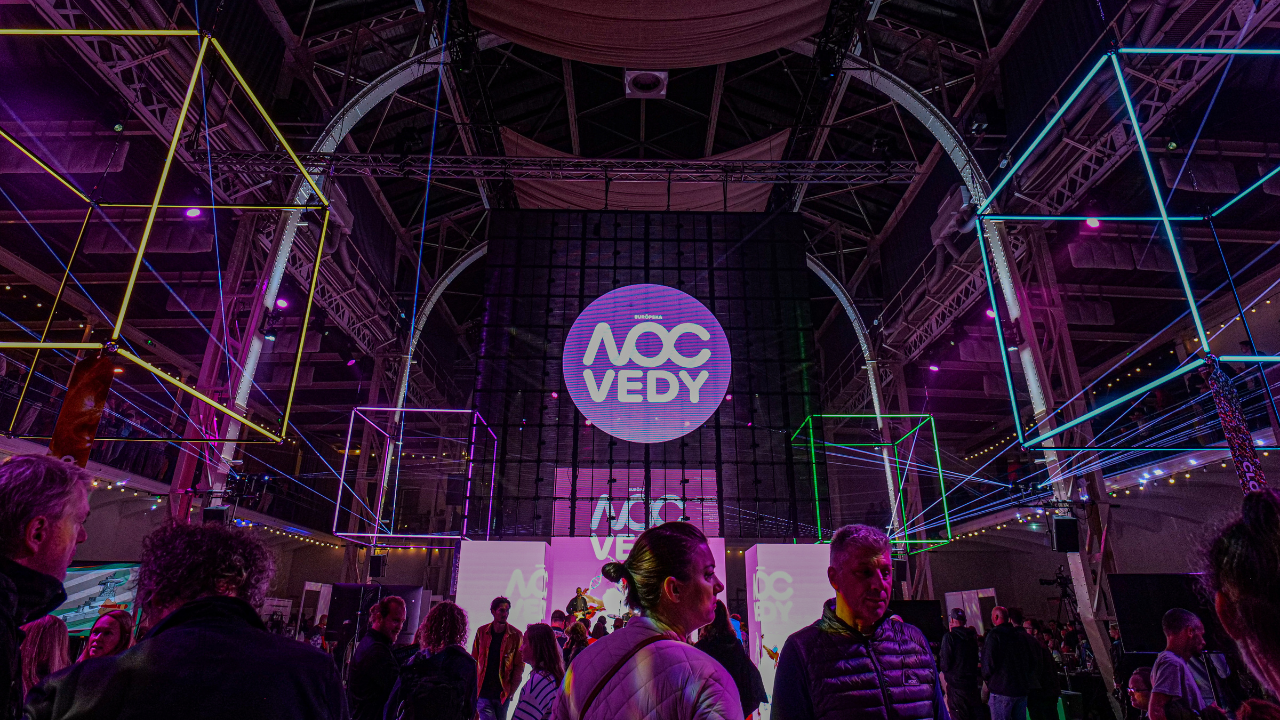
European Researcher’s Night Slovakia

European Researcher’s Night is the biggest science festival in Slovakia, and it brings news from the world of research and innovation in an inspiring and unique way.

The festival is traditionally held on the last Friday of September in Bratislava, Košice, Banská Bystrica, Žilina, Poprad, and other accompanying locations. The day-long program (9 am to 11 pm) offers a series of scientific presentations, discussions, experiments, workshops, technological attractions and so much more!

What 2025 holds

The scientific community is increasingly confronting the limitations of traditional predictive models and linear approaches in analyzing complex systems. Chaos, once understood as a synonym for disorder, is now seen as an inherent property of dynamic processes, where sensitivity to initial conditions and nonlinearity determine their evolution. Instead of perceiving uncertainty as an obstacle, we can interpret it as a catalyst for scientific discoveries and technological innovations.

Last year’s theme of complexity highlighted the interdisciplinary connections in research. This year, as part of the Night of Science, we will explore chaos as a fundamental mechanism of adaptation, evolution, and transformation in various systems. The event will open discussions on how scientific disciplines approach uncertainty and nonlinearity and what paradigmatic shifts these phenomena imply.

Quantum Physics and Chaos: Uncertainty as an Epistemological and Technological Imperative

At the quantum level, uncertainty is a fundamental property of systems. Quantum fluctuations, state superposition, and wave function collapse challenge classical notions of predictability and deterministic understanding of reality. Quantum physics thus provides a natural link between chaotic phenomena and the emergence of new orders, where uncertainty becomes a source of technological innovations.

The International Year of Quantum Science and Technology 2025 offers a unique opportunity to explore the relationship between chaotic processes and quantum mechanics. Quantum algorithms utilize chaotic behavior to solve nonlinear problems, while quantum communication protocols introduce new standards of security and efficiency in information transmission.

Chaos in Nature and Society: Mechanisms of Stability and Transformation

In natural systems, chaos does not merely represent entropy but also stabilization and emergent organization. From climate processes and ecosystem interactions to neural networks and evolutionary mechanisms – nonlinear dynamics lead to the formation of self-organizing structures and adaptive strategies.

Similar principles apply to social and technological systems. Financial markets, digital networks, and information ecosystems exhibit chaotic behavioral patterns, where even minimal perturbations significantly influence global outcomes. This presents challenges for modeling, regulating, and managing complex systems.

Night of Science 2025 will offer an interdisciplinary perspective on the connection between chaos, quantum technologies, natural phenomena, and social dynamics. We will explore how uncertainty shapes innovation processes and what epistemological and technological implications we can extrapolate for a better future. Chaos is not just a challenge – it represents a potential key to new scientific paradigm shifts.


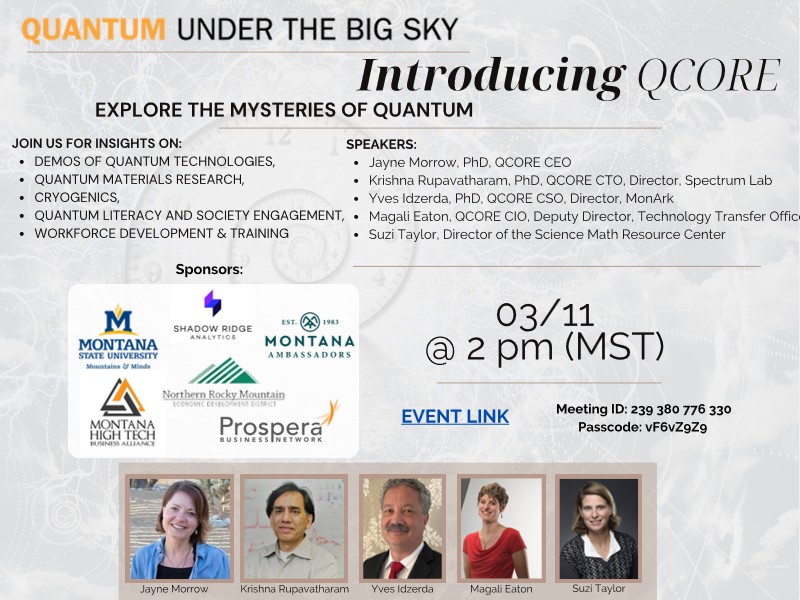
Quantum under the Big Sky: Introducing QCORE

The Montana Photonics & Quantum Alliance presents Quantum under the Big Sky: Introducing QCORE, a webinar featuring Montana State University’s QCORE. QCORE is a new research and technology development center designed to create the foundations for innovation and advocate for growing the quantum economy in Montana and the surrounding region. Currently, funded efforts are creating an applied quantum testbed that will underpin quantum networking, sensing, and computing capabilities and form the foundation for standards development.

Testbed capabilities build on existing programmatic strength in photonics research at Spectrum Lab and the quantum materials’ foundry MonArk to create synergistic capabilities and demonstrate successful pilot-scale quantum technology innovations and networked systems integration.

Join the Webinar to learn more about QCORE Programmatic Thrust Areas, Including:

  • Demonstrations of novel quantum technologies including quantum computing, sensors, and quantum networking;
  • quantum materials research;
  • cryogenics;
  • quantum literacy and society engagement;
  • workforce development, training;
  • promoting the growth of the quantum innovation ecosystem and global supply chain.

Quantum Computing Industry Training

Quantum computing promises great potential for companies in almost all sectors thanks to its speed and precision advantages. The combination with machine learning methods also opens up new possibilities. How do quantum computers work, what principles are their programming based on, and why does the so-called “quantum advantage” promise a disruptive change in the IT industry? In a 3-day course, the quantum team of the Fraunhofer IAO trains the experts of tomorrow.

​​​The free training program provides comprehensive knowledge in the field of quantum computing, from basics to application. The course aims at a general understanding of quantum technology and builds up the necessary key skills for industrial application. Four modules will teach you how to assess the key technology of quantum computing, how to deal with it and how to apply it in a targeted manner: Basics, Hardware, Algorithms, and Application.

​We invite participants to join us in learning about the phenomena of the quantum world, the differences between today’s system architectures, and the basics of programming them. From the principles of quantum mechanics, we take the exciting path to their industrial application and work on a wide variety of use cases, for example, in the fields of quantum chemistry, finance, optimization, or quantum machine learning.

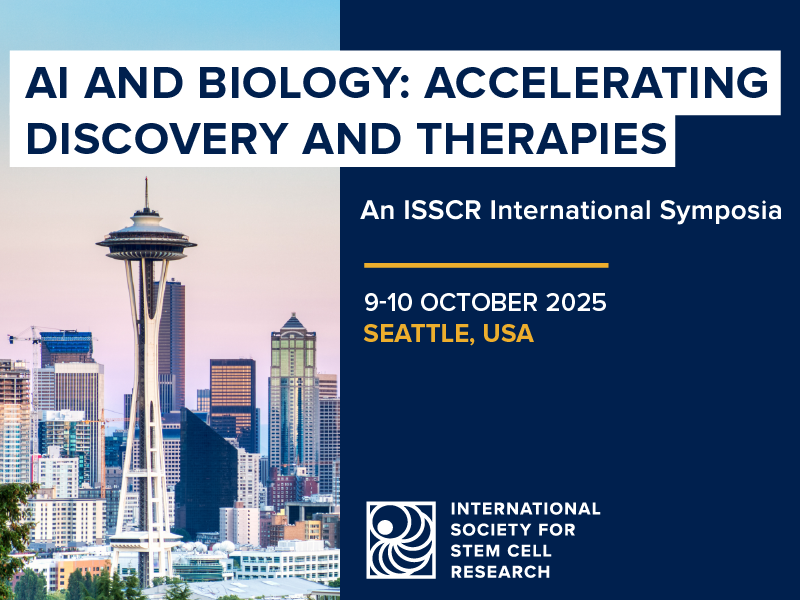
AI and Biology: Accelerating Discovery and Therapies

Recent advances in Artificial Intelligence (AI) technologies have transformed the way we approach biomedical research—from analyzing complex data, understanding development and disease, to developing new drugs and enhancing clinical outcomes. The ISSCR invites you to a unique program that aims to align data scientists and biologists to collaboratively address the challenges in AI-enabled biology and its translation to clinical applications. Join us in Seattle as we delve into the latest advancements in de novo protein and cell design, foundational models, single-cell multi-omics and multimodal imaging, manufacturing and clinical advances, diversity of data, perturbation predictions, and the emerging role of quantum computing in accelerating complex biological simulations. Connect with leading AI experts to be inspired by what the future has to offer.

International Conference on Quantum Computing

The International Conference on Quantum Computing 2025 (ICoQC2025) will present the state of the art in quantum computing research from different perspectives: significant progress and novelties on the hardware, strategies and architectures for protecting quantum information, quantum algorithms themselves, and related enabling technologies. It is a follow-up on ICoQC 2018 with a similar program, composed of invited talks, contributed talks and poster sessions.

The conference will be held from May 12 to 16, 2025 in Paris.