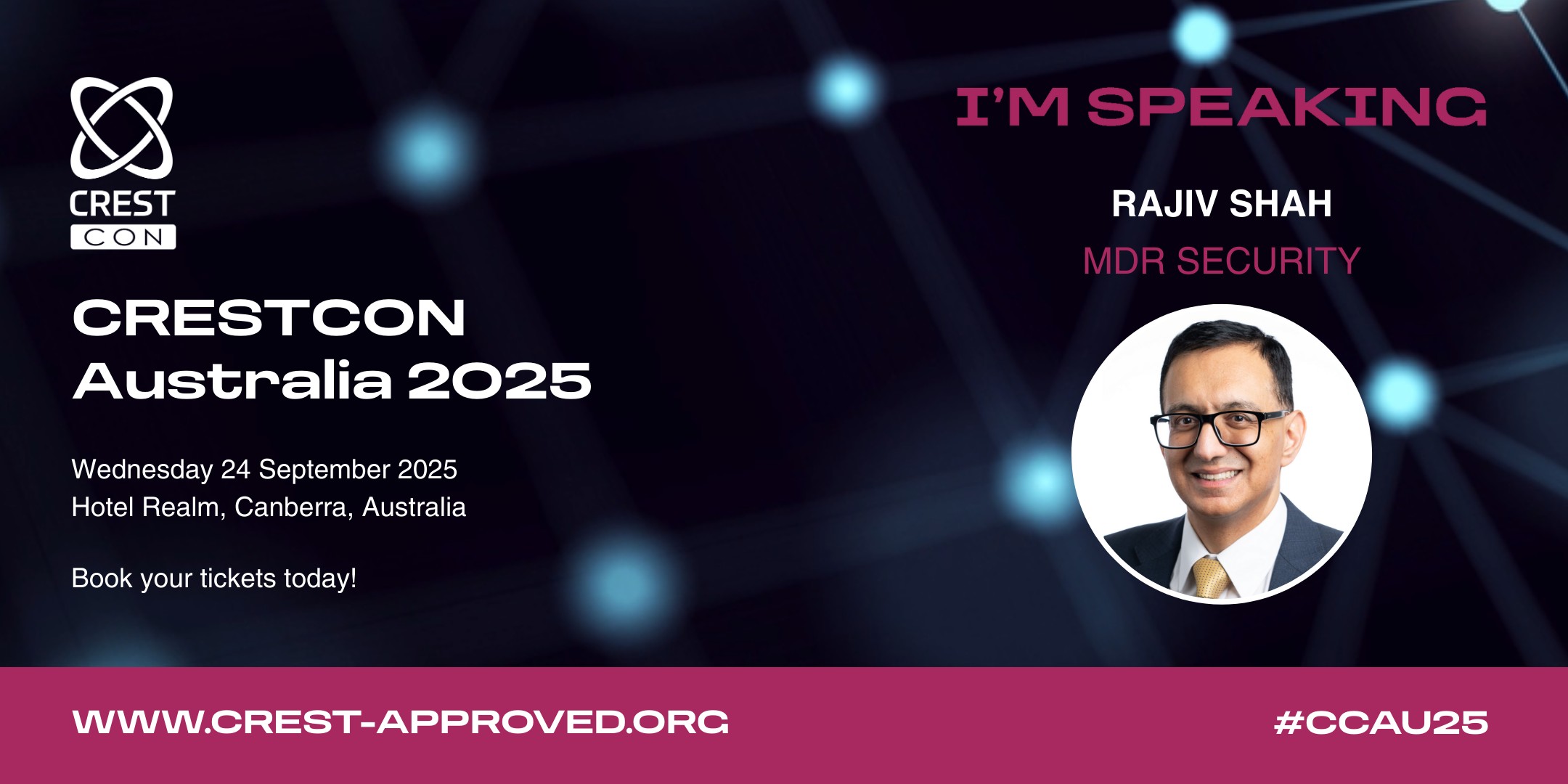
CRESTCon Australia 2025

CRESTCon Australia 2025 is more than just a cybersecurity conference—it is a hub for technical excellence, industry collaboration, and career inspiration. From technical deep dives to thought-provoking panel discussions, this conference offers a rare opportunity to explore the latest innovations, challenges, and solutions in the ever-evolving digital threat landscape.

Quantum technology could potentially transform the threat landscape, but the real risks and what needs to be done are poorly understood.

The conference will feature a talk from Dr Rajiv Shah titled “Security threats from quantum computing—a realistic assessment of the threat, lessons from real-life experience, and practical advice.”

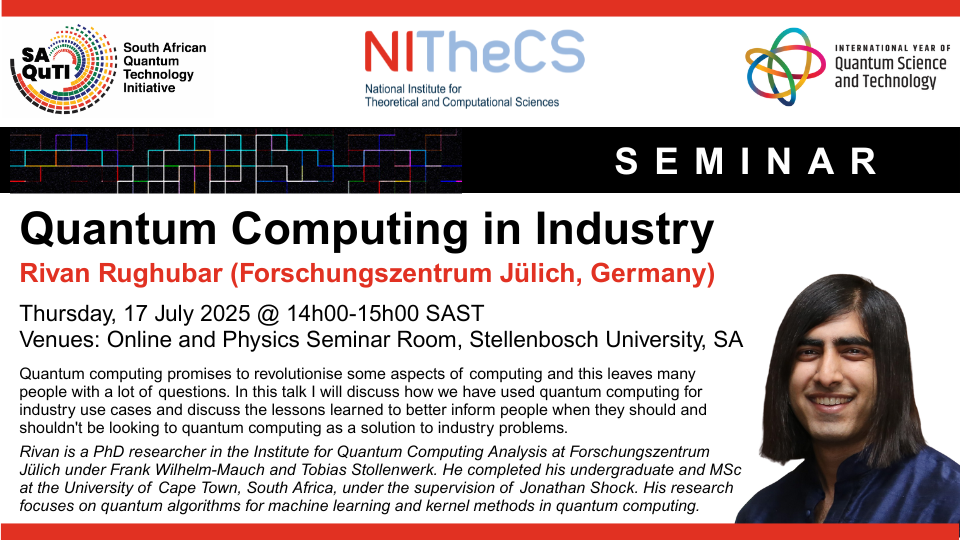
Quantum Computing in Industry

Abstract

Quantum computing promises to revolutionise certain aspects of computing, leaving many people with plenty of questions. In this talk, I will discuss how we have applied quantum computing to industry use cases and share the lessons learned to better inform people when they should and shouldn’t look to quantum computing as a solution to industry problems.

Biography

Rivan is a PhD researcher in the Institute for Quantum Computing Analysis at Forschungszentrum Jülich under Frank Wilhelm-Mauch and Tobias Stollenwerk. He completed his undergraduate and MSc at the University of Cape Town under the supervision of Jonathan Shock. His research focuses on quantum algorithms for machine learning and kernel methods in quantum computing.

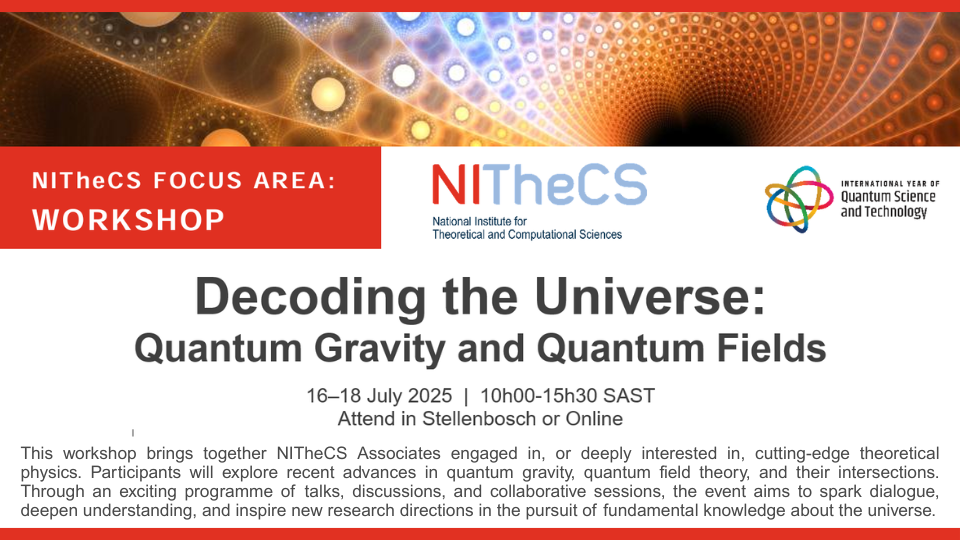
NITheCS Focus Area Workshop: ‘Decoding the Universe: Quantum Gravity and Quantum Fields’

This workshop will bring together NITheCS Associates engaged in, or deeply interested in, cutting-edge theoretical physics. Participants will explore recent advances in quantum gravity, quantum field theory, and their intersections. Through an exciting programme of talks, discussions, and collaborative sessions, the event aims to spark dialogue, deepen understanding, and inspire new research directions in the pursuit of fundamental knowledge about the universe.

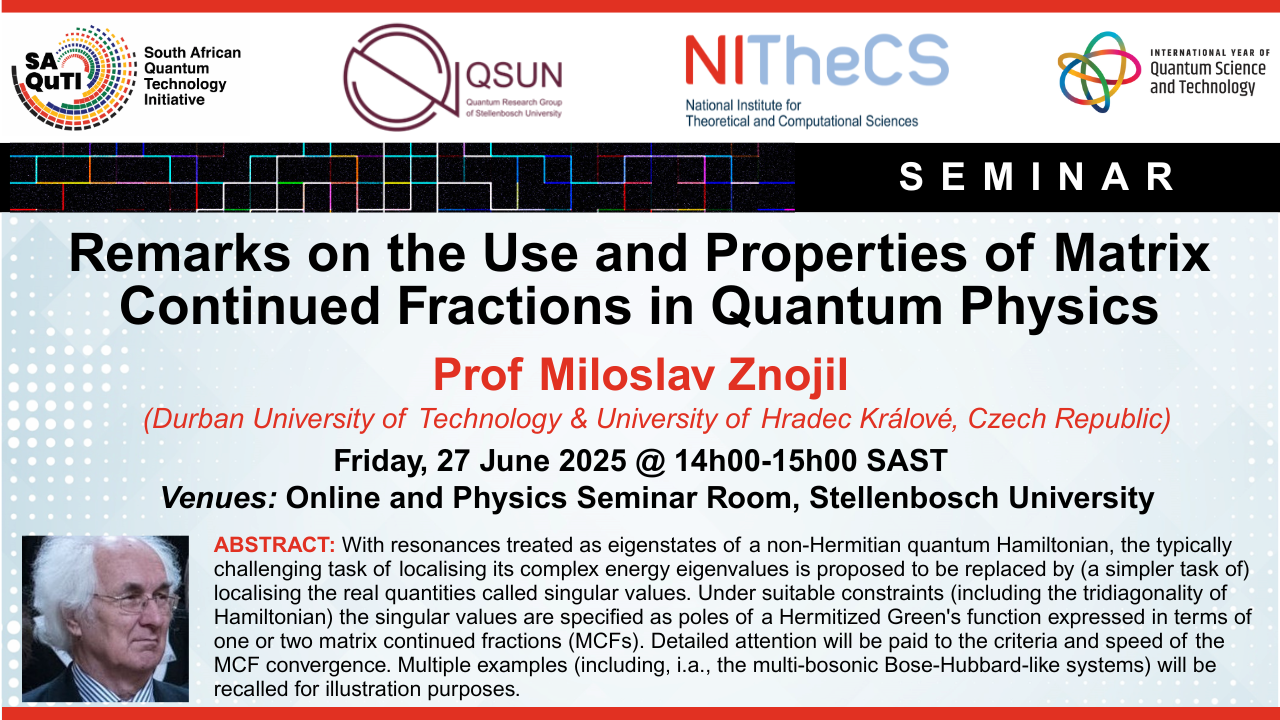
QSUN, SAQuTI & NITheCS Seminar

With resonances treated as eigenstates of a non-Hermitian quantum Hamiltonian, the typically challenging task of localising its complex energy eigenvalues is proposed to be replaced by (a simpler task of) localising the real quantities called singular values. Under suitable constraints (including the tridiagonality of Hamiltonian) the singular values are specified as poles of a Hermitized Green’s function expressed in terms of one or two matrix continued fractions (MCFs). Detailed attention will be paid to the criteria and speed of the MCF convergence. Multiple examples (including, i.a., the multi-bosonic Bose-Hubbard-like systems) will be recalled for illustration purposes.

Biography

Prof Miloslav Znojil is a Czech theoretical and mathematical physicist specialising in quantum mechanics, with a focus on simplified and tractable models, pseudo-Hermitian operators, and advanced algebraic and analytical methods. He earned his BSc in Nuclear Physics from the Czech Technical University (1968), followed by MSc and PhD degrees in Theoretical and Mathematical Physics from Charles University, Prague, where he was later awarded the prestigious Dr.Sc. scientific degree in 1994.
Prof Znojil has held research positions across Europe and Russia, including at the Institute of Nuclear Physics (CSAS, Rez), the J. Stefan Institute (Ljubljana), and FIAN Moscow. He currently serves as a Leading Research Worker at the Nuclear Physics Institute of the Czech Academy of Sciences, a Research Professor at Durban University of Technology, and an independent researcher at the University of Hradec Králové.


He is Deputy Director of the Doppler Institute (Rez branch) and sits on the editorial boards of Physics and Acta Polytechnica. He has authored over 325 publications with more than 5,800 citations (h-index: 38), and is recognised internationally for his contributions to quasi-Hermitian quantum models, perturbation theory, and supersymmetry.


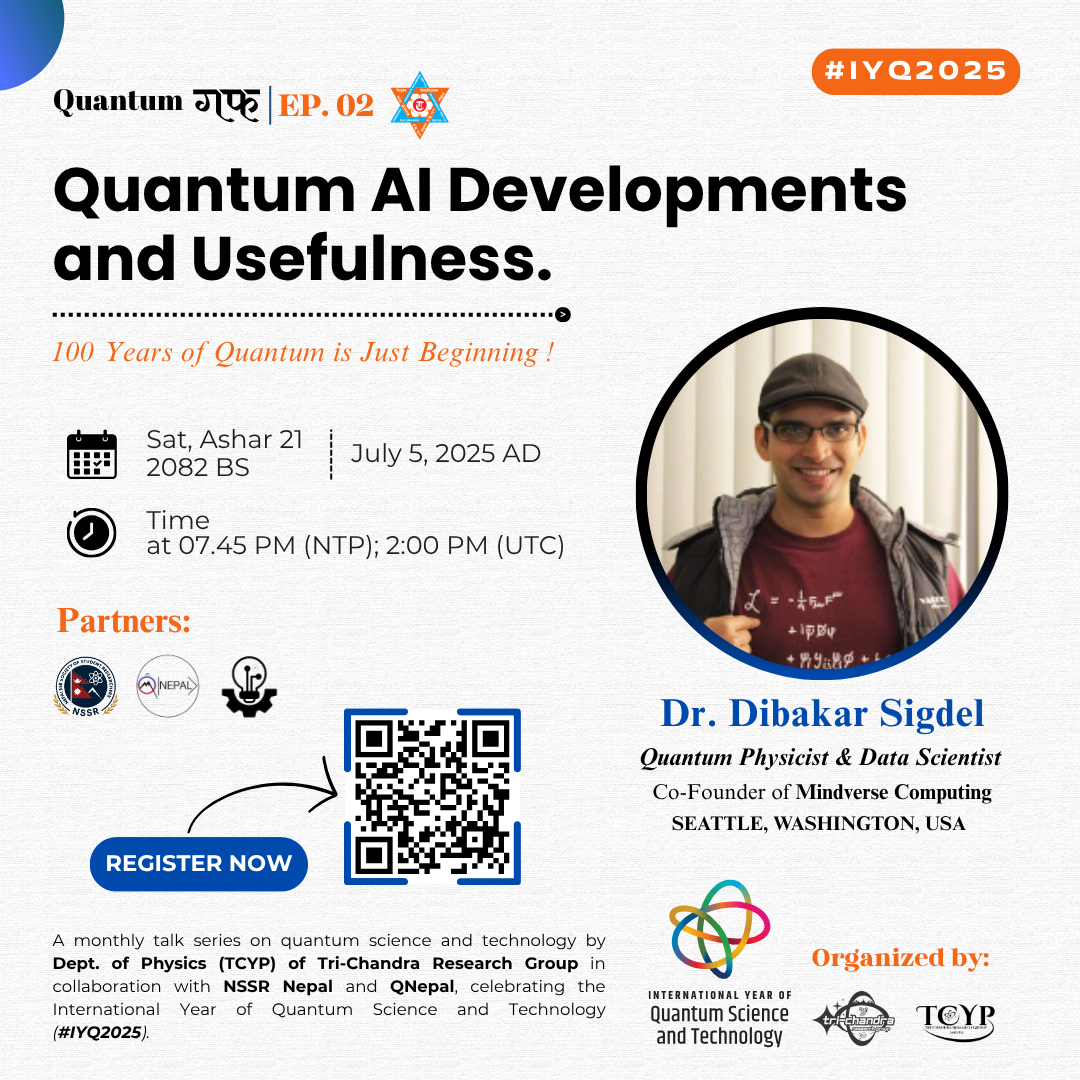
Quantum गफ | EP.02 Quantum AI Developments and Usefulness

Join us for Episode 02 of Quantum गफ, a monthly talk series exploring the frontiers of quantum science and technology. The series is organized by the Dept. of Physics (TCYP) of Tri-Chandra Research Group (TCRG) in collaboration with QNepal and NSSR Nepal, as part of the global celebration of the International Year of Quantum Science and Technology (#IYQ2025).

 Topic: “Quantum AI Developments and Usefulness”

Guest Speaker: Dr. Dibakar Sigdel, Quantum Physicist & Data Scientist, Co-Founder, Mindverse Computing
Seattle, Washington, USA

Session Overview

In this session titled “Quantum AI Developments and Usefulness,” Dr. Dibakar Sigdel will explore how recent advancements in quantum computing are driving innovation in artificial intelligence. From quantum machine learning techniques to real-world applications in data science, the talk will examine how quantum AI is poised to revolutionize the future of intelligent systems.


Contact Us

📧

 Facebook

 Instagram

 LinkedIn

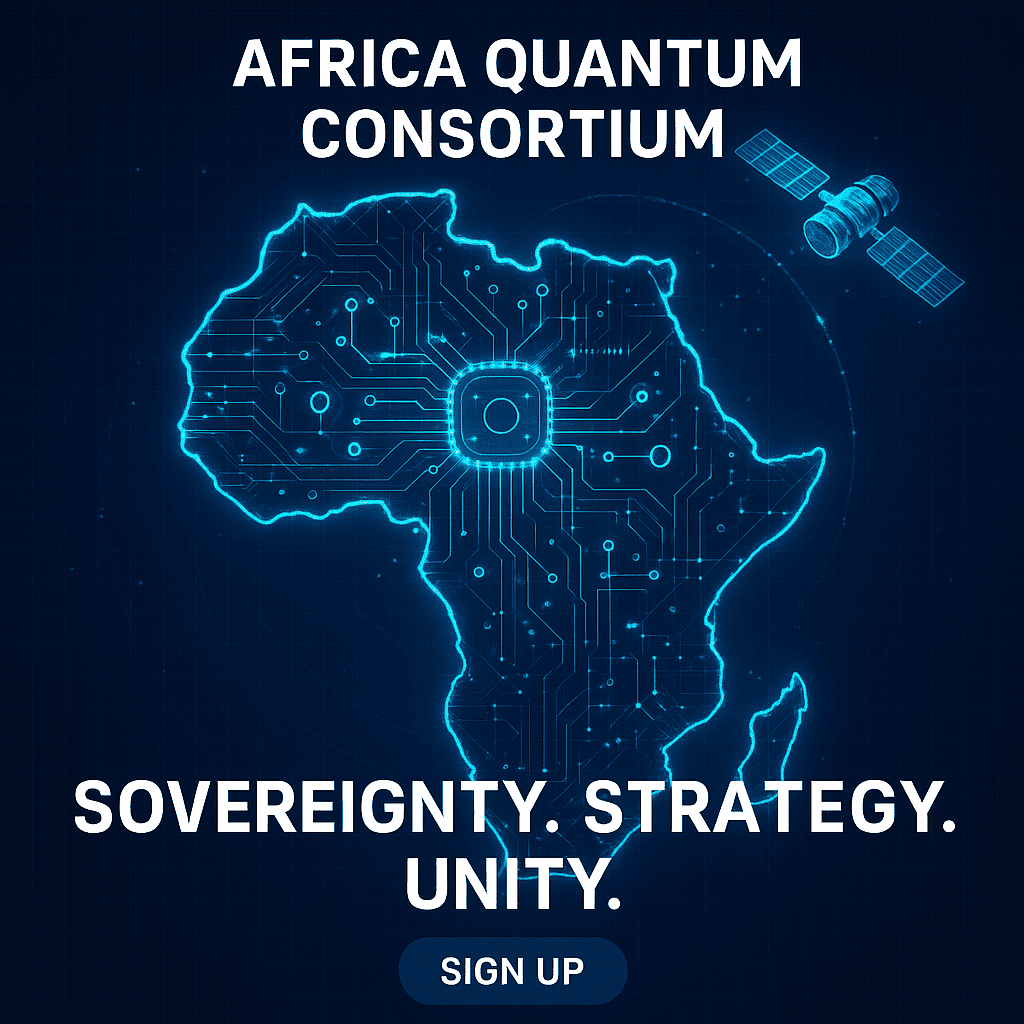
 The Quantum Roundtable

Coming This September: The AQC 3Q Quantum Roundtable Showcase Africa’s Quantum and Deep Tech Momentum. This roundtable spotlights breakthrough startups, frontier research, and our bold vision for a deep tech innovation hub rooted in Africa. Global and diaspora partners will chime in as we shape the continent’s next leap. This is where ideas meet action. Pre-register now. Be part of the build.

Warwick Quantum Launch Event

 Warwick Quantum is a new interdisciplinary research initiative that brings together the University of Warwick’s quantum technology work, encompassing the Departments of Computer Science, Mathematics, Chemistry, and Physics, as well as the School of Engineering and the Warwick Manufacturing Group. Our vision is to provide a bridge between these areas, making an impact on quantum computing and quantum technologies at all levels, from theory and foundations to hardware and industrial applications.

We are hosting the Warwick Quantum launch event in Warwick on Friday, July 11, 2025. The speakers will include Dmitry Budker, Sir Peter Knight, Helena Knowles, Gerald Milburn, and Michael Cuthbert.

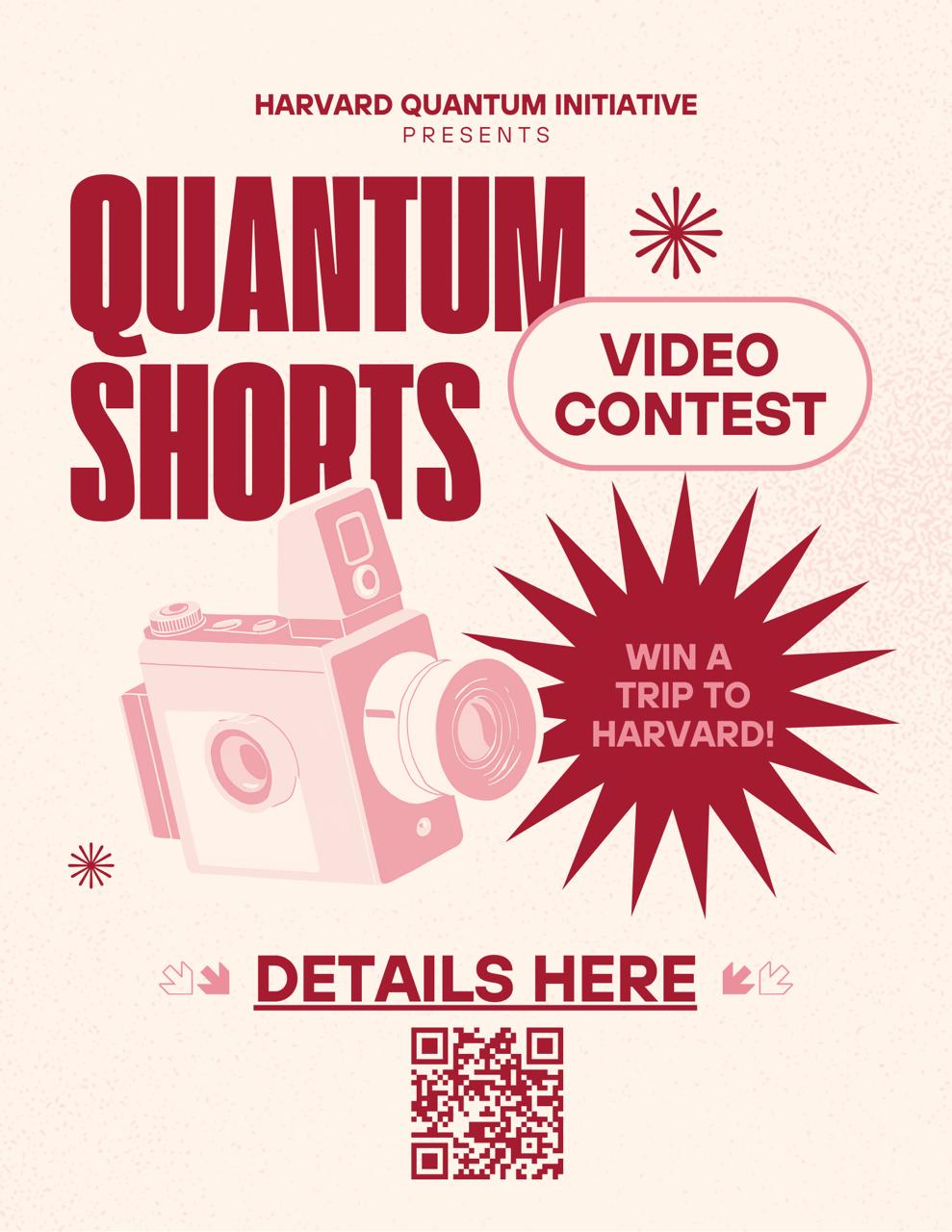
Harvard Quantum Shorts Contest

In celebration of the International Year of Quantum Science and Technology, the Harvard Quantum Initiative invites students ages 14–19 to participate in an exciting global competition!

Create and submit a short video that explores a topic in quantum science—whether it’s quantum computing, entanglement, superposition, or any concept that inspires you. This is your chance to showcase your scientific insight, creativity, and passion for discovery.

Selected winners will receive an exclusive opportunity to visit Harvard’s cutting-edge quantum research facilities and meet world-class scientists.

Quantum Machine Learning Workshop

This workshop provides an introduction to Quantum Machine Learning using PennyLane and PyTorch, with hands-on exercises and take-home challenges. The workshop includes four practical sessions that cover the QML concepts, models, and techniques. The sessions explore the development of quantum estimators and classifiers, their training with various optimisers, loss and cost functions, as well as model testing and scoring using variety of metrics. It finally, explains how to create hybrid quantum-classical QML models.

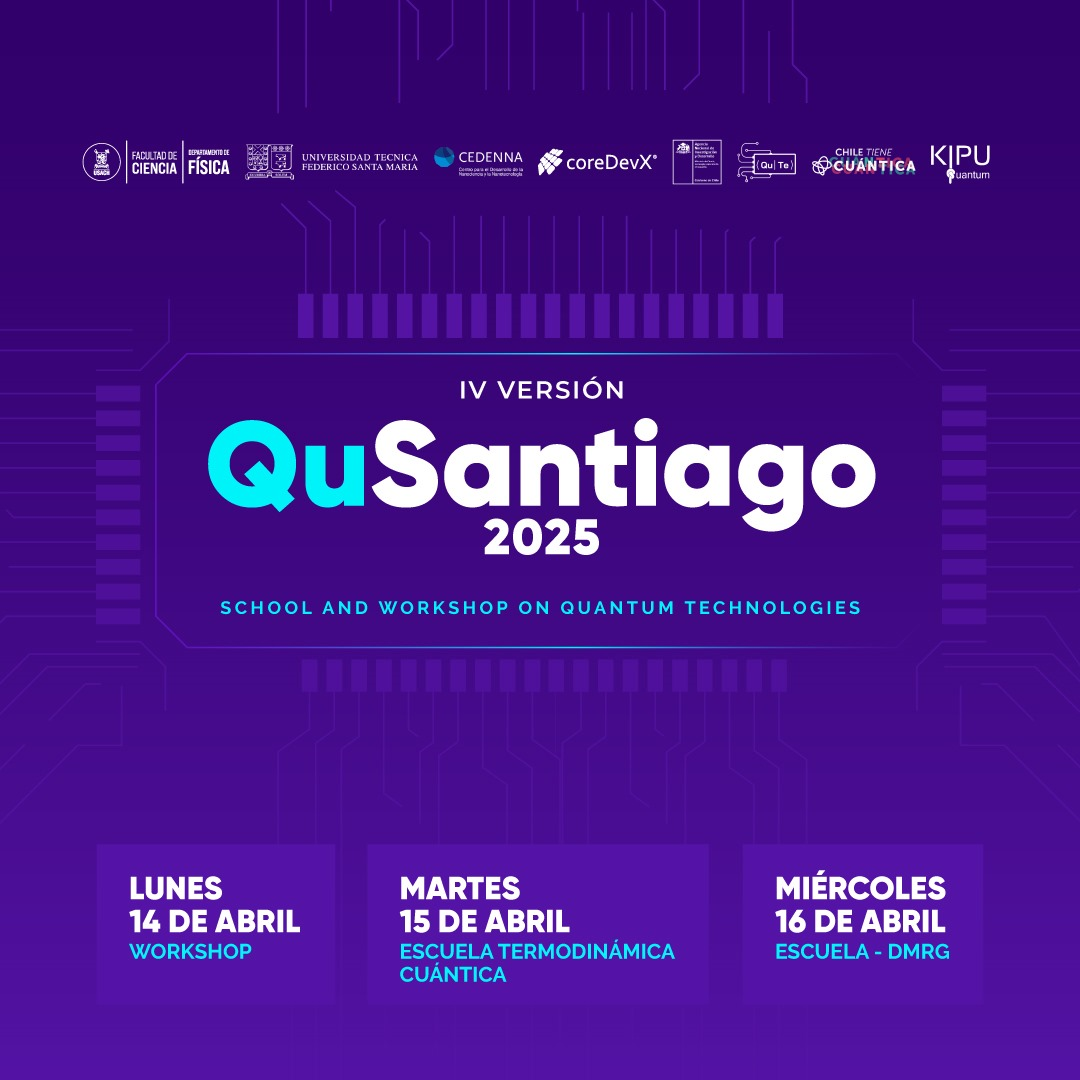
QuSantiago IV

En esta edición especial del QuSantiago, el encuentro dedicado a la investigación y desarrollo en tecnologías cuánticas, nos complace en anunciar su realización durante el presente año, reafirmando su compromiso con la excelencia académica y el avance científico. Este evento, que se llevará a cabo en conjunto con la Universidad Federico Santa María (Campus San Joaquín) y la Universidad de Santiago de Chile (USACH), representa una oportunidad única para el intercambio interdisciplinario entre instituciones de alto prestigio.

Enfoque Temático

En esta edición se abordarán dos ejes temáticos de alta relevancia en la investigación cuántica:

Sistemas Cuánticos Abiertos (USM)

Exploraremos las bases de computación cuántica y topología para entender la relevancia del anuncio de Microsoft y su nuevo chip Majorana. Además de comprender las bases de otra de las áreas más contraintuitiva como la termodinámica cuántica, donde se abordarán aspectos fundamentales para entender los ciclos termodinámicos básicos y su relevancia en máquinas y baterías cuánticas.

Técnicas para el Cálculo de Sistemas de Muchos Cuerpos (USACH)

Técnicas para el cálculo de sistemas de muchos cuerpos: Con la limitación de los computadores cuánticos actuales, técnicas para el estudio de sistemas de muchos cuerpos como Tensor Network tienen gran relevancia en estos días. En esta instancia abordaremos los aspectos básicos para cálculos que involucren Hamiltonianos de muchos cuerpos, como los es la técnica de Density Matrix Renormalization Group y cómo esta evoluciona a tensor network.