International Masterclass in Particle Physics – Pierre Auger Masterclass in Braga

Outreach activity of one day, in which high-school students attend a University or Institute to learn about particle physics and analyze real data, ending with an international video conference moderated by scientists at the Pierre Auger Observatory. Integrated with the IPPOG’s International Masterclasses in Particle Physics (ippog.org/imc-international-masterclasses).

What Does “Quantum” Mean?

2025 is The International Year of Quantum Science and Technology.  Let’s start by asking what does this word “quantum” mean?

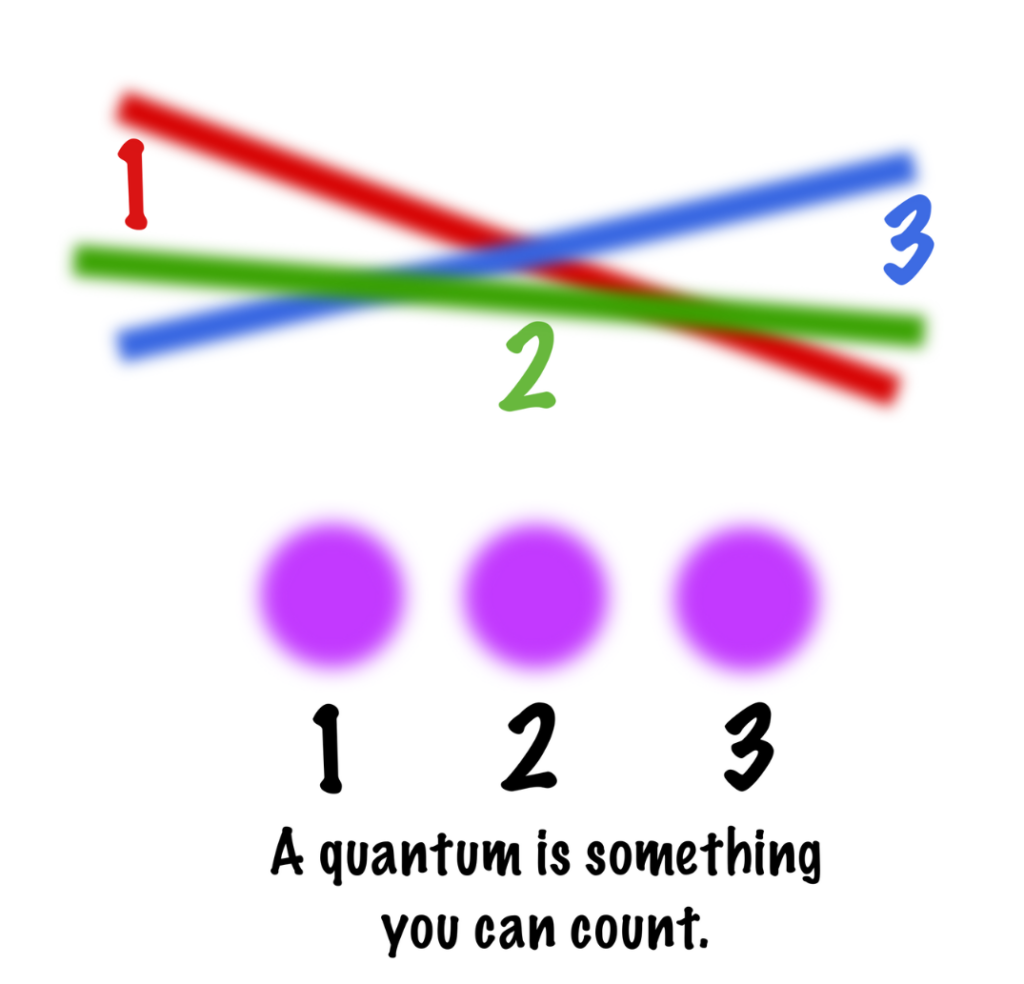
That’s a good starting question.  In general, the word “quantum” means “something you can count.”  It’s from a Latin word and is the same root as is found in words like “quantity” and “quantify.”  A “quantum” is a single thing you can count and the plural “quanta” are things you can count.  The question is: When you look at something, is it possible to count it?

Can you give an example?

Sure.  If we looked at a stadium crowd and I said, “count the crowd,” how would you understand this request?

Well, I would assume you meant count the people in the crowd.

Exactly.  In this case, the quanta – the things you are counting – would be people.  Similarly, if we looked at a beach and I said, “count the sand” what would you think I mean?

I guess I would think you meant counting the grains of sand – but this sounds very difficult!

It would be!  The point is not whether we can actually find the number, but whether there is something we can count at all.  In this case, a quantum of sand is a grain of sand.  But now let me ask a trickier question, if we were on the beach and looked out at the water and I said, “count the water” what do I mean?

Maybe how many liters of water?

It’s less clear of a request, isn’t it?  In the case of liters, we can always develop some agreed upon unit of measure like this with which to count things.  When I asked about counting sand, you could have interpreted this to mean counting the number of liters of sand or kilograms of sand.  But these units of measure are a bit arbitrary, instead of liters or kilograms, one could count in gallons or pounds or tons.  They’re agreed-upon conventions that could be changed.  A quantum means something less arbitrary, an indivisible thing to count that wouldn’t depend on an arbitrary measurement standard.

Then for counting water, would you mean counting the molecules of water?

Yes, a molecule of water would be a more appropriate quantum of water.  It’s the smallest, indivisible unit of water that you could have.  Of course, it would be even more challenging to count molecules of water than grains of sand.

You can’t even see the water molecules to count them!

Precisely, and this gets us closer to understanding how the word quantum is being used in the phrase “quantum science.”  From our perspective, the water looks continuous, as though you could keep dividing it into smaller and smaller drops.  It’s not at all obvious that there is the smallest piece of water.  The word quantum started being used by scientists to refer to a few cases where it looked as though something was continuous or infinitely dividable, but it turned out that there is something countable about it.

Is the fact that water is made up of countable water molecules, or that things more generally are made up of atoms that we could count, an example of quantum science?

Surprisingly, no. The idea that things are made of atoms is one that goes back thousands of years, and the modern understanding that there are different chemical elements, each with their own type of atom, is around 200 years old. These are very important ideas and they do make a claim about matter being made up of countable pieces, but they are not the quanta that are being referred to in quantum science.  This is a rather confusing point, since it is the case that quantum science is widely used to understand details about atoms and molecules, but it’s not the case that the word “quantum” in this context refers to the fact that atoms and molecules are countable things.  Rather, the word quantum started being used a bit over 100 years ago to refer to other cases where things that seemed continuous or infinitely dividable turned out to have a countable aspect to them.


Written by Paul Cadden-Zimansky, Associate Professor of Physics at Bard College and a Global Coordinator of IYQ.

IYQ mascot, Quinnie, was created by Jorge Cham, aka PHD Comics, in collaboration with Physics Magazine
All rights reserved.

Featured image: Yan Krukau.

Spring Series Talk: Molecular Self-Assembly: A Lego Movie through the lens of Quantum Mechanical Simulations

Chemistry Seminar: Sivanujan Suthaharan

Sivanujan Suthaharan, a master’s student from Illinois State University Department of Chemistry, will present a seminar titled “Molecular Self-Assembly: A Lego Movie Through the Lens of Quantum Mechanical Simulations” at 3 p.m. on Friday, March 7, 2025, in Julian Hall, room 225. Refreshments will be served prior to the seminar in Julian Hall, room 224.

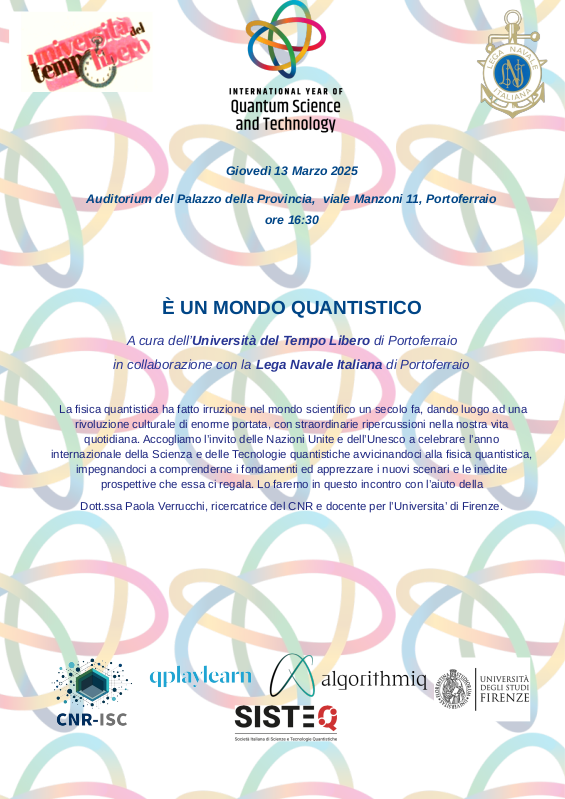
E’ un Mondo Quantistico


Così recita la prima pagina del sito che le Nazioni Unite e l’Unesco hanno messo a disposizione di chiunque voglia accogliere l’invito a celebrare il 2025 come anno internazionale della Scienza e della tecnologia quantistica. Si tratta di una straordinaria occasione per condividere con un pubblico il più ampio possibile il come ed il perché la scienza e la tecnologia quantistica siano divenute fondamentali per l’umanità e come il loro ruolo non potrà che aumentare in futuro. Anche se la teoria viene ancora percepita come surreale, assai difficile e basata su principi la cui comprensione è preclusa ai più, ognuno può, indipendentemente dalla propria formazione, avvicinarsi alla fisica quantistica. Per questo il manifesto dell’IYQ riporta come prima missione delle iniziative quella di “contribuire ad accrescere la consapevolezza del pubblico riguardo l’importanza e l’impatto della Scienza Quantistica e delle sue applicazioni in tutti gli ambiti della vita”. Perché quando tutto intorno a noi diviene “quantum” è importante abbandonare ogni reticenza ed impegnarsi a comprendere, con rigore e coraggio, i fondamenti della fisica quantistica, giungendo ad una comprensione profonda dei fondamenti logici della teoria, così da apprezzare in modo non superficiale i nuovi scenari e le inedite prospettive che essa ci regala. In questo incontro ci proveremo insieme a Paola Verrucchi, ricercatrice dell’Istituto dei Sistemi Complessi del CNR e docente per il Dipartimento di Fisica dell’Università di Firenze.

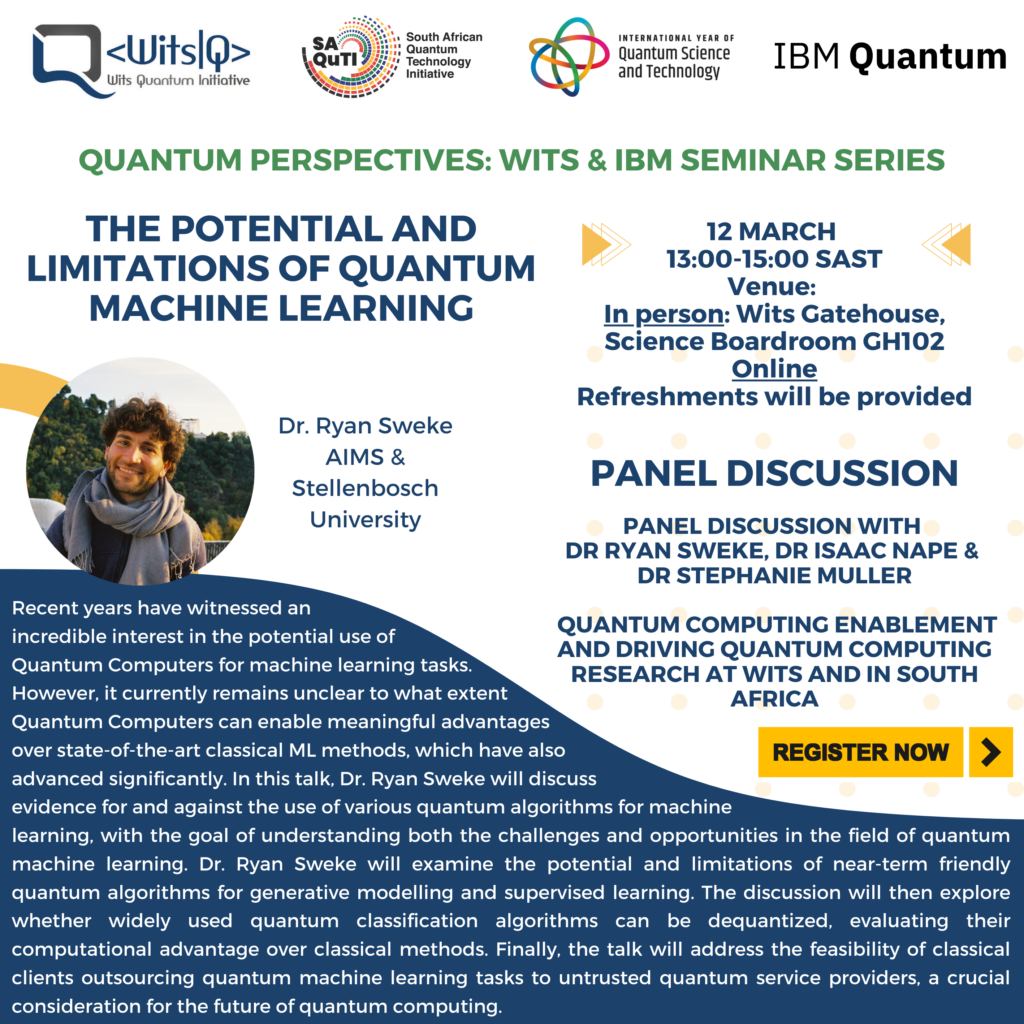
Quantum Perspectives: WITS & IBM Seminar Series

Seminar on the potential and limitations of quantum machine learning followed by a panel discussion on Quantum computing enablement and driving quantum computing research at Wits and in South Africa.

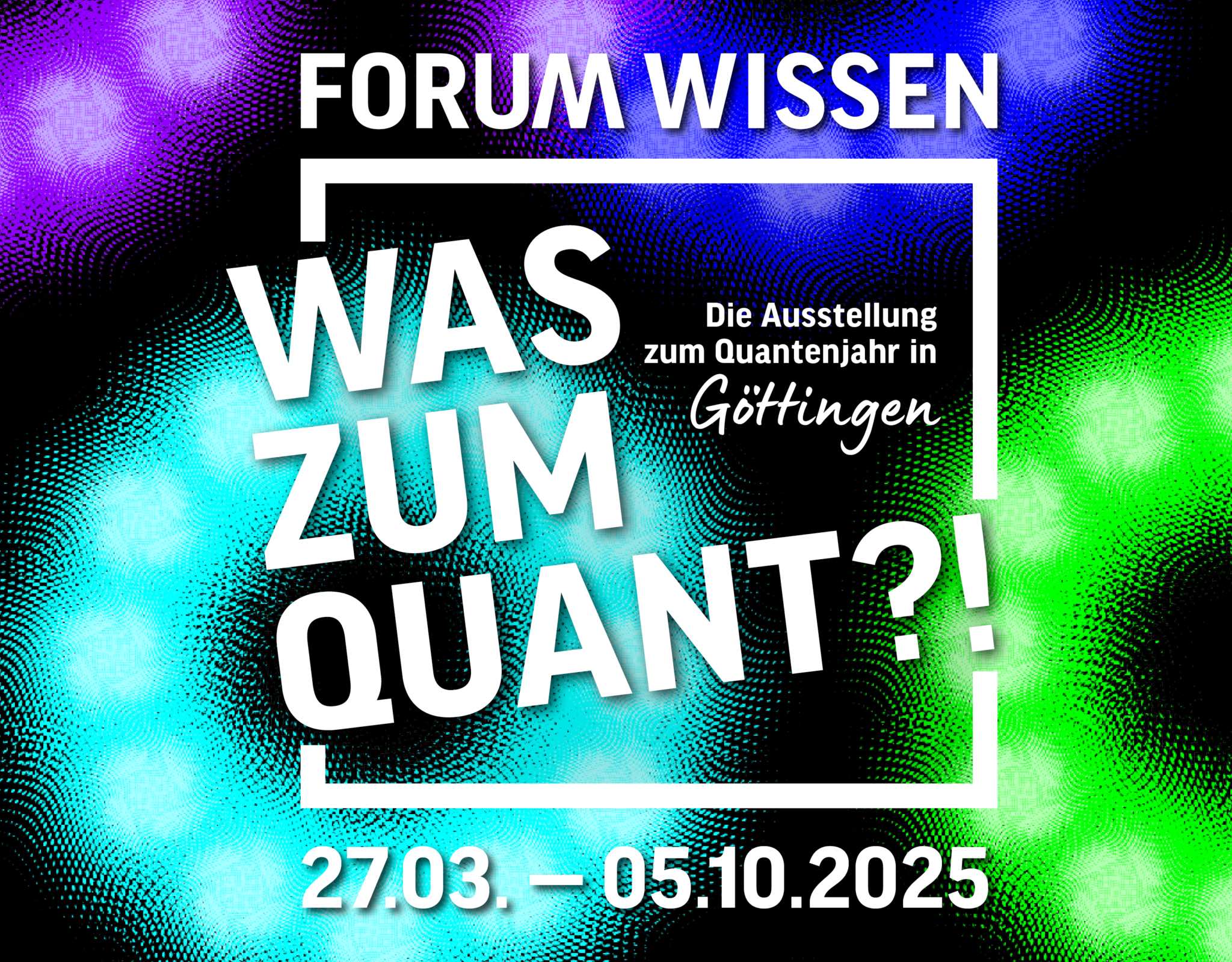
What the Quant?!

The special exhibition “What the Quant?!” at the Knowledge Museum of the University of Göttingen explores the formulation of quantum mechanics in 1925 and takes a look at the present day. The exhibition illustrates how scientists at the University of Göttingen worked together and presents their work in an international research context. It shows which financial, political and social circumstances made their scientific breakthrough possible and which technological developments were based on quantum theory.

Hands-on experiments on quantum physics illustrate that the way the world works at an atomic level is different from what we perceive and experience. The exhibition features examples where quantum technologies are currently in use. Games and theatre sequences developed by youths, as well as artworks, invite visitors to explore the world of quantum mechanics in the Forum Wissen.

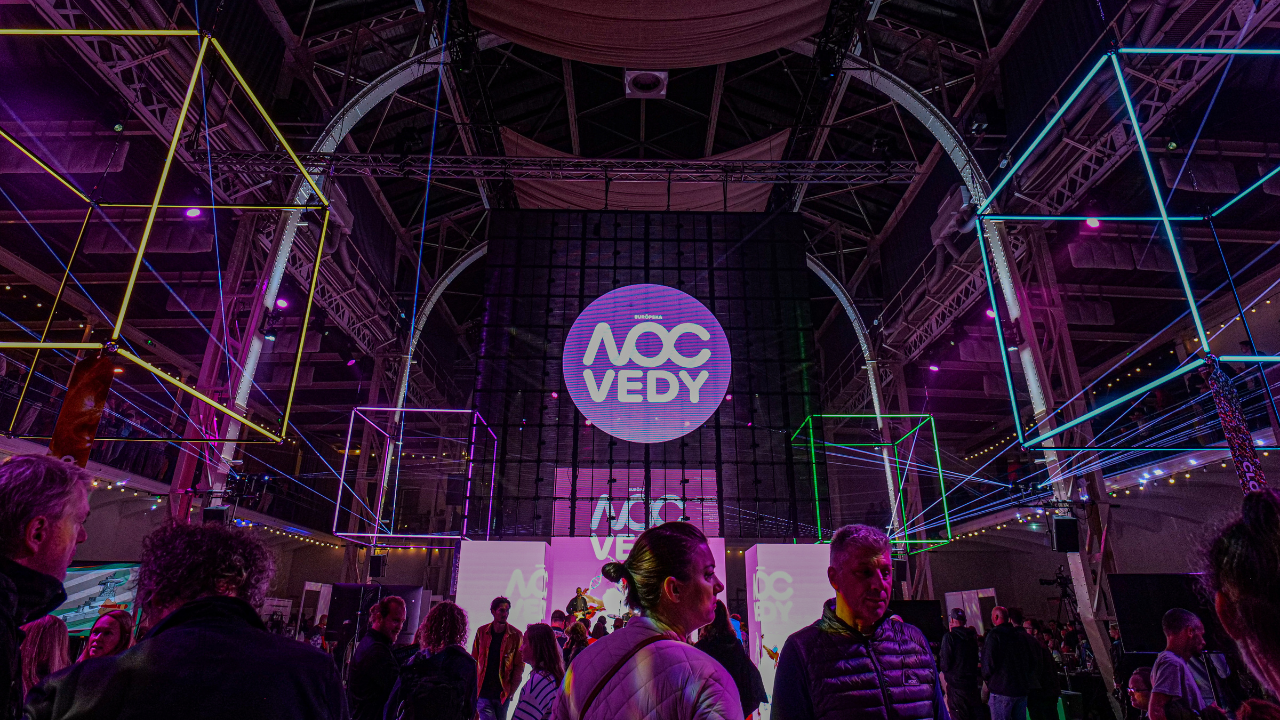
European Researcher’s Night Slovakia

European Researcher’s Night is the biggest science festival in Slovakia, and it brings news from the world of research and innovation in an inspiring and unique way.

The festival is traditionally held on the last Friday of September in Bratislava, Košice, Banská Bystrica, Žilina, Poprad, and other accompanying locations. The day-long program (9 am to 11 pm) offers a series of scientific presentations, discussions, experiments, workshops, technological attractions and so much more!

What 2025 holds

The scientific community is increasingly confronting the limitations of traditional predictive models and linear approaches in analyzing complex systems. Chaos, once understood as a synonym for disorder, is now seen as an inherent property of dynamic processes, where sensitivity to initial conditions and nonlinearity determine their evolution. Instead of perceiving uncertainty as an obstacle, we can interpret it as a catalyst for scientific discoveries and technological innovations.

Last year’s theme of complexity highlighted the interdisciplinary connections in research. This year, as part of the Night of Science, we will explore chaos as a fundamental mechanism of adaptation, evolution, and transformation in various systems. The event will open discussions on how scientific disciplines approach uncertainty and nonlinearity and what paradigmatic shifts these phenomena imply.

Quantum Physics and Chaos: Uncertainty as an Epistemological and Technological Imperative

At the quantum level, uncertainty is a fundamental property of systems. Quantum fluctuations, state superposition, and wave function collapse challenge classical notions of predictability and deterministic understanding of reality. Quantum physics thus provides a natural link between chaotic phenomena and the emergence of new orders, where uncertainty becomes a source of technological innovations.

The International Year of Quantum Science and Technology 2025 offers a unique opportunity to explore the relationship between chaotic processes and quantum mechanics. Quantum algorithms utilize chaotic behavior to solve nonlinear problems, while quantum communication protocols introduce new standards of security and efficiency in information transmission.

Chaos in Nature and Society: Mechanisms of Stability and Transformation

In natural systems, chaos does not merely represent entropy but also stabilization and emergent organization. From climate processes and ecosystem interactions to neural networks and evolutionary mechanisms – nonlinear dynamics lead to the formation of self-organizing structures and adaptive strategies.

Similar principles apply to social and technological systems. Financial markets, digital networks, and information ecosystems exhibit chaotic behavioral patterns, where even minimal perturbations significantly influence global outcomes. This presents challenges for modeling, regulating, and managing complex systems.

Night of Science 2025 will offer an interdisciplinary perspective on the connection between chaos, quantum technologies, natural phenomena, and social dynamics. We will explore how uncertainty shapes innovation processes and what epistemological and technological implications we can extrapolate for a better future. Chaos is not just a challenge – it represents a potential key to new scientific paradigm shifts.

Quantum under the Big Sky: Introducing QCORE

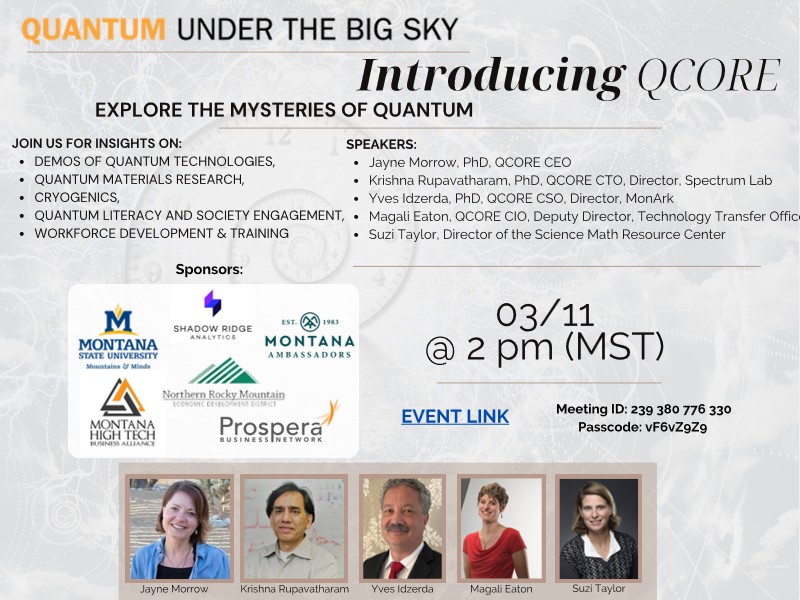
The Montana Photonics & Quantum Alliance presents Quantum under the Big Sky: Introducing QCORE, a webinar featuring Montana State University’s QCORE. QCORE is a new research and technology development center designed to create the foundations for innovation and advocate for growing the quantum economy in Montana and the surrounding region. Currently, funded efforts are creating an applied quantum testbed that will underpin quantum networking, sensing, and computing capabilities and form the foundation for standards development.

Testbed capabilities build on existing programmatic strength in photonics research at Spectrum Lab and the quantum materials’ foundry MonArk to create synergistic capabilities and demonstrate successful pilot-scale quantum technology innovations and networked systems integration.

Join the Webinar to learn more about QCORE Programmatic Thrust Areas, Including:

  • Demonstrations of novel quantum technologies including quantum computing, sensors, and quantum networking;
  • quantum materials research;
  • cryogenics;
  • quantum literacy and society engagement;
  • workforce development, training;
  • promoting the growth of the quantum innovation ecosystem and global supply chain.