Q2B25 Tokyo

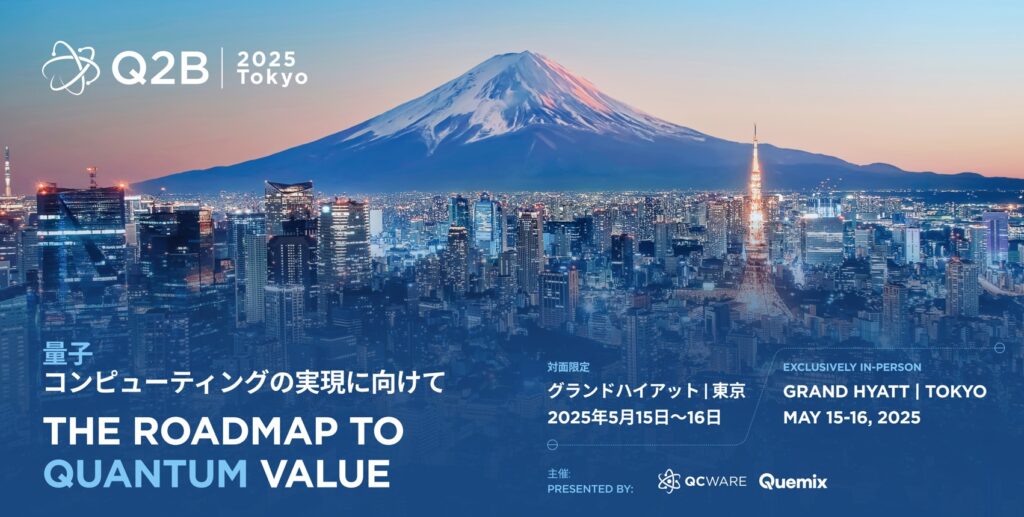
Q2B events (Tokyo May 15-16, 2025/ Paris September 24-25 / Silicon Valley December 9-10-11) are premier global conferences that bring together industry leaders, researchers, and innovators to explore the latest advancements in quantum technologies and their real-world applications and bring awareness around them. Organized by QC Ware, Q2B events focus on bridging the gap between quantum technology and business, featuring talks, panels, and demonstrations from top quantum hardware and software providers, enterprises, and academic institutions. It also focuses on national and international quantum policies and other aspects like quantum workforce building, promotion of women & diversity in quantum.

quantum2025.fr

The aim of this website is to list the events organized in France in connection with the quantum year and to list existing French resources for the general public. The site is collaborative but moderated: anyone can suggest an event or a resource.

PQI 2025

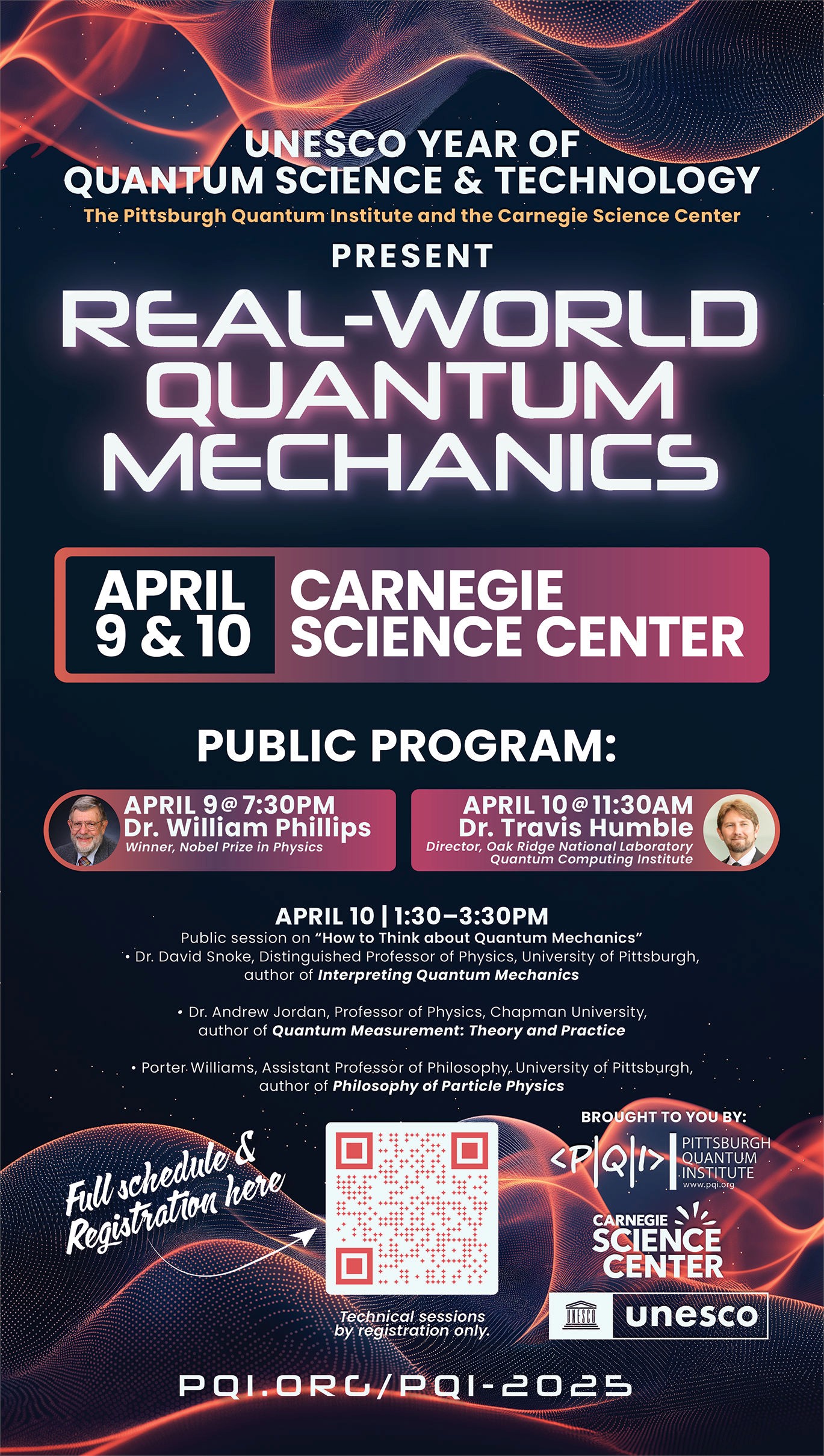
PQI 2025 will take place on April 9 & 10, 2025 at the Carnegie Science Center in Pittsburgh, PA. This conference is a collaboration between the Pittsburgh Quantum Institute and the Carnegie Science Center in celebration of the UNESCO International Year of Quantum Science and Technology. The event features two public lectures from Nobel Prize winner, Professor William D. Phillips, and Director of the Quantum Science Center, Dr. Travis Humble. The event will also include technical sessions, a poster session for graduate students, and a quantum college fair for high school students.

IYQ’25 Conference

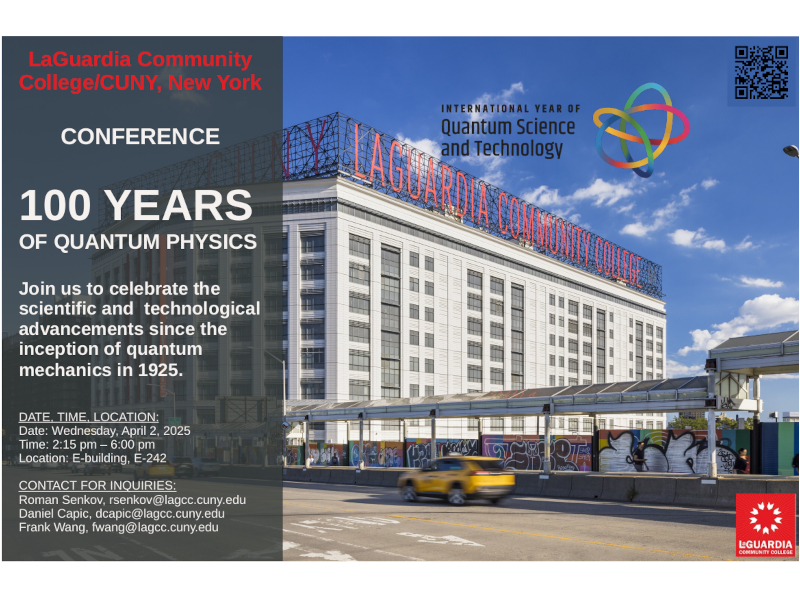
To celebrate a century of quantum physics, LaGuardia Community College (CUNY, New York) will host an interdisciplinary in-person conference exploring the historical developments, contemporary advancements, and future prospects of quantum science. We invite everyone to an extraordinary celebration featuring talks by interdisciplinary speakers from LaGuardia Community College and beyond about the history, current frontiers, and future of the quantum revolution. This event is aimed at the general public: seasoned physicists, aspiring engineers, or curious students are all welcome.

The 13th Annual International Hackathon for Social Good (April 25 – 27, 2025)

This year, the NYUAD Hackathon is focusing on one of the most transformative technologies of our time: Quantum Computing (QC), along with the role of Artificial Intelligence (AI) in advancing QC, while addressing the challenges outlined in the United Nations Sustainable Development Goals (SDGs).

We are proud to take part in the global celebration activities of the UN’s declaration of 2025 as the International Year of Quantum Science and Technology (IYQ).

Revolución Cuántica

El Instituto Tecnológico Superior de Calkiní (ITESCAM) propone organizar un ciclo de conferencias de dos días, del 3 al 4 de abril de 2025. El título del evento es “Revolución Cuántica: Ciencia, Tecnología y Futuro”. Este evento está diseñado para ser mayoritariamente divulgativo, con el objetivo de hacer accesibles los conceptos de la ciencia y la tecnología cuántica a toda la comunidad, independientemente de su formación en física.

Las actividades incluirán charlas que abordarán temas como la computación cuántica, las aplicaciones médicas de la tecnología cuántica y su impacto en la vida cotidiana, aplicaciones en energías renovables y nanomateriales. Los contenidos se presentarán de manera sencilla y comprensible, utilizando ejemplos prácticos y evitando tecnicismos, para asegurar que todos los asistentes puedan comprender y apreciar la relevancia de estos avances.

Spring Series Talk: Molecular Self-Assembly: A Lego Movie through the lens of Quantum Mechanical Simulations

Chemistry Seminar: Sivanujan Suthaharan

Sivanujan Suthaharan, a master’s student from Illinois State University Department of Chemistry, will present a seminar titled “Molecular Self-Assembly: A Lego Movie Through the Lens of Quantum Mechanical Simulations” at 3 p.m. on Friday, March 7, 2025, in Julian Hall, room 225. Refreshments will be served prior to the seminar in Julian Hall, room 224.

Quantum Sciences & Technologies: Transforming Chemistry with Quantum, HPC, and AI

The promise of quantum is real, and we are beginning to see where this technology can have the greatest impact. Decades of research and development point to the tremendous impact quantum computing will have on the simulation of quantum systems, especially for chemistry and materials science. As the fidelity and scale of quantum machines improve, we will first see the scientific quantum advantage, solving classes of scientifically interesting and classically intractable problems. As we scale to quantum supercomputers, we will achieve industrial quantum advantage and solve the world’s most pressing challenges through quantum-enabled advances in chemistry, biochemistry, and materials science. Scaled quantum systems won’t exist in isolation but will operate alongside AI and classical supercomputing.

Come join Microsoft for a lecture and workshop to bring together High-Performance Computing, AI, and early quantum systems and learn how it can accelerate scientific discovery.

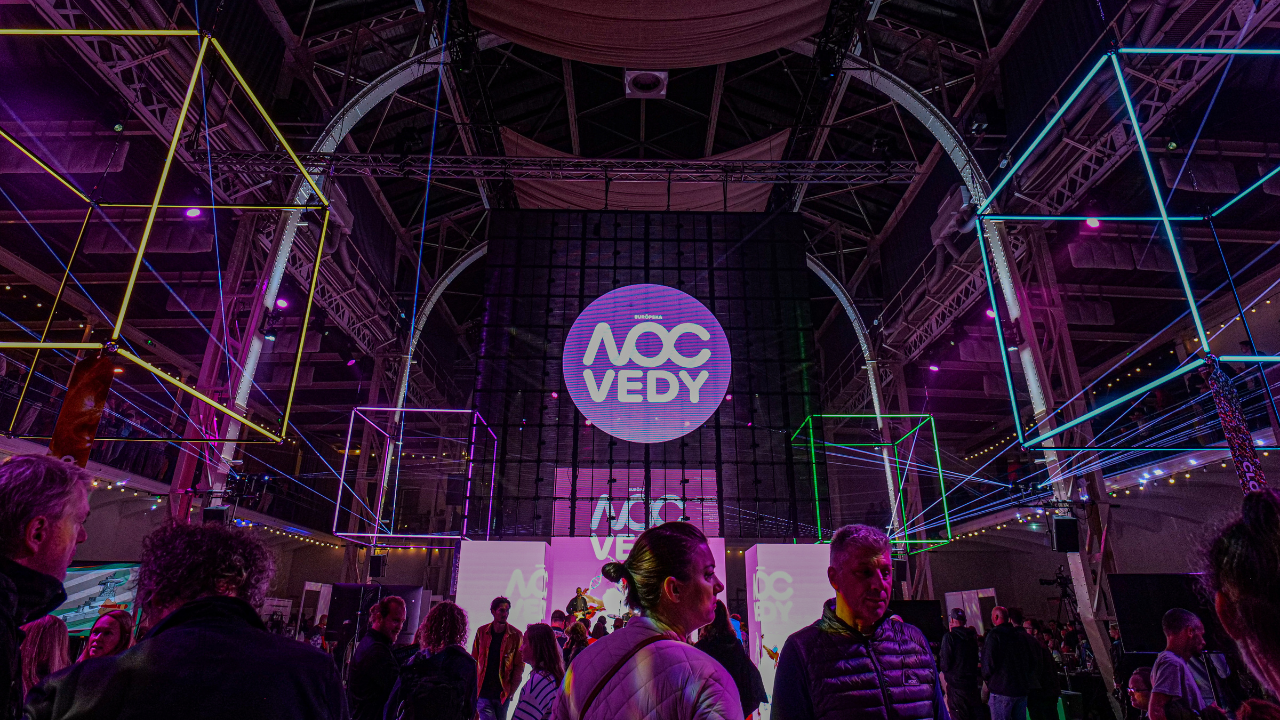
European Researcher’s Night Slovakia

European Researcher’s Night is the biggest science festival in Slovakia, and it brings news from the world of research and innovation in an inspiring and unique way.

The festival is traditionally held on the last Friday of September in Bratislava, Košice, Banská Bystrica, Žilina, Poprad, and other accompanying locations. The day-long program (9 am to 11 pm) offers a series of scientific presentations, discussions, experiments, workshops, technological attractions and so much more!

What 2025 holds

The scientific community is increasingly confronting the limitations of traditional predictive models and linear approaches in analyzing complex systems. Chaos, once understood as a synonym for disorder, is now seen as an inherent property of dynamic processes, where sensitivity to initial conditions and nonlinearity determine their evolution. Instead of perceiving uncertainty as an obstacle, we can interpret it as a catalyst for scientific discoveries and technological innovations.

Last year’s theme of complexity highlighted the interdisciplinary connections in research. This year, as part of the Night of Science, we will explore chaos as a fundamental mechanism of adaptation, evolution, and transformation in various systems. The event will open discussions on how scientific disciplines approach uncertainty and nonlinearity and what paradigmatic shifts these phenomena imply.

Quantum Physics and Chaos: Uncertainty as an Epistemological and Technological Imperative

At the quantum level, uncertainty is a fundamental property of systems. Quantum fluctuations, state superposition, and wave function collapse challenge classical notions of predictability and deterministic understanding of reality. Quantum physics thus provides a natural link between chaotic phenomena and the emergence of new orders, where uncertainty becomes a source of technological innovations.

The International Year of Quantum Science and Technology 2025 offers a unique opportunity to explore the relationship between chaotic processes and quantum mechanics. Quantum algorithms utilize chaotic behavior to solve nonlinear problems, while quantum communication protocols introduce new standards of security and efficiency in information transmission.

Chaos in Nature and Society: Mechanisms of Stability and Transformation

In natural systems, chaos does not merely represent entropy but also stabilization and emergent organization. From climate processes and ecosystem interactions to neural networks and evolutionary mechanisms – nonlinear dynamics lead to the formation of self-organizing structures and adaptive strategies.

Similar principles apply to social and technological systems. Financial markets, digital networks, and information ecosystems exhibit chaotic behavioral patterns, where even minimal perturbations significantly influence global outcomes. This presents challenges for modeling, regulating, and managing complex systems.

Night of Science 2025 will offer an interdisciplinary perspective on the connection between chaos, quantum technologies, natural phenomena, and social dynamics. We will explore how uncertainty shapes innovation processes and what epistemological and technological implications we can extrapolate for a better future. Chaos is not just a challenge – it represents a potential key to new scientific paradigm shifts.