


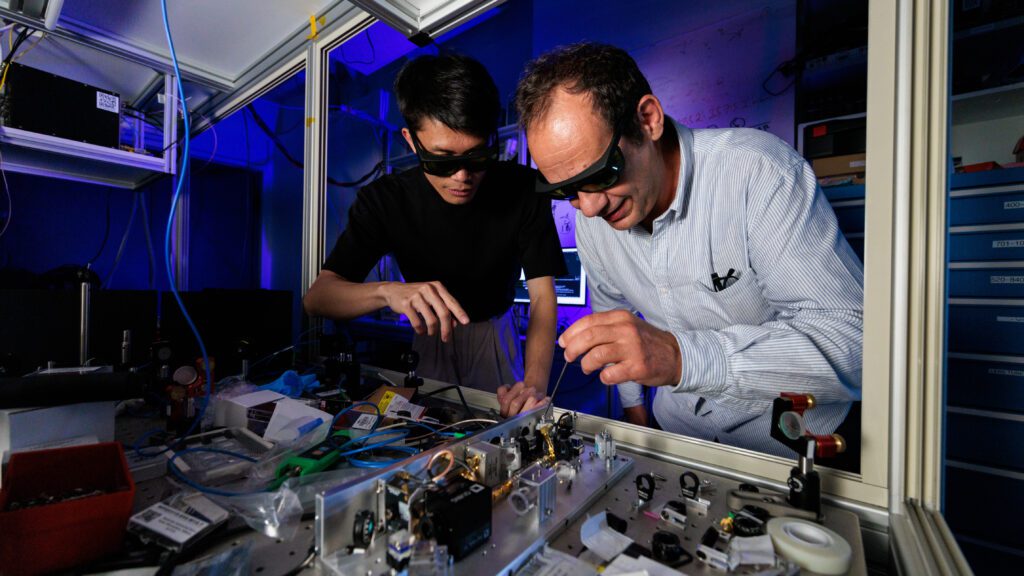
When quantum engineer Aitor Villar watched a rocket blast off from the US in November 2025, he was seeing almost ten years’ work take flight. This was the launch of SpeQtre—a satellite he helped design—set to demonstrate space-to-ground quantum communication.
Villar’s story is a wonderful example of the careers possible for students choosing a quantum path. His journey began with a PhD at the Centre for Quantum Technologies in Singapore. Arriving with a background in telecoms engineering, he started building quantum satellites, graduated to join a company spun off from the group, and has celebrated as the team’s first spacecraft entered orbit. Villar is part of a growing worldwide workforce in the emerging quantum industry. The total number of “quantum-engaged” workers globally may be close to 200,000, according to an estimate by the US-based Quantum Economic Development Consortium (QED-C) in its State of the Global Quantum Industry 2025 report. The consortium counted over 7,400 openings for quantum jobs in 2024 alone.
Career paths in quantum
These roles encompass a huge diversity. There are deeply technical and hands-on engineering jobs like Villar’s, but also software, business, and community positions. Take the roughly 100 students who have graduated from the PhD programme at CQT since 2007 as a sample: they have found a whole universe of opportunities.
Thi Ha Kyaw, for example, completed his PhD at CQT in 2018 in theoretical physics, focusing on quantum computing. He chose the software route. After a postdoc in Toronto, Canada, he joined LG Electronics, where he now leads a quantum computing research group. He settled in Canada but keeps strong ties to his student home: he is organising a conference in Singapore in 2026 to celebrate his PhD advisor’s 65th birthday.
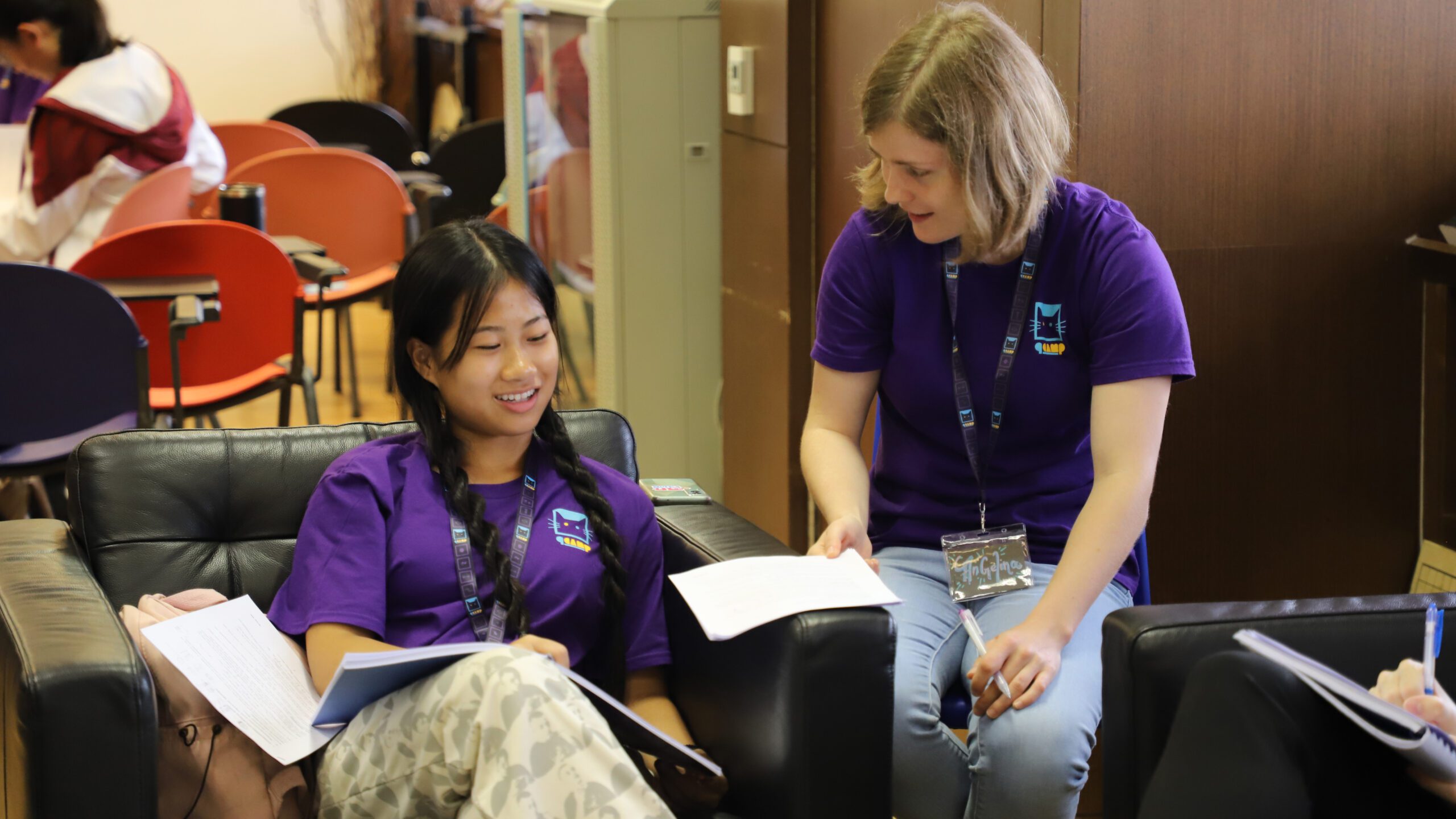
Then there’s Angelina Frank. She went into the quantum industry, focusing on software first, taking a role as technical product manager at the Singapore HQ of startup Horizon Quantum after she graduated from CQT in 2023. During her PhD, she had organised camps for high-school students and co-established a national Quantum Young Researchers Association.
Pursuing that community empowerment, Frank moved next to QAI Ventures, a Switzerland-headquartered venture firm that opened a Singapore office in 2025. She became their Head of Science and Technology APAC. The first project? Organising a quantum hackathon.
Of course, the traditional path from PhD and to a career in academia is still there for students bitten by the research bug. Anurag Anshu, another 2018 CQT graduate, is now an Assistant Professor of Computer Science at Harvard University in the US. Meanwhile, Nelly Ng, who did a final-year project in CQT as an undergraduate before heading overseas for her PhD, came back as a CQT Fellow in 2025. This was after she was appointed an Assistant Professor at Nanyang Technological University, Singapore (NTU Singapore).
What’s different these days is the variety of alternative employers competing for quantum skills.
Top scholarships for talent
Seeing that demand for quantum-trained talent is intense and growing, Singapore in 2024 launched a National Quantum Scholarships Scheme. The programme will support up to 100 PhD and 100 Master’s students over five years.
Lee Kai Xiang was among the first scholarship recipients. His project, part of Singapore’s National Quantum Processor Initiative (NQPI), involves building a neutral atom array computer. He got hooked by the idea of trying to build it and now enjoys problem-solving in the lab.
NQPI is one of several national-level quantum programmes established under Singapore’s National Quantum Strategy to focus on translation and industry engagement, complementing the curiosity-driven basic research at CQT.
Through these programmes, students get to work on real-world applications. Recent CQT PhD graduate Du Jinyi, for example, collaborated with the National Quantum-Safe Network testbed to trial an exceptionally bright chip-based source of entangled photons over a record distance of 155 km of deployed telecom fibre. This kind of technology might be used to make a future quantum internet.
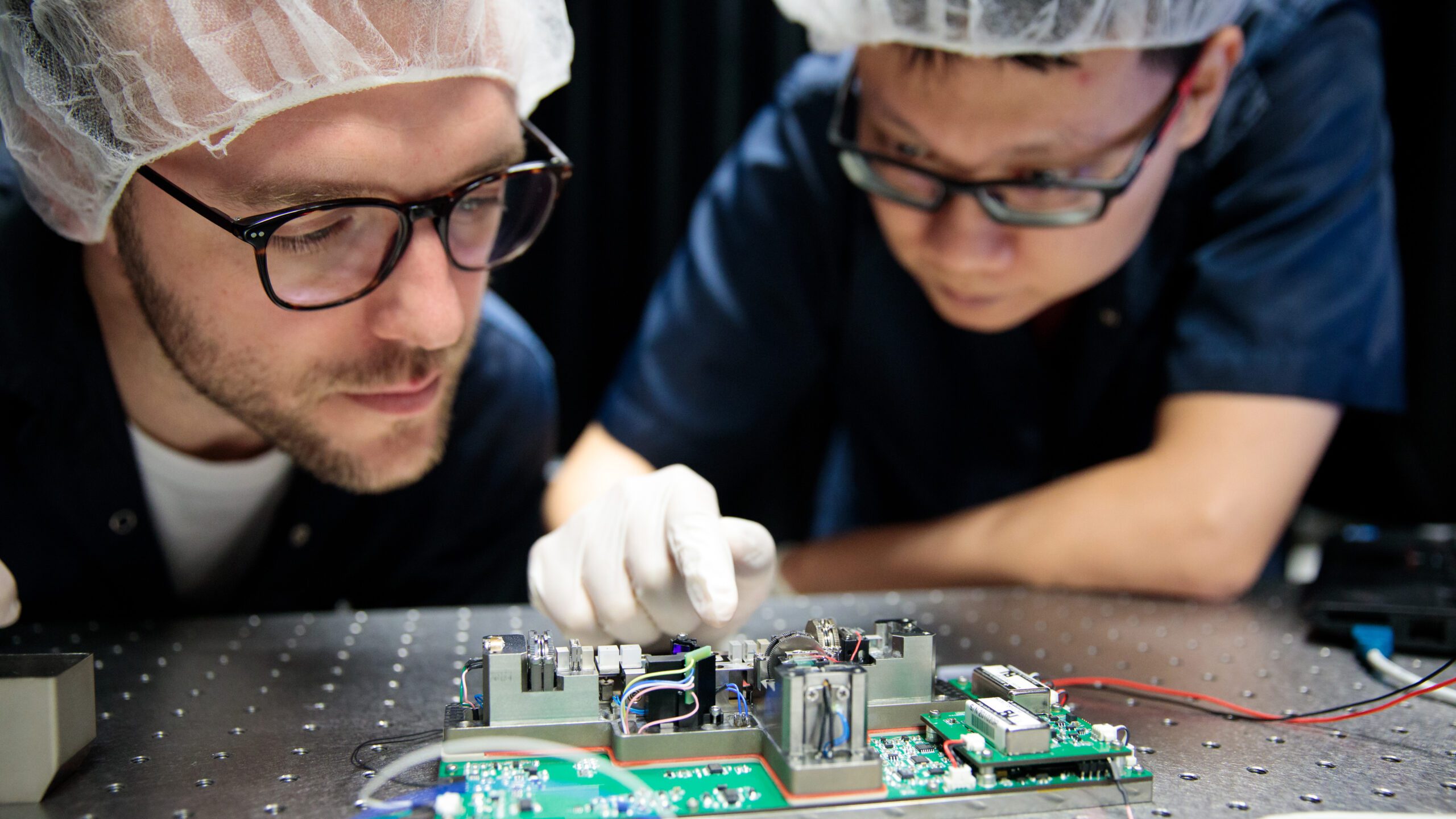
In another lab, PhD student Paul Tan worked with colleagues to integrate a superconducting quantum processor for the National Quantum Computing Hub using components from many suppliers. The processor will be used to explore how quantum computing could tackle challenges in fields from finance to drug discovery.
Is the PhD essential? Not for all industry jobs. An analysis of quantum job listings by the Chicago Quantum Exchange, published in 2024, found that a PhD was a requirement for less than half. That can make a Master’s degree a good entry route, especially for students coming from different backgrounds who want to pick up quantum skills.
The Master’s scholarships under Singapore’s National Quantum Scholarships Scheme are tenable for selected existing courses where students commit to working on a quantum project. These include master’s by research programmes in physics, engineering, and chemistry.
PhD scholars join CQT, matriculating at the National University of Singapore, NTU Singapore, or the Singapore University of Technology and Design, all of which host nodes of the national centre.
Both scholarships offer attractive terms and are open to students of all nationalities. Undergraduate students can also ask CQT for an internship before they decide to apply.
With its clear strategy to be a hub for the development and deployment of quantum technologies, Singapore is fertile ground to launch a quantum career. Just ask Villar. While his PhD research aimed at space, he grew deep roots. The Spanish researcher, whose satellite will create quantum connections between countries, has chosen to call Singapore home.
The diverse experiences of these PhD graduates still give only a small sample of the different types of career paths available in quantum. As researchers and engineers, they have joined a field that also needs educators, communicators, diplomats, economists, and policymakers. In Singapore and around the world, as the quantum industry grows, so do the opportunities.