

International Year of Quantum and the Decade Ahead

An Editorial from Physical Review X Quantum Announcing the Launch of the IYQ Collection

In the summer of 1925, on the windswept island of Helgoland, a young Werner Heisenberg outlined matrix equations that would forever change our understanding of nature. Concurrent work by Erwin Schrödinger, who postulated a complementary wave-equation theory and showed its equivalence to Heisenberg’s matrix formalism, helped the scientific community to gradually embrace the counterintuitive concepts faced at the time. Together, these revolutionary principles became the cornerstone of quantum mechanics—a theory that, over the next century, would face relentless scrutiny [1] and ultimately serve as the foundation for technologies capable of manipulating single atoms and photons [2,3]. Today, as the world witnesses the development of quantum computers and grapples with their implications [4], UNESCO has declared 2025 the International Year of Quantum Science and Technology.

To celebrate this milestone, APS and the Physical Review journals reflect on their shared journey with quantum science—one of breathtaking discoveries and transformative ideas [5]. But what role does a young journal like PRX Quantum play in this momentous celebration?
Any historian would argue that understanding the past is essential to shaping the future. At PRX Quantum, we constantly seek breakthroughs that redefine boundaries and open new frontiers. To honor 100 years of quantum mechanics, we present a special collection. This begins with a historical perspective [6] that explores the intricate dance between fundamental science and its technological offspring. Building on this perspective, we examined our recent publications and selected a handful of papers that offer a glimpse into the future of the field.

The path to realizing century-old thought experiments—once likened by Schrödinger to endeavors as silly as trying to raise Ichthyosauria in the zoo—required countless ingenious technical and conceptual breakthroughs. This fascinating journey is captured in Prof. Haroche’s captivating article [6], which highlights the central role lasers have played in quantum science.

As Prof. Haroche notes, we are now witnessing a renaissance of research on Rydberg atoms. Quantum computing with neutral atoms, prominently featured in our recent publications, is poised to significantly influence the field in the coming years. Remarkably, the laser’s offspring, optical tweezers [7,8], have emerged as a ubiquitous tool driving many breakthroughs in this arena. We highlight techniques to assemble atom-arrays [9], an architecture to effectively build a large-scale fault-tolerant quantum computer [10], and strategies to achieve record-high performances [11]. In concert, those results show a compelling path forward.

Superconducting qubits [12], a cornerstone of many quantum computing architectures, arose as an alternative system that drew heavily from the successes of cavity QED with atomic systems. They offer superior speed and practicality owing to their integration into standard microwave electronics. While transmons remain the dominant paradigm for superconducting qubits, there is growing interest in a related cousin, the fluxonium qubit. With its exceptional coherence and high anharmonicity, offering greater flexibility in circuit design, fluxonium holds significant promise. We anticipate exciting developments in this area [13,14].

The quantum landscape is vast, offering a playground of platforms and physical systems for exploring fundamental questions or pursuing specific applications. While it’s impossible to cover all such pathways, Prof. Haroche’s article inspired us to highlight the latest advances in integrated photonics [15], given the pivotal role of optics in quantum research. After all, photons enabled the violation of Bell’s inequalities, showcasing one of quantum mechanics’ most distinguishing features [16–18]. Likewise, optical cooling and trapping have led to some of the most striking demonstrations of quantum statistical principles, most notably the emergence of Bose-Einstein condensates [19,20]. We couldn’t resist offering a glance at the latest developments in controlled quantum chemistry with ultracold polar molecules [21].

In previous decades, the focus was on controlling individual quantum systems. Today’s challenges lie in managing interactions, scaling up system sizes, and verifying the status of large quantum systems or operations. Another trend observed in our journal is the development of theoretical tools for efficient tomography [22], and explorations on how to best bring together quantum processing and machine learning within formalized computer science theories [23].

Several fundamental questions remain about the key ingredients, and correct mix, needed to make a processor truly quantum—or, conversely, one that can be efficiently simulated classically [24]. Our journal reflects on the ongoing flurry of innovative algorithms, smart architectural choices, and hybrid techniques that steadily advance the overarching goal of fault-tolerant quantum computing. Adaptive quantum circuits is one such example. By leveraging mid-circuit measurements and feedforward, a promising approach shows how to efficiently prepare many-body entangled states even on low-depth near-term hardware [25].

Error correction plays a pivotal role in strengthening the quantum community’s confidence towards the feasibility of building a large-scale quantum machine [26,27]. Its history is just as fascinating as it was decisive in boosting worldwide investment in quantum science and technology. Research in this fast-paced area spans a vast spectrum, from highly mathematical and abstract code design to hardware-integrated and engineering-driven solutions. As a small glimpse into recent developments, we highlight three outstanding contributions: an ingenious implementation of the hallmark Steane code on ion traps [28]; a protocol that simplifies the implementation of low-density parity-check (LDPC) codes [29]—a resource-efficient alternative to surface codes; and a fundamental study that draws inspiration from topological error correction to deepen our understanding of phases of matter [30].

As has been long put forward by Shannon, key concepts in information theory are deeply connected with notions in thermodynamics, such as entropy. The connection between these fields—and the role of knowledge in thermodynamics—has a rich history [31], with a notable example being the resolution of Maxwell’s demon paradox [32]. At the same time, quantum mechanics is fundamentally a science of information. We couldn’t conclude this collection without highlighting the fascinating ideas emerging at the intersection of these disciplines. Recent advances in quantum thermodynamics further strengthen this connection, linking concepts from computational complexity to the study of the cost of thermal operations [33]. These costs have profound implications for quantum technologies [34] and are also tied to fundamental precision bounds, as demonstrated by a novel methodology that examines trade-offs in nonequilibrium Markovian open quantum systems [35].

Many discoveries arise from unexpected connections. We hope this curated collection sparks inspiration and insight—whether through the experimental and theoretical methods it showcases or the conceptual ideas it advances. This collection is but a snapshot, capturing some of the most compelling research published on our pages in recent months. The scope of PRX Quantum and quantum research extends far beyond what we could include here. The forest of quantum science consists of many trees and there is much fruit to be harvested in its varied branches, such as quantum sensors, metrology, and communications, which we leave for future spotlights. We eagerly anticipate the breakthroughs you will make in these and other areas, shaping the next decade of quantum science and technology.

References (35)

  1. Among multiple tests, the very linearity of Shrödinger’s equations has been experimentally verified as shown here: J. J. Bollinger, D. J. Heinzen, Wayne M. Itano, S. L. Gilbert, and D. J. Wineland, Test of the linearity of quantum mechanics by rf spectroscopy of the 9⁢Be+ ground state, Phys. Rev. Lett. 63, 1031 (1989).
  2. Serge Haroche, Nobel lecture: Controlling photons in a box and exploring the quantum to classical boundary, Rev. Mod. Phys. 85, 1083 (2013).
  3. David J. Wineland, Nobel lecture: Superposition, entanglement, and raising Schrödinger’s cat, Rev. Mod. Phys. 85, 1103 (2013).
  4. Ivan H. Deutsch, Harnessing the power of the second quantum revolution, PRX Quantum 1, 020101 (2020).
  5. See a collection of Quantum Milestones published by Physics Magazine throughout 2025, and an upcoming collection on quantum foundations organized by the Physical Review journals.
  6. S. Haroche, Laser, offspring and powerful enabler of quantum science, PRX Quantum 6, 010102 (2025).
  7. A. Ashkin, Acceleration and trapping of particles by radiation pressure, Phys. Rev. Lett. 24, 156 (1970).
  8. A. Ashkin, J. M. Dziedzic, J. E. Bjorkholm, and Steven Chu, Observation of a single-beam gradient force optical trap for dielectric particles, Opt. Lett. 11, 288 (1986).
  9. M. A. Norcia, H. Kim, W. B. Cairncross, M. Stone, A. Ryou, M. Jaffe, M. O. Brown, K. Barnes, P. Battaglino, T. C. Bohdanowicz et al., Iterative Assembly of 171⁢Yb Atom Arrays with Cavity-Enhanced Optical Lattices, PRX Quantum 5, 030316 (2024).
  10. Yiyi Li and Jeff D. Thompson, High-rate and high-fidelity modular interconnects between neutral atom quantum processors, PRX Quantum 5, 020363 (2024).
  11. R. B.-S. Tsai, X. Sun, A. L. Shaw, R. Finkelstein, and M. Endres, Benchmarking and fidelity response theory of high-fidelity Rydberg entangling gates, PRX Quantum 6, 010331 (2025).
  12. Jens Koch, Terri M. Yu, Jay Gambetta, A. A. Houck, D. I. Schuster, J. Majer, Alexandre Blais, M. H. Devoret, S. M. Girvin, and R. J. Schoelkopf, Charge-insensitive qubit design derived from the Cooper pair box, Phys. Rev. A 76, 042319 (2007).
  13. Helin Zhang, Chunyang Ding, D. K. Weiss, Ziwen Huang, Yuwei Ma, Charles Guinn, Sara Sussman, Sai Pavan Chitta, Danyang Chen, Andrew A. Houck, Jens Koch, and David I. Schuster, Tunable inductive coupler for high-fidelity gates between fluxonium qubits, PRX Quantum 5, 020326 (2024).
  14. Wei-Ju Lin, Hyunheung Cho, Yinqi Chen, Maxim G. Vavilov, Chen Wang, and Vladimir E. Manucharyan, 24 days-stable CNOT gate on fluxonium qubits with over 99.9% fidelity, PRX Quantum 6, 010349 (2025).
  15. Y. Pang, J. E. Castro, T. J. Steiner, L. Duan, N. Tagliavacche, M. Borghi, L. Thiel, N. Lewis, J. E. Bowers, M. Liscidini, and G. Moody, Versatile chip-scale platform for high-rate entanglement generation using an AlGaAs microresonator array, PRX Quantum 6, 010338 (2025).
  16. N. David Mermin, Is the Moon there when nobody looks? Reality and the quantum theory, Phys. Today 78, 28 (2025).
  17. Nicolas Brunner, Daniel Cavalcanti, Stefano Pironio, Valerio Scarani, and Stephanie Wehner, Bell nonlocality, Rev. Mod. Phys. 86, 419 (2014).
  18. Scientific Background on the Nobel Prize in Physics 2022, “FOR EXPERIMENTS WITH ENTANGLED PHOTONS, ESTABLISHING THE VIOLATION OF BELL INEQUALITIES AND PIONEERING QUANTUM INFORMATION SCIENCE” Advanced information. NobelPrize.org. Nobel Prize Outreach (2025). https://www.nobelprize.org/prizes/physics/2022/advanced-information/.
  19. E. A. Cornell and C. E. Wieman, Nobel lecture: Bose-Einstein condensation in a dilute gas, the first 70 years and some recent experiments, Rev. Mod. Phys. 74, 875 (2002).
  20. Wolfgang Ketterle, Nobel lecture: When atoms behave as waves: Bose-Einstein condensation and the atom laser, Rev. Mod. Phys. 74, 1131 (2002).
  21. S. Finelli, A. Ciamei, B. Restivo, M. Schemmer, A. Cosco, M. Inguscio, A. Trenkwalder, K. Zaremba-Kopczyk, M. Gronowski, M. Tomza, and M. Zaccanti, Ultracold Li⁢Cr: A new pathway to quantum gases of paramagnetic polar molecules, PRX Quantum 5, 020358 (2024).
  22. R. King, D. Gosset, R. Kothari, and R. Babbush, Triply efficient shadow tomography, PRX Quantum 6, 010336 (2025).
  23. Haimeng Zhao, Laura Lewis, Ishaan Kannan, Yihui Quek, Hsin-Yuan Huang, and Matthias C. Caro, Learning quantum states and unitaries of bounded gate complexity, PRX Quantum 5, 040306 (2024).
  24. Yifan Zhang, and Yuxuan Zhang, Classical simulability of quantum circuits with shallow magic depth, PRX Quantum 6, 010337 (2025).
  25. Kevin C. Smith, Abid Khan, Bryan K. Clark, S. M. Girvin, and Tzu-Chieh Wei, Constant-depth preparation of matrix product states with adaptive quantum circuits, PRX Quantum 5, 030344 (2024).
  26. Peter W. Shor, Scheme for reducing decoherence in quantum computer memory, Phys. Rev. A 52, R2493 (1995).
  27. Andrew Steane, Multiple-particle interference and quantum error correction, Proc. R. Soc. Lond. A 452, 2551 (1996).
  28. Lukas Postler, Friederike Butt, Ivan Pogorelov, Christian D. Marciniak, Sascha Heußen, Rainer Blatt, Philipp Schindler, Manuel Rispler, Markus Müller, and Thomas Monz, Demonstration of fault-tolerant steane quantum error correction, PRX Quantum 5, 030326 (2024).
  29. Noah Berthusen, Dhruv Devulapalli, Eddie Schoute, Andrew M. Childs, Michael J. Gullans, Alexey V. Gorshkov, and Daniel Gottesman, Toward a 2D local implementation of quantum low-density parity-check codes, PRX Quantum 6, 010306 (2025).
  30. Yaodong Li, Nicholas O’Dea, and Vedika Khemani, Perturbative stability and error-correction thresholds of quantum codes, PRX Quantum 6, 010327 (2025).
  31. A. Bérut, A. Arakelyan, A. Petrosyan, Sergio Ciliberto, Raoul Dillenschneider, and Eric Lutz, Experimental verification of Landauer’s principle linking information and thermodynamics, Nature 483, 187 (2012).
  32. Koji Maruyama, Franco Nori, and Vlatko Vedral, Colloquium: The physics of Maxwell’s demon and information, Rev. Mod. Phys. 81, 1 (2009).
  33. A. Munson, N. B. T. Kothakonda, J. Haferkamp, N. Yunger Halpern, J. Eisert, and P. Faist, Complexity-constrained quantum thermodynamics, PRX Quantum 6, 010346 (2025).
  34. Alexia Auffèves, Quantum technologies need a quantum energy initiative, PRX Quantum 3, 020101 (2022).
  35. Tan Van Vu, Fundamental bounds on precision and response for quantum trajectory observables, PRX Quantum 6, 010343 (2025).

This piece was posted on the APS Physical Review Journals website.

Brilliant Poetry Competition Returns in 2025, Celebrating The International Year of Quantum 

MEDIA RELEASE

Entries open on World Poetry Day – 21 March 2025

Edinburgh, Thursday 13th March 2025. The Brilliant Poetry Competition is back for its second year, celebrating the rich connections between science and poetry. Following the success of the inaugural competition, which drew 375 entries from 36 countries, the 2025 edition aims to be even more ambitious, fostering creative exploration of quantum themes.

The initiative is led by Professor Sam Illingworth, science poetry academic at Edinburgh Napier University, and Kylie Ahern, publisher of The Brilliant – a world-leading science communication platform – and CEO of STEM Matters.

This year, the competition proudly aligns with the International Year of Quantum Science and Technology (IYQ 2025), marking a century since the foundations of quantum mechanics. Poets are invited to engage with the wonders of quantum science, alongside any other scientific themes that inspire them.

A Platform for Science-Inspired Poetry

“The best poetry, like the best science, is about curiosity, observation, and making sense of the world in new ways,” said Professor Sam Illingworth. “Brilliant (Quantum) Poetry is a space for writers to explore science with both wonder and precision, creating work that resonates across disciplines.”

“We were astounded by the emotional depth and creative ingenuity in last year’s entries,” said Kylie Ahern. “The links between the arts and sciences are undeniable – both demand innovation, imagination, and a deep engagement with the unknown. We cannot wait to see how poets bring quantum science and other fields to life through verse.”

Meet the Judges

This year’s competition features an esteemed panel of judges, including Diego Golombek, an internationally recognised biologist, science communicator, and award-winning author. Golombek, who has long championed the intersection of science and culture, brings a unique perspective to evaluating work that bridges scientific thought with poetic expression.

Prizes and Key Dates

The Brilliant (Quantum) Poetry Competition is free to enter and open to writers worldwide.

  • Submissions open: 21 March 2025 (World Poetry Day)
  • Deadline: 20 June 2025
  • Prizes: £1,000 for first place, £500 for second, £250 for third. Winning poems will be published and featured in a live online reading event.

For further information:

Europe
Professor Sam Illingworth, Edinburgh Napier University
📞 +44 (0) 7886 238 517
📧 S.Illingworth@napier.ac.uk

USA/Asia/Australia
Kylie Ahern, STEM Matters
📞 +61 (0) 416 196 942
📧 kylie@stemmatters.com.au

Join us in celebrating the fusion of science and poetry – where words meet wonder.

What Does “Quantum” Mean?

2025 is The International Year of Quantum Science and Technology.  Let’s start by asking what does this word “quantum” mean?

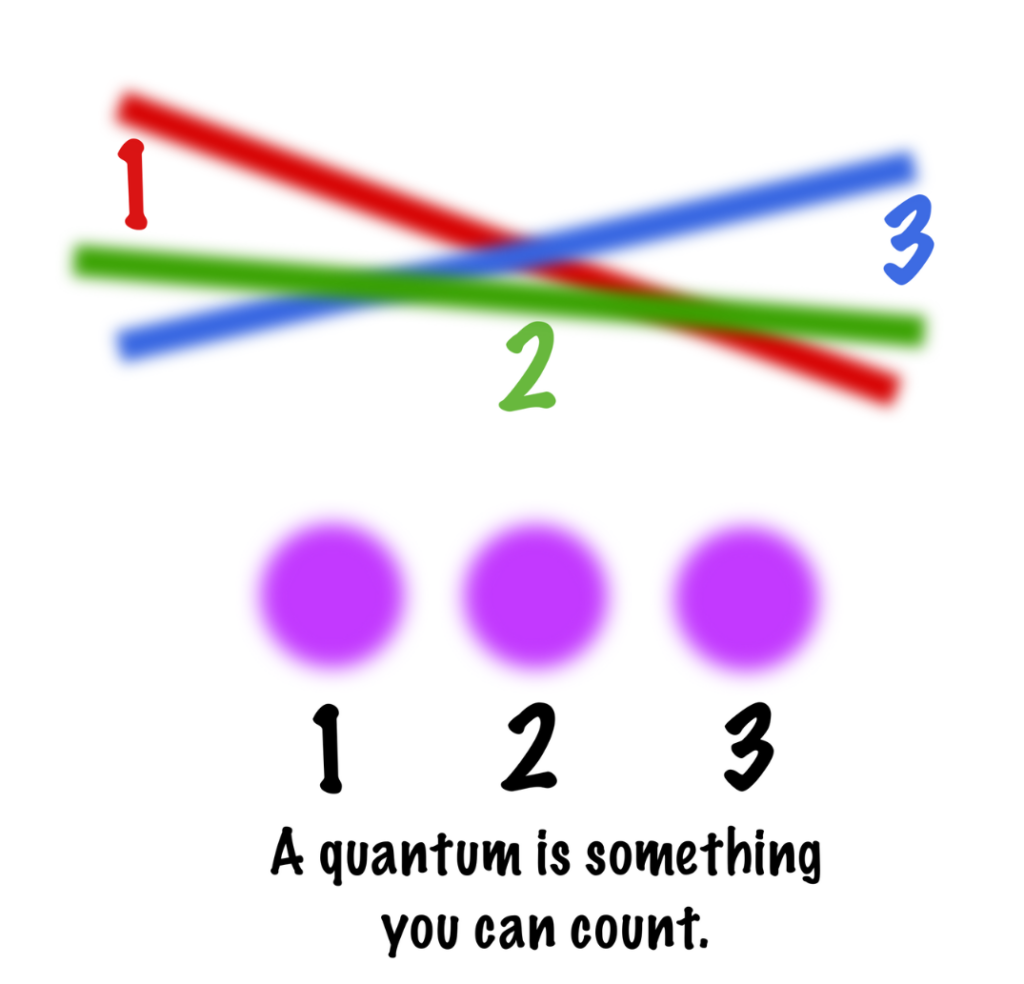
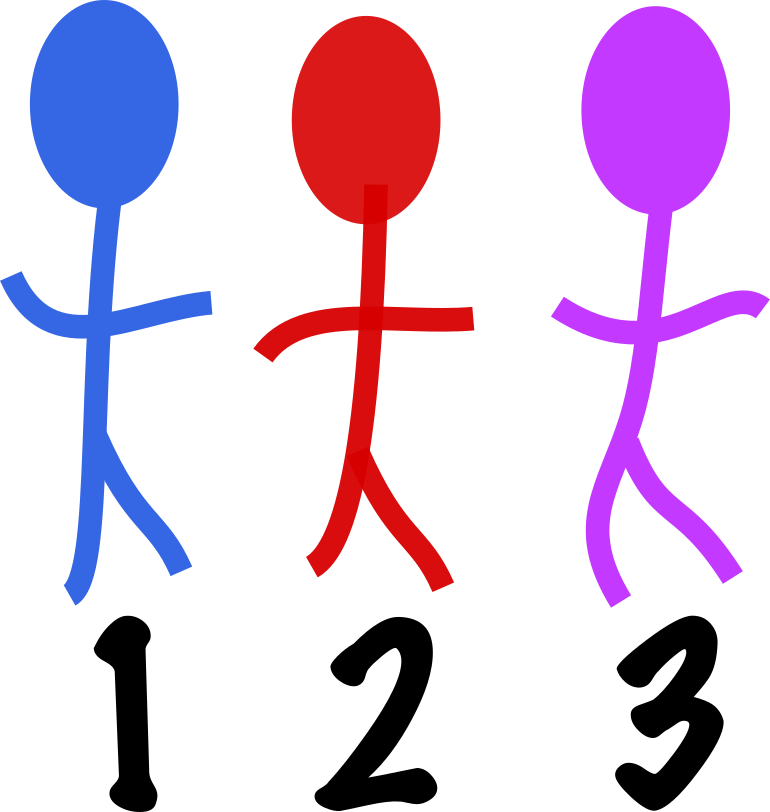
That’s a good starting question.  In general, the word “quantum” means “something you can count.”  It’s from a Latin word and is the same root as is found in words like “quantity” and “quantify.”  A “quantum” is a single thing you can count and the plural “quanta” are things you can count.  The question is: When you look at something, is it possible to count it?

Can you give an example?

Sure.  If we looked at a stadium crowd and I said, “count the crowd,” how would you understand this request?

Well, I would assume you meant count the people in the crowd.

Exactly.  In this case, the quanta – the things you are counting – would be people.  Similarly, if we looked at a beach and I said, “count the sand” what would you think I mean?

I guess I would think you meant counting the grains of sand – but this sounds very difficult!

It would be!  The point is not whether we can actually find the number, but whether there is something we can count at all.  In this case, a quantum of sand is a grain of sand.  But now let me ask a trickier question, if we were on the beach and looked out at the water and I said, “count the water” what do I mean?

Maybe how many liters of water?

It’s less clear of a request, isn’t it?  In the case of liters, we can always develop some agreed upon unit of measure like this with which to count things.  When I asked about counting sand, you could have interpreted this to mean counting the number of liters of sand or kilograms of sand.  But these units of measure are a bit arbitrary, instead of liters or kilograms, one could count in gallons or pounds or tons.  They’re agreed-upon conventions that could be changed.  A quantum means something less arbitrary, an indivisible thing to count that wouldn’t depend on an arbitrary measurement standard.

Then for counting water, would you mean counting the molecules of water?

Yes, a molecule of water would be a more appropriate quantum of water.  It’s the smallest, indivisible unit of water that you could have.  Of course, it would be even more challenging to count molecules of water than grains of sand.

You can’t even see the water molecules to count them!

Precisely, and this gets us closer to understanding how the word quantum is being used in the phrase “quantum science.”  From our perspective, the water looks continuous, as though you could keep dividing it into smaller and smaller drops.  It’s not at all obvious that there is the smallest piece of water.  The word quantum started being used by scientists to refer to a few cases where it looked as though something was continuous or infinitely dividable, but it turned out that there is something countable about it.

Is the fact that water is made up of countable water molecules, or that things more generally are made up of atoms that we could count, an example of quantum science?

Surprisingly, no. The idea that things are made of atoms is one that goes back thousands of years, and the modern understanding that there are different chemical elements, each with their own type of atom, is around 200 years old. These are very important ideas and they do make a claim about matter being made up of countable pieces, but they are not the quanta that are being referred to in quantum science.  This is a rather confusing point, since it is the case that quantum science is widely used to understand details about atoms and molecules, but it’s not the case that the word “quantum” in this context refers to the fact that atoms and molecules are countable things.  Rather, the word quantum started being used a bit over 100 years ago to refer to other cases where things that seemed continuous or infinitely dividable turned out to have a countable aspect to them.


Written by Paul Cadden-Zimansky, Associate Professor of Physics at Bard College and a Global Coordinator of IYQ.

IYQ mascot, Quinnie, was created by Jorge Cham, aka PHD Comics, in collaboration with Physics Magazine
All rights reserved.

Featured image: Yan Krukau.

OQI and UNESCO celebrate the International Year of Quantum in Geneva

(IEEE is an IYQ partner.)

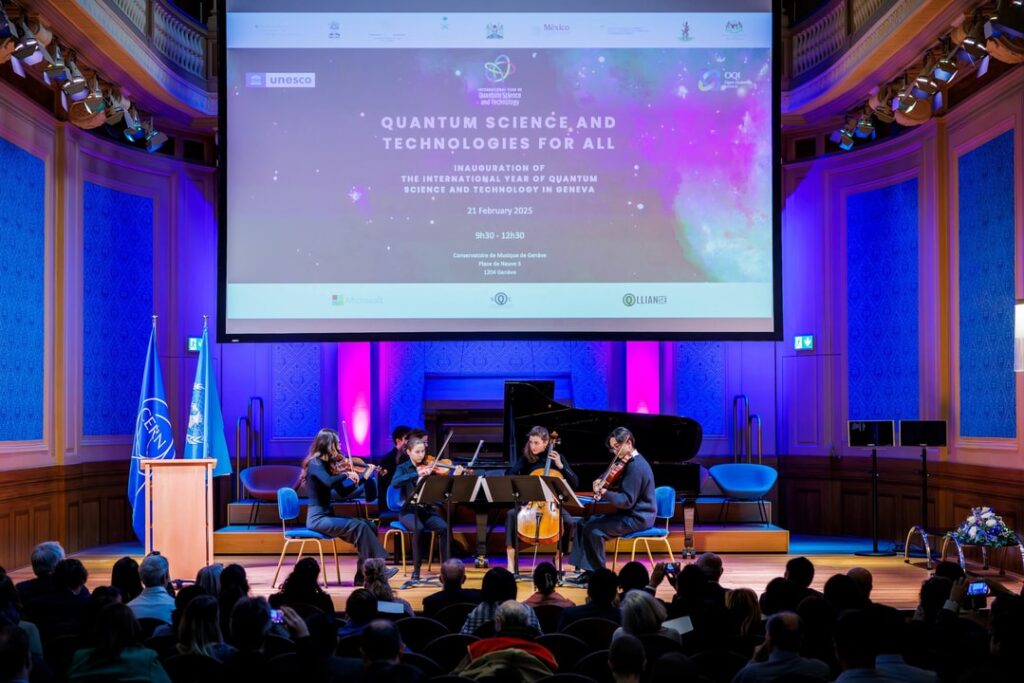
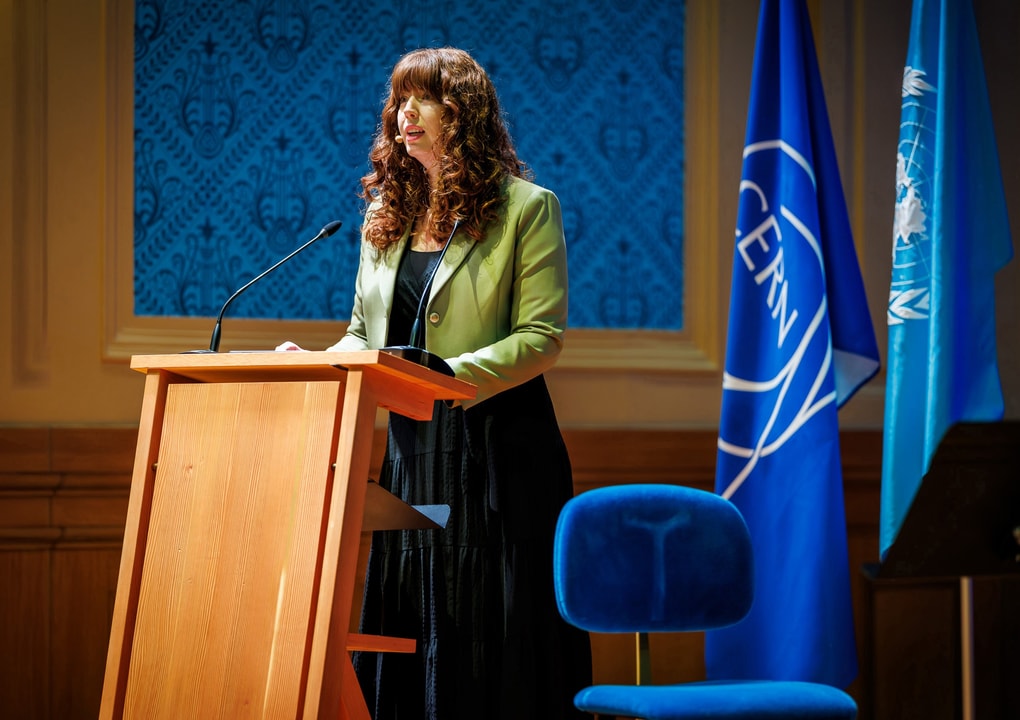
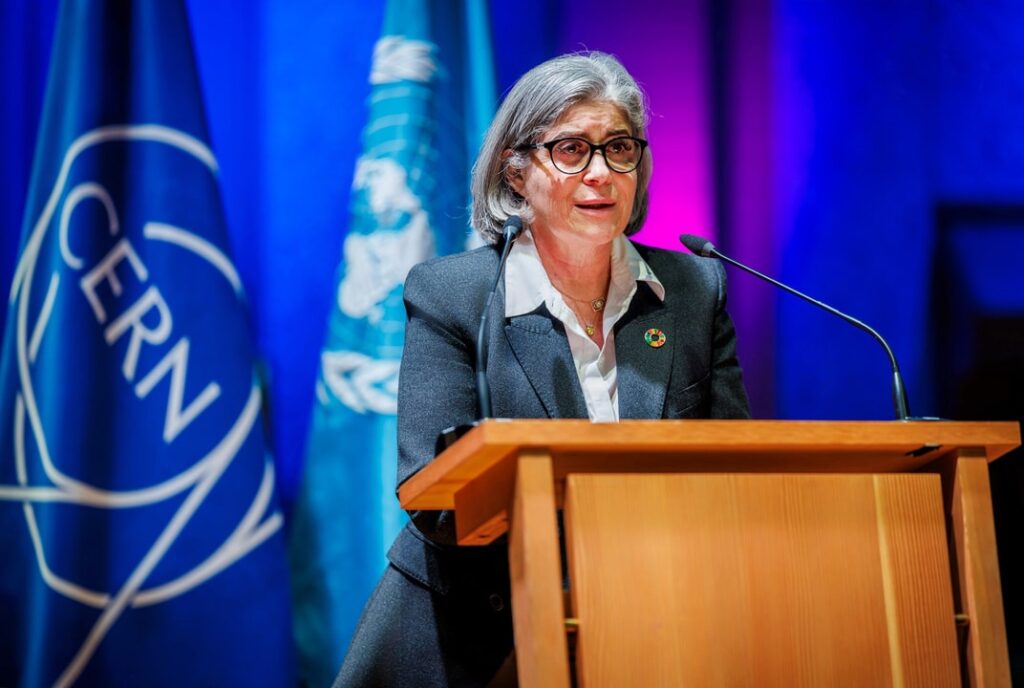
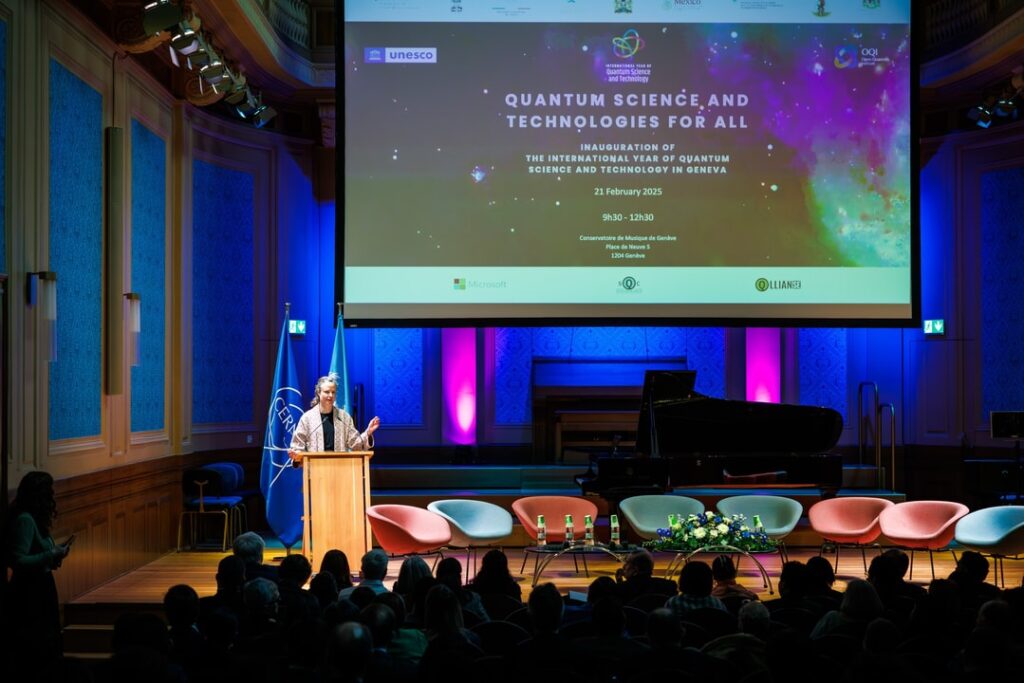
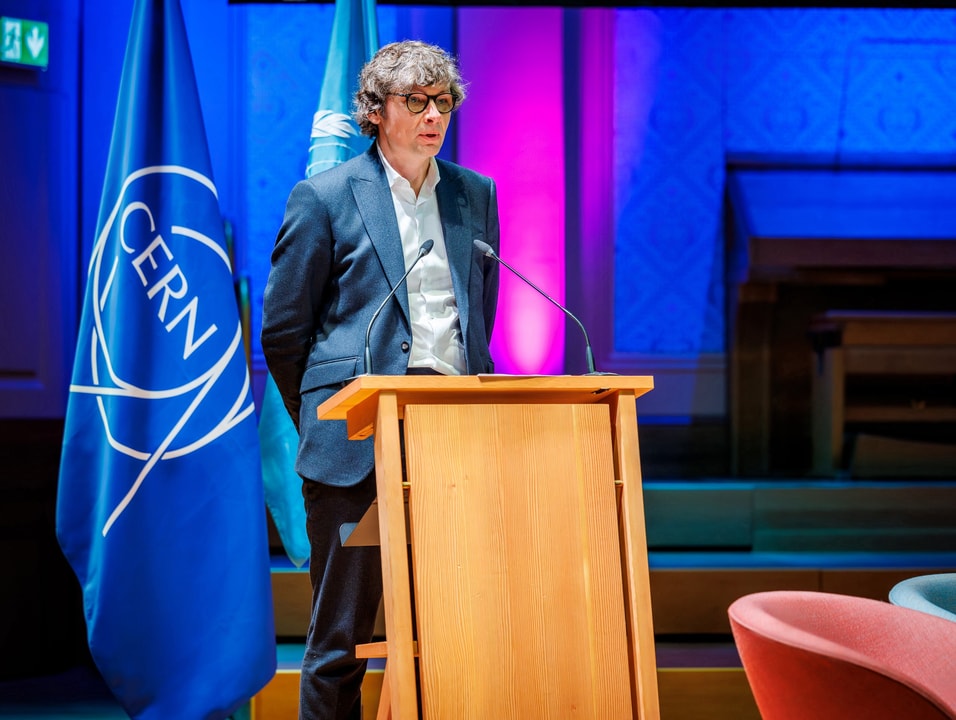
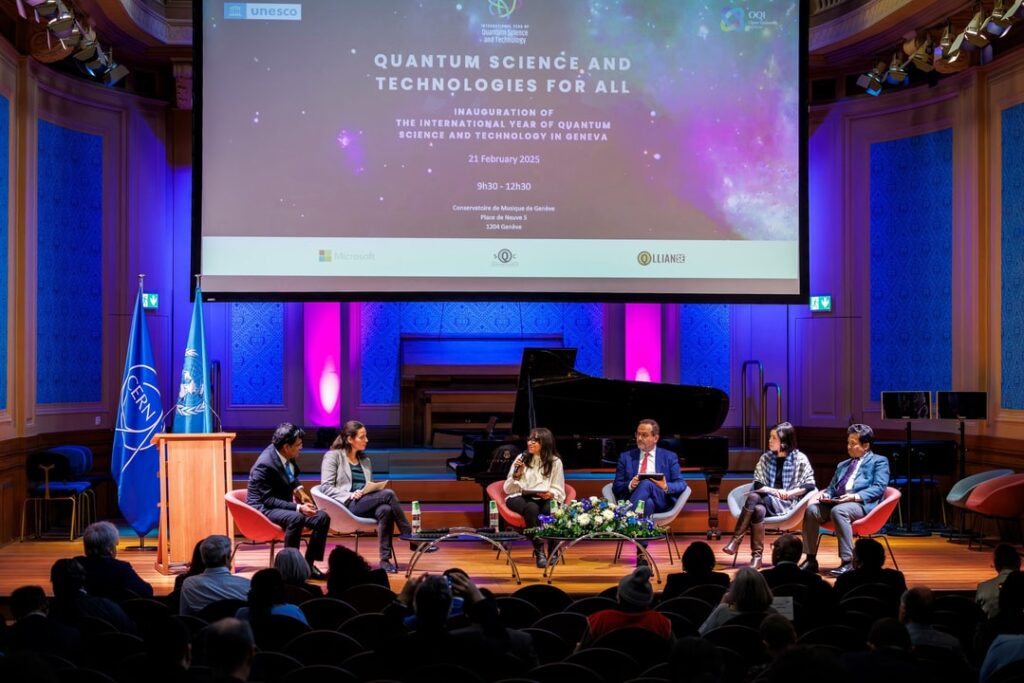
On 21st February 2025, over 100 individuals–including policymakers, diplomats, scientists, and educators–gathered to celebrate the launch of the International Year of Quantum Science and Technology (IYQ) in Geneva, following the official Opening Ceremony at UNESCO Headquarters in Paris earlier this month. Co-organised by OQI and UNESCO, the celebration took place at the Geneva Conservatory of Music as one of the recognised global IYQ events in 2025. 

With performances from musicians of the Conservatoire intertwining science and culture, the event emphasised the societal impact of quantum technology development. Featuring a series of panel discussions, diplomats engaged in dialogue on the global societal impact of quantum science and technology, examining the challenges and opportunities presented by the technology on a national and international scale. A scientific panel addressed the current gaps in quantum education and explored strategies of how to enhance global learning opportunities.

“Through the inauguration of the IYQ in Geneva, UNESCO and the Open Quantum Institute reaffirmed our commitment to fostering multilateral cooperation, raising public awareness, and driving collective action toward ensuring that advancements in quantum technologies remain inclusive, secure, and beneficial to humanity,” said Enrica Porcari, Head of CERN IT.

A call to action

During the event, OQI and UNESCO called upon all stakeholders—from member states, scientific institutions, academia, civil society, and many others—to actively collaborate in realizing the potential of quantum science and technology to address global challenges while upholding ethical and human rights principles. This call to action encourages everyone to engage in the International Year of Quantum and to advance the development of quantum technology for the benefit of humanity.

Throughout 2025, OQI will be organising key global initiatives—including regional events, hackathons and the Quantum Diplomacy Game across multiple continents. Find out more about our upcoming plans and how you can get involved. 

As an officially recognised global event of the IYQ, OQI and UNESCO would like to thank the support of all IYQ partners.


All photos by Marc Bader.

This piece was published on the OQI website.

UNESCO Puts the Spotlight on Quantum Science and Technology

Quantum science is transforming the world—but will it benefit all?

As Dr Lidia Brito, Assistant Director-General for Natural Science at UNESCO noted, “Quantum science is not just about pushing the frontiers of knowledge—it is about calling a Global Quantum Agenda for shaping a future where technology serves all of humanity. The International Year of Quantum Science and Technology is a call to ensure that these advancements bridge divides, rather than create new ones.”

As the sole UN agency with a mandate in the basic sciences, UNESCO has been designated as the lead agency for the International Year of Quantum Science and Technology (IYQ), proclaimed by the United Nations General Assembly on 7 June 2024. This marks a century since the birth of quantum mechanics.

The IYQ in 2025 is a pivotal initiative celebrated under the broader framework of the International Decade of Sciences for Sustainable Development (IDSSD). Within this framework, the IYQ in 2025 serves as a catalyst for long-term advancements in quantum research and applications. By aligning IYQ initiatives with the objectives of the IDSSD, UNESCO seeks to establish sustainable quantum education programs, encourage enduring international collaborations, and integrate quantum technologies into broader sustainable development strategies.

The IYQ is not just a year-long celebration but the beginning of a dedicated decade of scientific endeavor. It represents a commitment to harnessing quantum science and technology for sustainable development, ensuring that its benefits are accessible to all, now and in the future.

What is quantum science and technology?

Quantum science explores the fundamental principles governing the behavior of matter and energy at the smallest scales, such as atoms and subatomic particles. These principles have led to the development of quantum technologies, which harness phenomena like superposition, entanglement, and quantum tunneling. Quantum technologies have transformative applications across diverse fields. In medicine, quantum sensors enable ultra-precise imaging and diagnostics. In computing, quantum processors promise to solve complex problems beyond the reach of classical computers, revolutionizing fields like cryptography, materials science, and climate modeling. In communications, quantum networks offer unprecedented security through quantum encryption. These breakthroughs have the potential to address global challenges and create new opportunities for innovation, sustainability, and economic growth.

Quantum science has its roots in unraveling the mysteries of light. Early studies of light’s dual nature, behaving as both particles and waves, uncovered fundamental principles that now underpin modern science and technology.

UNESCO ADG for Natural Sciences, Ms. Lidia Brito, speaks on equitable access, global collaboration, and inclusion in quantum technologies during the Opening Ceremony of the International Year of Quantum Science and Technology.

About the International Year on Quantum Science and Technology

In 2015, UNESCO successfully led the International Year of Light, celebrating advancements in light-based technologies. Today, UNESCO once again takes the lead in honoring the transformative contributions of quantum science and technology.

The IYQ aims to

  • Raise global awareness of quantum science and its role in achieving sustainable development goals.
  • Foster international collaboration in research and education.
  • Drive innovation in quantum technologies.
  • Address the quantum divide by ensuring equitable access to quantum education and infrastructure, particularly in underserved regions.
  • Inspire young people, especially women and underrepresented groups, to pursue careers in quantum science and technology.


Launching the year

On 4–5 February 2025, UNESCO successfully organized the Opening Ceremony of IYQ at its Headquarters in Paris. Bringing together more than 1000 scientists, policymakers, educators, and industry leaders, the Opening Ceremony set the stage for a year-long global dialogue on how quantum science can drive a more sustainable and inclusive future. Discussions highlighted the transformative power of quantum science, not only in shaping our understanding of the universe but also in tackling critical challenges in healthcare, climate, and secure communications. Speakers emphasized the need to bridge the ‘Quantum Divide’ by ensuring equitable access to quantum technologies through international cooperation, ethical frameworks, and governance mechanisms. The program explored ways to scale quantum innovations, advancing their real-world applications, while also underscoring the importance of public engagement and education in demystifying quantum science and inspiring future generations.

The IYQ exhibition celebrated the transformative power of quantum science, showcasing groundbreaking innovations, interactive installations, and artistic expressions that bridge complex quantum concepts with real-world applications. Through immersive experiences—such as a Quantum Bullet Time Photo Booth, an augmented-reality Double-Slit Experiment, and a Quantum Jungle calculating Schrödinger’s Equation in real time—visitors engaged directly with quantum phenomena. The exhibition also featured artworks exploring the intersection of quantum physics and human experience, including portraits of superconducting devices, art-science collaborations, and reflections on quantum’s societal impact. Leading research institutions and global networks demonstrated advancements in quantum computing, secure communications, and open-access research, while initiatives promoting international cooperation and equitable access highlighted the importance of bridging the ‘Quantum Divide.’ The exhibition underscored how quantum innovation is reshaping industries, fostering global collaboration, and addressing major challenges—a testament to the creativity and dedication driving the future of quantum science.

A highlight of the ceremony was the keynote speech by Nobel Laureate Prof. Anne L’Huillier, who took the audience on a journey through the quantum world with ultrashort light pulses, illustrating how breakthroughs in fundamental physics have led to transformative technologies. She emphasized that while quantum mechanics began as a theoretical framework, it has since revolutionized fields such as precision measurement, advanced imaging, and next-generation computing. Her address underscored the vital role of basic research in driving real-world innovations, reinforcing the need for continued investment in fundamental science. Equally inspiring was the fireside chat with Nobel Laureate Prof. William D. Phillips, who reflected on the evolution of quantum science—from its early breakthroughs to the dawn of the second quantum revolution. He highlighted how quantum technologies are no longer confined to laboratories but are shaping industries, from quantum-enhanced medical diagnostics to ultra-secure communications. He also addressed the importance of scientific collaboration and public engagement, emphasizing that the future of quantum science depends not only on researchers but on a well-informed society and forward-thinking policies. Dr. Amal Kasry, Chief of the Section for Basic Sciences, Research, Innovation and Engineering at UNESCO said: “By the end of 2025, we aim to promote the idea of building a strong global foundation for quantum education and collaboration, foster greater inclusion of underrepresented groups, and enhance public understanding of how quantum technologies can contribute to addressing global challenges, particularly in bridging the gap between the Global North and South.”

About the International Decade of Sciences for Sustainable Development

The United Nations General Assembly adopted a resolution on 25 August 2023, proclaiming 2024–2033 as the International Decade of Sciences for Sustainable Development (IDSSD, the Science Decade), with UNESCO designated to lead its implementation. Member States and all relevant stakeholders are encouraged to actively support and participate in the Decade’s initiatives. After extensive consultations with stakeholders and a co-design process, the Science Decade has developed a strategic plan and established its governance structure, including a Secretariat, an Executive Committee, and an Advisory Committee. The Science Decade aims to advance basic sciences through global collaborative research initiatives, promote open science to democratize scientific processes, transform national innovation systems to better respond to societal needs, and enhance scientific literacy worldwide. This Science Decade offers a unique opportunity for humanity to fully harness the power of science in advancing sustainable development and securing a safe and prosperous future for everyone.

UN Member States and all relevant stakeholders are urged to actively back the Decade, with UNESCO designated to lead its implementation. The Science Decade was officially launched on Monday, 2 December 2024, during the prestigious Latin American and Caribbean Open Science Forum (CILAC) in San Andrés Isla, Colombia. This landmark event convened global leaders, eminent scientists, and policymakers for a dynamic exchange of ideas, setting the stage for transformative scientific endeavors to drive sustainable development. Through high-level discussions and visionary insights, the forum shaped a bold agenda for leveraging science as a cornerstone of the 2030 Sustainable Development Goals, reaffirming the commitment of the global community to innovation, inclusivity, and collaboration.


A call to action

The International Year of Quantum Science and Technology is not just a celebration of achievements—it is a global call to action for the future. Through coordinated efforts, the IYQ seeks to inspire the next generation of quantum scientists and innovators, ensuring that the benefits of quantum technologies are shared equitably across the globe. In a broader context, the Science Decade invites forward-thinking individuals, institutions, and organizations to submit proposals that will help shape the next ten years of innovation, discovery, and scientific advancement. The Decade is a global initiative designed to foster interdisciplinary collaboration and transformative research that will address the world’s most pressing challenges. This is an opportunity to be at the forefront of a new era in science, making meaningful impacts on society and our planet.


This article is included in UNESCO Today Magazine

Jing Zhao is a Project Officer at the Basic Science, Research Innovation, and Engineering Section at the Natural Science Sector of UNESCO.

Pictures © UNESCO/Marie ETCHEGOYEN.

IYQ 2025 Opening Ceremony Vlog: 100 Years is Just the Beginning 

The International Year of Quantum (IYQ2025) Opening Ceremony at UNESCO in Paris was a landmark event, bringing together some of the world’s leading scientists, policymakers, and industry pioneers. The event marked the beginning of a year-long celebration of quantum science, highlighting its role in shaping the future of technology, education, and global collaboration.

Diya Nair, Global Lead for Outreach and United Kingdom’s Ambassador of Girls in Quantum, attended the ceremony to capture key moments from the event. She created a vlog that takes you behind the scenes, showcasing thought-provoking panel discussions, inspiring keynote insights from Nobel Laureates who have shaped the field and much more! A key focus of the discussions was speakers emphasising the importance of investing in quantum education to equip future generations with the knowledge and skills to shape this rapidly evolving field.

Another central theme was quantum’s potential to address some of the world’s most pressing challenges. Experts discussed applications in quantum sensing, which could revolutionise medical diagnostics and environmental monitoring; cybersecurity, where quantum encryption promises unprecedented levels of data protection; and financial services, where quantum algorithms could transform risk analysis and optimisation. The event truly served as a call to action, encouraging interdisciplinary collaboration between academia, industry, and governments to accelerate progress.

Watch the full vlog by Diya here:

As we celebrate 100 years of quantum science, its full potential is still yet to be realised. The discoveries made today will shape the technologies of tomorrow, and this event was a powerful reminder of how far the field has come—and how much further it can go.

Watch the full opening ceremony on the UNESCO YouTube Channel.

If you found this interesting, subscribe to Quriosity by Diya for more quantum content and share your thoughts in the comments – what excites you most about the future of quantum?

Diya Nair is the Global Lead for Outreach and UK Ambassador of Girls in Quantum.

Jan 23, 2025: “The Second Quantum Revolution and Sissa’s Computer” by Philippe Chomaz

Kick off the International Year of Quantum (IYQ) with Philippe Chomaz, Executive Scientific Director of the Fundamental Research Department at CEA

In this special event, Dr. Philippe Chomaz will highlight global collaboration and innovation in quantum science and technology, with representation from UNESCO to underscore its international significance.

Now Available: YouTube Recording

See slides: [Slides_PhilippeChomaz]

When : Thursday January 23, 2025

16:00 CET  (10:00 EST)

Philippe Chomaz (PhD), Executive Scientific Director, Fundamental Research Department at CEA.

Biography

Philippe Chomaz is a prominent physicist specializing in nuclear science, known for his leadership in research and dedication to science outreach. A graduate of the prestigious Ecole Normale Supérieure – rue d’Ulm, Paris, he earned his doctorate in theoretical nuclear physics from Université Paris-Sud. His research focuses on the exploration of exotic atomic nuclei, quantum chaos, and critical phenomena in nuclear systems.

Chomaz served as the director of the Institut de Recherche sur les Lois Fondamentales de l’Univers (IRFU) at the CEA (French Atomic Energy Commission), where he led major projects and contributed to advancing nuclear physics on both theoretical and experimental fronts. He has also been instrumental in developing large-scale research facilities like GANIL and SPIRAL2.

Beyond his academic contributions, Philippe Chomaz is an advocate for public engagement with science. He has participated in numerous initiatives, including TEDx talks and public lectures, where he demystifies complex topics such as quantum mechanics and its revolutionary impact on technology and society.

Abstract

Newtonian mechanics, Maxwellian electromagnetism, thermodynamics, and Clausius’s entropy… In 1900, physics was considered elegant and complete! Lord Kelvin famously remarked before the Royal Institution of Great Britain that only a few “small clouds in the blue sky of physics” remained.

These “small clouds” would grow into storms that revolutionized physics in the 20th century. The first storm revealed that light is granular, composed of particles called photons. The second demonstrated that electrons in atoms behave as waves. The world was no longer straightforward—it became a duality of wave and particle. The universe had entered the quantum realm.

This quantum revolution of physics ushered society into the information age during the second half of the 20th century. Quantum mechanics gave birth to the transistor and the laser, opening doors to computers and modern communication. Suddenly, everything became possible: the internet, algorithms, artificial intelligence, and more.

Today, researchers worldwide are preparing for a third quantum revolution, leveraging extraordinary quantum properties such as superposition, non-locality, and entanglement. Will quantum computers, ultimate sensors, and teleportation crack open Schrödinger’s cat’s box?


Published in APS News

The International Year of Quantum: Igniting Possibility, Accelerating the Future

(Quantum Insider is an IYQ sponsor.)

Insider Brief:

  • The International Year of Quantum is a call to action, not just a celebration. It is intended to bring quantum science into public awareness, ensuring accessibility and engagement beyond academia.
  • Collaboration and inclusivity are essential for quantum’s future. The ceremony reinforced the need for interdisciplinary partnerships, iterative progress, and expanding participation across industries and communities.
  • Education and workforce development must be prioritized now. Quantum literacy in K-12 and reskilling professionals across fields are critical to building a robust and diverse ecosystem.
  • Ethical responsibility and societal impact must guide quantum’s growth. The field must balance innovation with security, sustainability, and equitable global access, ensuring quantum benefits humanity as a whole.
  • Image Credit: UNESCO/Marie ETCHEGOYEN

Quantum has always been a force of contradiction—both foundational and elusive, shaping the modern world while remaining an enigma to most. It exists in the devices we use, the systems we rely on, yet it is spoken of in paradoxes, understood by few.

The opening ceremony of the International Year of Quantum was an acknowledgment of this duality—not just a reflection on a century of discovery, but a call to shape what comes next. It was a gathering of scientists, policymakers, and industry leaders, aligned not only in their ambition but in their responsibility to make quantum’s future more tangible, more accessible, and more inclusive.

UNESCO, the American Physical Society, and organizations like The Quantum Insider are championing this year-long initiative to bring quantum into public consciousness—not as a distant theoretical field, but as a potential tool to impact society at every level. The mission is not just to celebrate progress but to ensure that the next era of quantum is one that belongs to all.

A Convergence of Purpose

The ceremony was not just a stage for reflection—it was a stage for alignment. On stage, we confirmed as a community that we are on the right page, with common themes of accessibility, education, responsible development, and tools to work towards the Sustainable Development Goals. Off stage, conversations deepened, partnerships formed, and the work of the future was not just imagined but actively set in motion.

Building something new requires an ability to see beyond what exists and take the next best step forward. The International Year of Quantum is not just about celebrating achievements; it is about pushing past barriers—technical, conceptual, institutional—to ensure that quantum’s promise is realized for all.

Celia Merzbacher, Executive Director of QED-C, captured this vision: “The International Year of Quantum, I believe, is an opportunity—because it’s broad, it’s inclusive, and it’s raising awareness. While QED-C is very much focused on advancing the commercial industry, that industry depends on the entire innovation ecosystem—from research to product development. I always say: quantum is global. Innovation is global. Talent is globally distributed, and the markets are global. The International Year of Quantum is about bringing together as many stakeholders as possible.”

And true inclusion is an active process—one that goes beyond awareness and requires sustained engagement across disciplines, industries, and communities. As the conversation deepened, a common thread emerged: progress in quantum will come not just from visionaries but from those who refine, challenge, and evolve ideas in real time. Allison Schwartz, Vice President of Global Government Relations & Public Affairs at D-Wave, reinforced this reality: “Being at the center of this industry—building applications today and providing real-time cloud access across 42 countries—gives us a unique opportunity to tap into new generations of innovators. We’re especially focused on those who aren’t just thinking theoretically but are asking, ‘What can I do today?’”

Quantum is not a solitary endeavor. It thrives on collaboration, on the merging of disciplines, on ideas that challenge conventional wisdom. Krysta Svore, Technical Fellow and Vice President of Advanced Quantum Development for Microsoft, emphasized this dynamic: “In computing, you always compare—you run it, measure against a baseline, and if it’s better, you use it. But in quantum computing, we haven’t been able to do that. The power today is that we are producing reliable quantum machines that can be integrated and layered onto existing workflows.”

The future of quantum cannot be built in isolation. It is not a closed-loop system, self-contained and exclusive to a handful of experts. It must be expansive, integrative, and, above all, inclusive.

The Question of Understanding

Education stood as one of the ceremony’s most urgent themes. Digital literacy is foundational in today’s world, yet classical computer science remains absent from many K-12 curriculums. Mathematics and physics—essential to quantum computing—are often overlooked. If we do not prioritize these subjects early, we risk creating a future where only a select few have the knowledge and opportunity to engage with this technology in meaningful ways.

But waiting for the next generation to come of age is not an option. The urgency of quantum’s development requires a workforce that draws from all disciplines and industries. We need physicists, yes—but also electrical engineers, software developers, policymakers, and advocates. The success of quantum technology will not rest on scientists alone; it will require the efforts of an entire ecosystem.

Rajeeb Hazra, CEO of Quantinuum, put it bluntly: “A big part of the access challenge is workforce. For quantum to realize its full potential, it must evolve from a small set of people who have to labor inordinately hard against the systems of the world to do it right.”

Mitra Azizirad, President & COO of Strategic Missions & Technologies at Microsoft, expanded on this idea: “The first step for us—and what I’m most focused on—is identifying those initial hybrid applications. How do we work with our partners and customers to determine what they will be? Because when you think about the marriage of AI and quantum, there’s an incredible opportunity ahead.”

Jonathan Felbinger, Deputy Director of the QED-C, drew a parallel to AI: “I think this is a great opportunity to capture the public imagination—much like AI has. Every day, there’s something in the news about AI, and I’m sure kids today are thinking, ‘I want to work in AI. I want to learn AI.’ In a way, they’ve become AI-native, interacting with it, shaping it, and building awareness around it. I want that same level of public engagement for quantum—both in terms of understanding use cases and building the future workforce.”

Ethics, Sustainability, and the Responsibility of Knowledge

Science does not exist in a vacuum, nor should it. The pursuit of knowledge is deeply human, driven by curiosity, by wonder, by the desire to push beyond the known. But awe alone is not enough. If we possess a technology, even in its early stages, that has the potential to address the world’s most profound challenges, then the responsibility to pursue it extends beyond personal ambition—it becomes an obligation to humanity.

Professor Yasser Omar, President of the Portuguese Quantum Institute, reminded attendees in his opening remarks on the second day of the event that “Basic science is a societal benefit.” But its impact depends on how we choose to apply it. The responsibility of scientific discovery does not lie solely with researchers in the lab—it extends to educators, policymakers, businesses, and individuals who seek to integrate and apply these discoveries for the benefit of society.

Hazra emphasized this dual responsibility: “Our job is to accelerate useful quantum computing for good—and each word in that is meaningful. Our role is to ensure we are accelerating both the rate of technology creation and its adoption. It does no good to develop technology and leave it in the lab. And it does no good to stop innovating just because democratizing that technology beyond the lab is getting harder.”

As with any powerful technology, ethical considerations and security risks must also be addressed. Merzbacher urged a balanced approach: “In the context of the International Year of Quantum, I think we should focus on the beneficial applications—whether it’s point-of-care diagnostics, improving weather forecasting to help farmers, or other positive impacts. As we develop these beneficial uses, national security controls will need to be targeted. Protections will still be necessary, but they should be narrowly focused to ensure that quantum’s positive applications can be widely shared and used.”

The Work That Lies Ahead

One of the most striking takeaways was the acknowledgment that progress is not always comfortable and quantum cannot afford to be an exclusive field. The future belongs to those willing to integrate it across industries, disciplines, and communities. The ceremony was a beginning, not an endpoint.

As Hazra observed, “The last three or four years—and even the last decade, before Quantinuum was formed—have been years of discovery. We’ve learned what works, and we’ve learned what doesn’t. Now, 2025 is the year of acceleration. I’m not saying we’ve solved all the problems, but we have a path—we have a map. And now, we’re moving faster along that map. The International Year of Quantum marks the year of accelerating useful quantum computing for good.”

The urgency is not just in the technology itself but in the decisions we make around it. The International Year of Quantum is not just a celebration; it is a challenge. A call to ensure that the foundations we build now will last. Science, after all, is not just about what we can do—it is about what we should do.

Azizirad, with passion and intention, captured the essence of this moment: “But right now—this moment—is the most exciting. Because we’re on the cusp of something where everything feels possible. We’re in the ‘art of the possible’ phase, where we’re truly ideating and layering quantum into what comes next.”


This piece was published on the Quantum Insider

Quantum Birds

Annie McEwen went to a mountain in Pennsylvania to help catch some migratory owls. Then Scott Weidensaul peeled back the owl’s feathery face disc, so that she could look at the back of its eyeball. No owls were harmed in the process, but this brief glimpse into the inner workings of a bird sent her off on a journey to a place where fleshy animal business bumps into the mathematics of subatomic particles. With help from Henrik Mouristen, we hear how one of the biggest mysteries in biology might finally find an answer in the weird world of quantum mechanics, where the classical rules of space and time are upended, and electrons dance to the beat of an enormous invisible force field that surrounds our planet.

Posted in Radiolab.

Featured image by Miranda Adramin – Own work, CC BY 3.0, Wikimedia.

5 Concepts Can Help You Understand Quantum Mechanics and Technology — Without Math!

(Microsoft is an IYQ sponsor.)

If you’ve heard or read about quantum mechanics, you may have seen it described as “weird.” Even the great Albert Einstein — one of the founders of quantum mechanics — called certain aspects of the theory “spooky.”

With its wave-like particles and particle-like waves, quantum mechanics certainly challenges our intuitions of how the world works. Accepting what is counterintuitive to us — while striving to learn more — is a very important part of science! 

Quantum can seem intimidating because it deals with the granular and fuzzy nature of the universe and the physical behavior of its tiniest particles that we cannot see with our eyes. Just because we haven’t experienced the world of quantum the way we can see the effects of gravity doesn’t mean quantum has to be “weird” or “spooky.”  

The founders of quantum mechanics may have thought it was “weird” because it was different from the physics they were used to. But that was more than 100 years ago. Quantum just is the way it is! 

I’m passionate about flipping the script on quantum and making it accessible to all. 

In this blog post, I will attempt to normalize quantum mechanics by drawing analogies to concepts you may already know and understand.

I will also try to explain the five things that I have noticed confuse people about quantum mechanics. (Don’t worry; no math will be required!) You probably don’t need to understand quantum mechanics in-depth, but I hope this will help you think about it and how it applies to your life. 

Quantum in action

Before the early 2000s, computers did not exhibit quantum behavior. But as technology advanced and transistors in computers got smaller (now as small as 5 nanometers, which is 5 billionths of a meter!), they started to show quantum behavior. Quantum behavior limits how small transistors can be and how fast computers can compute because it makes transistors “pesky” in that they don’t exhibit the predictable behavior that engineers want. For this reason, computers now operate on multiple “cores” to help increase computing speed and power.

The Wonderful World of Quantum

When you zoom in on matter at the quantum scale, nature gets granular. At this scale, we find tiny particles such as: 

  • Photons: particles of light that have no mass or charge.
  • Electrons: subatomic particles that make up the atom, carry electricity and have charge and mass. 
  • Quarks: the building blocks of protons and neutrons. 

Alternatively, you can think of matter like a digital image: If you zoom in enough on an image, you start to see it’s made of individual pixels. 

Classical physics governs the movement of things we can see, such as baseballs and planets. Quantum physics is a world we can’t easily see. If any part of quantum is substantially different from classical physics, it is that physics at the quantum scale is not only granular but also “fuzzy.” 

When we zoom in on an image, a pixel seems to have a well-defined boundary, or does it? If you were able to zoom in on the atoms and subatomic particles that make up the pixel, you would see that the subatomic particles aren’t well defined. Their boundaries and behavior are somewhat unclear. This is similar to drawing a “perfect” line with a pencil and ruler. If you looked at that line with a microscope, the edges would look more wobbly than straight.

The lack of clarity in quantum mechanics creates unique behaviors. The consequences of these behaviors perplexed the physicists who were the first to try to understand quantum mechanics. These behaviors are: 

  1. Wave-particle duality: Tiny particles look like they are behaving like waves or particles, depending on how you observe them.
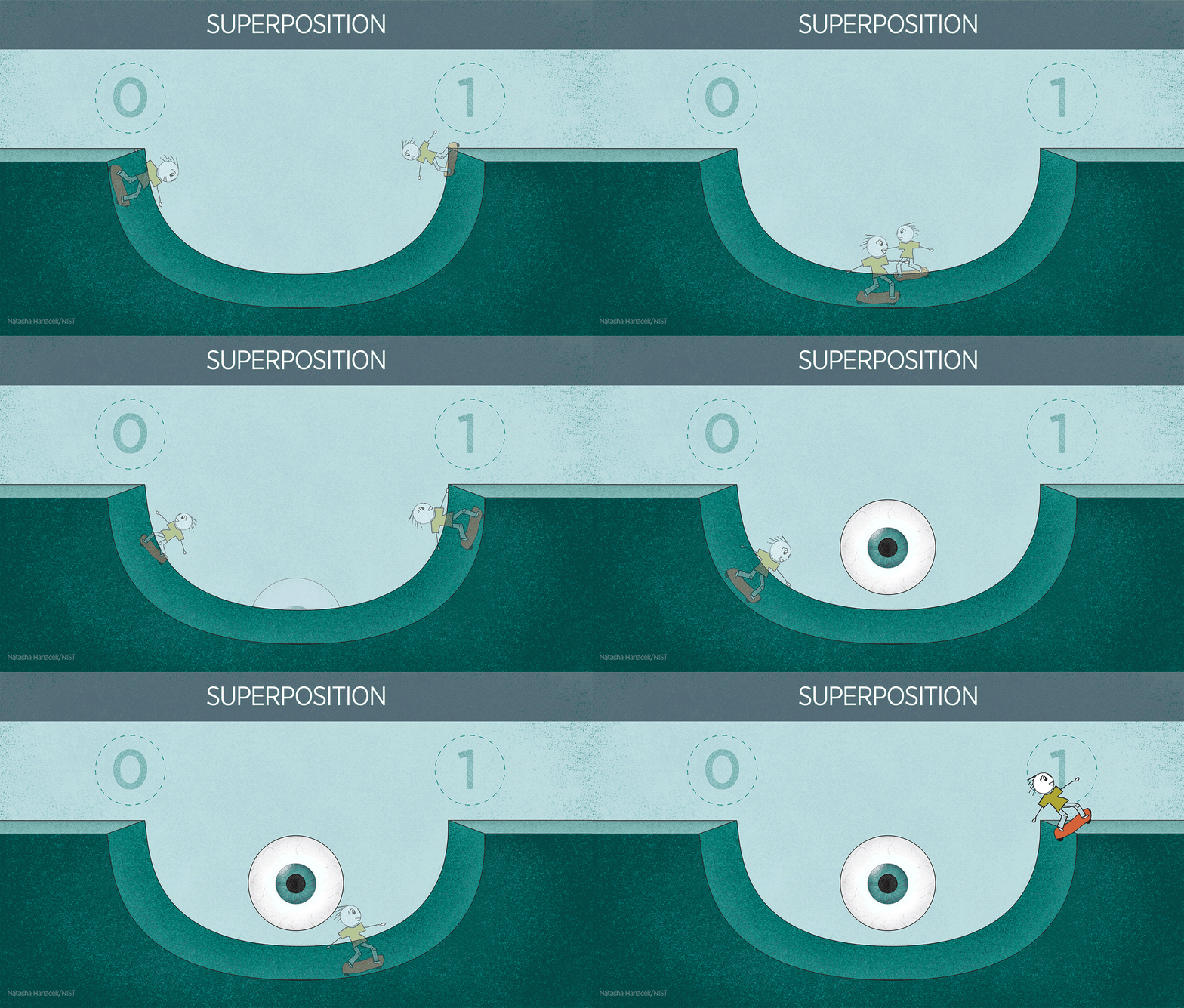
  2. Superposition: In the quantum world, particles can exist in multiple states at once.
  3. The Heisenberg uncertainty principle: Nature imposes a fundamental limit on how precisely you can measure something. (You can’t measure certain pairs of properties at the same time with unlimited precision.) 
  4. Entanglement: Two things can be so interconnected that they influence each other, regardless of distance apart.
  5. Spin: Spin is a fundamental characteristic of elementary particles. Like mass or charge, spin determines a particle’s behavior and interaction with other particles.

I will discuss how these behaviors are central to emerging quantum technologies like quantum computing and quantum cryptography and how they manifest in fantastic ways in the natural world. 

Wave-Particle Duality

The fuzziness at the granular level occurs because these tiny particles act a bit like waves (similar to water waves and radio waves). Remember the definition of wave-particle duality: Tiny particles like electrons and photons can appear to behave like waves or particles, depending on how you observe them. The wave-like properties of particles at the quantum level are like water waves; they can interfere with one another, resulting in “ripples.” The ripples allow us to predict the particles’ behavior (where they are most likely to be found, what energy they are likely to have and how they will interact with other particles). 

Take light as an example. 

When light passes through water droplets, the light can act like waves that form the beautiful patterns of a rainbow. 

On the other hand, when light hits a solar panel, it acts like a particle. Because we observe the photons’ energy being deposited in chunks (like a solid ball hitting a screen), we perceive them as behaving like particles. 

Superposition

To better understand the energetic states of particles, I can draw an analogy to musical instruments. Instruments have many notes (tones, vibrations or frequencies) that they can sound on. When you add energy to an atom, for example, you can excite the cloud of electrons that surround the atom, like striking a drum. Just as a musical instrument can sound on multiple tones because of the mechanical structure of the drum, superposition allows particles to exist in multiple “states” at the same time. This is because of the force or “tension” the nucleus creates on the electron cloud. 

In the quantum world, particles can exist in multiple states at once. Credit: N. Hanacek/NIST.

Superposition in action

Superposition is extremely useful in quantum technologies. For instance, superposition is used to make atoms oscillate in atomic clocks. It’s also important to note that physicists have quite a bit of control over superposition in well-controlled systems like atomic clocks. Physicists can control the atom to be in one electronic state or another. Or they can create a superposition of both states. 

You can imagine superposition as being similar to a pendulum swinging between positions (one at the far left and one at the far right). When oscillating, the pendulum is at neither position but oscillating from one position to the other. The “swinging” back and forth between the platforms is the oscillation that forms the clock signal, just like the oscillation of a pendulum, just way faster! 

Heisenberg Uncertainty Principle in Measurement 

The notion of uncertainty exists for measurements of all physical systems but becomes really apparent at the quantum scale.

When you try to measure the state of any system, you inevitably disturb it at some level. Why? Because to observe it, you typically need to interact with it using some type of probe. 

For instance, we use photons bouncing off objects to see them with our eyes, a form of measurement that allows us to judge an object’s position, movement and size. The light bouncing off a skyscraper doesn’t have large enough energy to significantly disturb the skyscraper. But if the skyscraper were as small as an electron, the energy could become comparable enough to the skyscraper’s to significantly disturb its state.

This is part of the essence of the Heisenberg uncertainty principle, which says that the act of measurement disturbs the quantum state of the object. As a result, there are limits to how precisely certain pairs of properties, like position and momentum and time and energy, can be known simultaneously. 

Entanglement

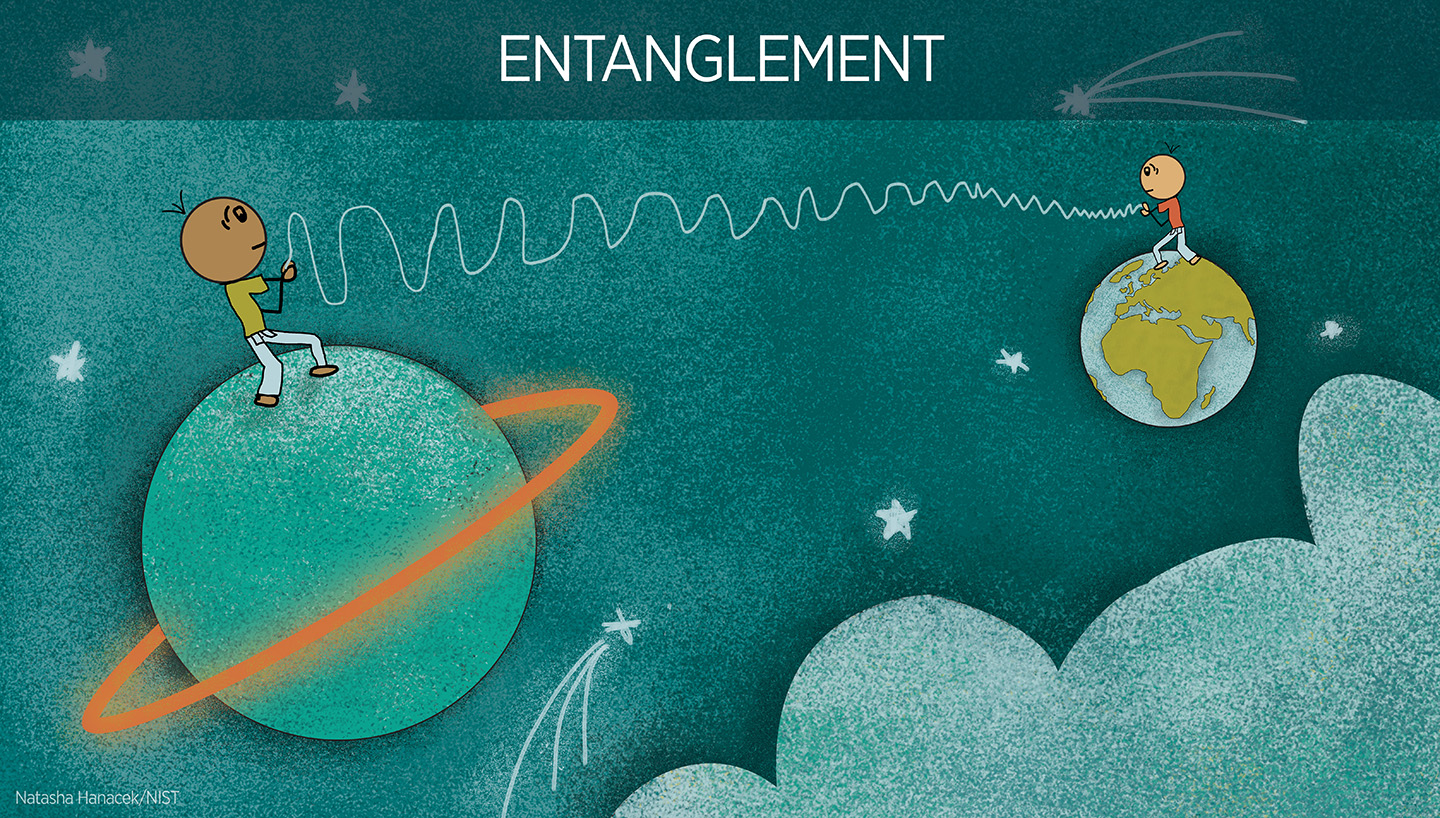
Quantum entanglement occurs when the quantum states of two or more particles become strongly correlated. This means the state of one particle can instantaneously influence the state of the other, regardless of distance. A common analogy to understand correlation is to think of two entangled photons as two coins that always land the same way when you flip them.

In the quantum phenomenon known as entanglement, the properties of two particles are intertwined even if they are separated by great distances from each other.Credit: N. Hanacek/NIST.

In quantum key distribution (QKD), entangled photons are used to securely exchange cryptographic keys (like in financial transactions for banks or top-secret military messages). If an eavesdropper tries to intercept the photons, the act of measuring them disturbs their quantum state, causing a detectable change in the correlation between the photons. This disturbance alerts the communicating parties to the presence of an eavesdropper, ensuring the security of the key exchange.

Entanglement in action: quantum communication and computation

Entanglement and superposition are used in many of the newer quantum technologies being developed today, such as quantum networking, quantum communication and quantum computing. Quantum bits, or qubits, that are entangled with each other have a potential “quantum advantage” that can allow them to solve some calculations much faster than classical computers and that allows exponential improvement of computing power with the number of qubits. 

Spin

While wave-particle duality, superposition, the Heisenberg uncertainty principle and entanglement are all manifestations of the fact that quantum systems have wave-like behavior, spin is off on its own. 

Although deeply associated with quantum mechanics, spin is just a characteristic a particle has when it’s created, similar to mass and charge. Despite its name, the term “spin” doesn’t mean the particle is actually spinning.

The spin of electrons, neutrons and protons that make up an atom make it possible for them to form stable structures, such as the elements, planets and our bodies. Your own body and anything you interact with in the physical world exists in its current form because spin gives the particles volume! Electrons can’t occupy the same space because of their given spin. This is what gives matter volume. 

Photons have a different spin than electrons, protons, and neutrons, allowing them to occupy the same space. This gives photons remarkable qualities. If you have noticed, you can feel the warmth of light, and you can see it, but you can’t hold it or touch it like you can hold things made of matter like pencils, table,s and pets.

Spin in action: lasers

The fact that photons can occupy the same space is responsible for the amazing utility of the laser. In lasers, all the photons can perfectly overlap with one another so that all the peaks and troughs of the light waves are perfectly aligned and added together. This allows lasers to create something like a superwave, so all the photons work together in the same space and at the same time. This allows lasers to cut metal, even if they operate with powers similar to a light bulb. 

Making Quantum Accessible for All 

I am deeply passionate about making quantum mechanics and quantum technology accessible to the public because I envision a future where the applications of these technologies reflect the diverse voices of all demographics. 

The impact of quantum technology and computing will be profound. Quantum may bring us more secure communication systems, solve problems like how to design better medicines, and much more. It’s crucial that everyone has a role in shaping how these innovations evolve to benefit humanity and the planet.

This piece was published first on the NIST website

Tara Fortier is a physicist and project leader in NIST’s Time and Frequency Division. 

Featured image credit: R. Wilson/NIST.