

What Y2K Can Teach Us About Q-Day

(The Quantum Algorithms Institute is an IYQ sponsor.)

Quantum computers are a powerful emerging technology that could solve some of the world’s most complex problems. Unfortunately, one of those problems includes breaking our most widely used encryption algorithms, compromising massive amounts of data worldwide. 

But in 2025, this should not be news. The quantum threat to cybersecurity has been a hot topic for years, with many organizations working to remediate it. Recently, the US National Institute of Standards and Technology (NIST) has released three standardized “quantum safe” encryption algorithms, marking a huge milestone in post-quantum cybersecurity development. So, with these new safe encryption mechanisms, isn’t this threat now neutralized? Unfortunately, not yet.

The emergence of new encryption standards and national migration guidelines is only the first step in the post-quantum security process; getting organizations to implement these new standards in time, before large-scale quantum computers emerge, is a far more daunting task. 

Due to the unpredictable nature of quantum computing progress, skepticism about the validity of the quantum threat, and, most importantly, the lack of a distinct Q-Day deadline, the atmosphere surrounding post-quantum cryptography migration shows a considerable lack of urgency that could prove detrimental in the future. 

PQC Inaction and Comparison to Y2K

In 1999, as the world was speeding towards a new millennium, the Y2K Bug was on everyone’s mind. Because computers at the time stored the current year as only two numbers (99 for 1999, 98 for 1998, and so on), the fear was that once the year 2000 hit, computer systems around the world would interpret “00” as “1900” rather than “2000.” This bug was predicted to shut down critical infrastructure technology unless taken care of. 

The hard deadline of January 1st, 2000, pushed organizations and governments to solve the problem before it was too late. An estimated $300 billion USD was spent worldwide to fix the bug, and, due to the hard work of thousands of workers behind the scenes, the impact of the Y2K bug was largely mitigated.

The Y2K bug is eerily similar to the newly dubbed Q-Day, the day quantum computers will break modern encryption. If/when this breakthrough event does occur, the implications will be far greater than those of Y2K, rendering the majority of modern encryption obsolete. So, why aren’t we seeing the same urgency to solve the Q-Day problem?
Quantum Doubt and Portrayal in Media

Unlike Y2K, quantum computing’s timeline and image make it harder to mobilize. There were a few traits to Y2K that enabled it to be taken seriously by not only the technology workers trying to fix the problem, but most importantly, by influential company executives. 

The tangible deadline certainly helped executives take the problem seriously. Significant pressure was applied, pushing organizations to act sooner rather than later. In contrast, because Q-Day could be anywhere from 3 to 15 years away, according to analysts, it is challenging to convince organizations to allocate resources to the problem now. 

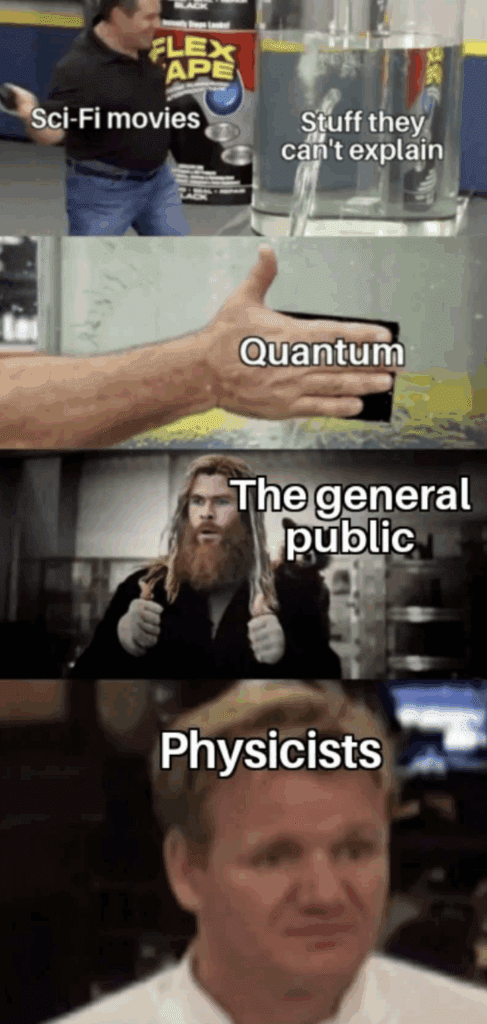
The way that the Y2K problem was comparatively easy to understand and quantify also had a large impact on how it was handled. The Y2K bug was easy to take seriously in part due to its mundane nature. In contrast, the quantum threat may seem technologically far-out to most, with some dismissing it entirely as science fiction due to the often-inaccurate portrayal of quantum technologies in popular media. Superhero movies, sci-fi adventures, and space operas all use the term “quantum” to describe just about anything adjacent to magic, causing “quantum” and “sci-fi” to share the same brain space. 

This portrayal makes it difficult for outsiders to take quantum seriously. Ella Meyer, a quantum computing outreach coordinator at the University of British Columbia, told GeekWire that media portrayals like this are making it “harder than ever to get people to properly engage with this world.”

Executives and key decision makers around the world are still trying to wrap their heads around the equally sci-fi-like world of AI, and now they’re being told they must start dealing with seemingly outlandish quantum threats. 
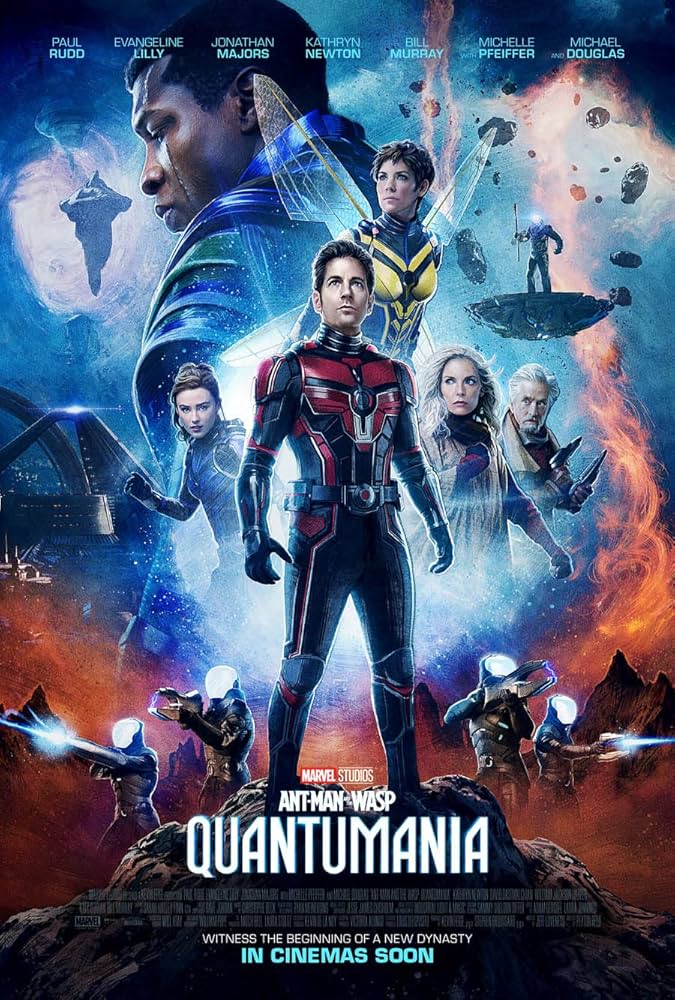
Image: IMDb

Because of the lack of a hard deadline and the fantastical portrayal of quantum in fictional media, it is easy to see how difficult it can be for non-technical decision-makers to take the quantum threat seriously. 

Call to Action

It is vital to the security of all organizations to get executive minds on board with the quantum threat. This isn’t simply something to be ignored. Already, national post-quantum migration roadmaps have been released by the likes of Canada, the USA, and the UK.

The migration to post-quantum cryptography will be long and arduous for most organizations. Convincing an executive team to commit to a multi-year-long project defending against such a fluid threat will be difficult, but it is entirely necessary. 

When discussing the quantum threat with executives, make sure to speak their language. Don’t get caught up in superposition and qubit count, but instead point to government migration guidelines and the post-quantum security plans of large corporations.

Additionally, highlight how migrating to post-quantum cryptography will improve an organization’s security posture beyond the quantum threat. Upgrading to new, improved cryptography, developing ways to become cryptographically agile, and undergoing a cryptographic discovery process will all help defend governments, businesses, and utilities against both quantum and classical threats. 

An organization’s post-quantum cryptography migration doesn’t have to be handled entirely in-house, either. Recently, new and established vendors, such as IBM, PQShield, and SandboxAQ, have begun offering cryptographic discovery and post-quantum remediation services. For organizations with small security teams, such vendors provide essential assistance. 

Conclusion 

In a world where the status quo on security and technology is constantly changing, it can be challenging to sift through the noise and find what will truly make an impact. The Y2K bug was taken seriously because it was perfectly positioned to cut through that noise due to its hard deadline and grounded nature. 

The quantum threat to cybersecurity is different. There is no hard deadline, no immediate observable impact, and it is obstructed by the mythological portrayal of a very real technology. Nevertheless, actions to mitigate this threat must be taken.

Every delay in migration extends the period in which critical data remains exposed to future decryption. The growing concern of “harvest now, decrypt later” attacks—where adversaries stockpile encrypted data anticipating quantum capabilities—makes early action essential.

The threat must be properly communicated to executive minds. Point to existing government migration guidelines, avoid getting caught up in the technical weeds, and make it clear that this is a threat that cannot be ignored.

Sources

The International Quantum Business Conference 2025: A Joint Initiative by the Galician Government, CESGA, and Fsas Technologies—a Fujitsu Company

(Fujitsu is an IYQ sponsor)

Quantum technologies are entering a decisive moment. Once considered a far-off scientific ambition, they are now moving steadily into practical experimentation, hybrid computing frameworks, and early industrial use cases. The shift is global, multidisciplinary, and collaborative. And yet, in many organizations, quantum still feels like a future tense: promising, but not ready; exciting, but uncertain.

The International Quantum Business Conference, taking place in Santiago de Compostela on December 17 to 18, 2025, is designed precisely for this moment. It brings together industry leaders, researchers, technologists, policymakers, and investors to discuss what it means to move quantum from potential to capability, and from capability to impact.

Pioneering Quantum Innovation from Galicia

Fsas Technologies—a Fujitsu company’s International Quantum Center was created with a clear mission: to accelerate the adoption of quantum technologies by fostering collaboration between research, industry, and public institutions. In Galicia, this mission has taken shape through concrete achievements—from pioneering proof-of-concept pilots with regional industry to the launch of specialized university courses that help cultivate the next generation of quantum talent. This new generation will have the opportunity to join research and development initiatives with the Galician Supercomputing Center (CESGA), local clusters, and innovation agencies. Together with the Galician government and CESGA, these efforts have laid the foundations for a robust quantum ecosystem that is internationally visible and growing rapidly.

More Than a Meeting Point—A Blueprint for Progress

Launched in 2024 by Fujitsu, in collaboration with the Galician Supercomputing Center (CESGA) and GAIN (The Galician Government’s Innovation Agency), the conference established itself as a unique forum where the scientific and business dimensions of quantum met on equal footing. The first edition gathered more than 200 participants from business, academia, and government, with a strong presence of international speakers and media coverage.

Discussions last year ranged from European public initiatives and global investment trends to real-world applications of quantum for drug discovery, logistics, energy optimization, and finance. This year’s edition continues that spirit, while raising the stakes.

2025: Empowering the Future of Quantum and Supercomputing for AI

As hybrid cloud environments, advanced accelerators, and quantum resources begin to work together, the frontier is no longer quantum alone, but quantum + HPC + AI. This is the landscape the 2025 program explores.

Across two days, participants will engage in:

  • Keynotes on European quantum strategy and national-scale ecosystem development
  • Panels connecting R&D centers, investors, and emerging industry adopters
  • Scientific sessions on quantum hardware, algorithms, and hybrid architectures
  • Business track discussions on real deployment pathways, funding, and regulation
  • A parallel poster session and a visit to the CESGA Quantum Computer (QMIO)

The conference also hosts the QUORUM alliance sessions, focused on Spain’s collaborative quantum innovation efforts across research centers and companies.

Why It Matters Now

Across regions and markets, the same questions echo:

  • How do we build a quantum-ready workforce?
  • Which applications will mature first?
  • How should policymakers support competitiveness while ensuring ethical and strategic alignment?
  • What partnerships enable scalable innovation rather than isolated pilot projects?

This event is shaped to address these questions practically, not hypothetically.

Speakers include leaders shaping quantum research, ecosystem design, industry deployment, and science policy. Topics such as fault tolerance, quantum-safe communications, dual-use innovation, hybrid quantum-HPC architectures, and sectoral case studies illustrate what scaling pathways may look like over the next five years.

The Place Matters Too

Santiago de Compostela has become an unexpected yet fitting landmark in Europe’s quantum map. With Fujitsu’s International Quantum Center, the Galician Supercomputing Center (CESGA), and a growing network of research institutions and technology companies, Galicia is positioning itself as a European node for quantum talent, experimentation, and industry collaboration.

The conference is part of that story of ecosystem-making.

Join the Conversation—and Help Shape the Next Chapter

Whether you work in:

  • Industry transformation
  • Academic research
  • Technology development
  • Policy, investment, or innovation management

The International Quantum Business Conference offers a space to learn, connect, challenge assumptions, and forge collaborations.

If the last decade was about imagining quantum, the next will be about building with it.

This is where that work begins—together.

More information and registration are available at this link.

Putting People at the Center of Quantum

For all the complexity in quantum, the real story begins with people 

(SC Quantum is an IYQ sponsor.)

At SC Quantum, our first conversations typically aren’t about physics or code. They’re about trust, connection, and building something that works for everyone.

From Possibility to Participation

Quantum holds enormous promise, and with that comes the responsibility to make sure its benefits can be shared widely. Progress depends not just on the science, but also on how we invite people with different backgrounds, experiences, and perspectives into the space.

SCQ aims to design opportunities that are meaningful and collaborative, so that educators, engineers, creatives, and community leaders can see a role for themselves in shaping what’s next. Expanding participation strengthens our outcomes and helps ensure that quantum grows in ways that are both innovative and grounded.

Listening Comes First

When we engage an academic institution, a nonprofit, or an industry partner, we begin by listening. Often the best question we can ask is simple: What do you need?

That question helps shape our strategy and determine whether quantum has a useful role to play. It also makes clear that we’re not here to talk to people. We’re here to work with them.

Peopleware Matters

There’s hardware and software, but there’s also peopleware. Human infrastructure makes new technology usable and meaningful. It’s easy to overlook, but without it even the most powerful tools can fall short of their full potential.

Peopleware is about relationships, trust, and the spaces where learning and collaboration happen. Quantum is as much about culture, communication, and connection as it is about qubits.

For Leaders Ready to Invest in People 

If you’re leading a business, school, or workforce program and looking to engage with quantum, here are three places to start:

  1. Identify a People-Centered Priority: Think about a challenge related to talent, training, or engagement. That could be helping students explore emerging careers, supporting employee development, or deepening STEM learning.
  2. Build New Connections: Partner with SC Quantum to link with educators, researchers, or employers who share your goals. Good collaborations often start with shared questions.
  3. Make Space for Exploration: Quantum isn’t just for experts. Creating space for curiosity in classrooms, boardrooms, and community spaces opens the door for new voices and fresh ideas.

Looking Ahead

Quantum is still taking shape. That means the values we embed today will influence how it grows tomorrow. Putting people first helps us stay focused on relevance, usefulness, and long-term impact.

My hope is that as South Carolina builds its place in the quantum landscape, we keep a sense of responsibility and openness: Not just what we can build, but who we are building it for.

Want to learn more or connect with the team? Contact SC Quantum.

CyberQ

CyberQ 2025 is the UAE’s flagship summit for cybersecurity and quantum technologies, hosted by the UAE Cybersecurity Council and the Technology Innovation Institute (TII). Under the theme “Future-Proofing Digital Defenses,” the event will explore how quantum computing, artificial intelligence, and emerging technologies are transforming the global cybersecurity landscape.
For the second year running, the CyberQ Summit 2025: Future-Proofing Digital Defenses is providing a global forum for government, industry leaders and those at the cutting-edge of emerging quantum technologies to explore the dangers they pose to current cryptographic systems, the opportunities that post quantum cryptography is creating and the best ways to integrate new cryptographic solutions to ensure a smooth transition, without disrupting operations.

QC101: Quantum Computing and Industry Use Cases

The Future Starts Here. Quantum computing has moved beyond theory—and QC101 is designed clearly to explain the core concepts and introduce practical use cases in partnership with industry leaders Classiq and Q-CTRL.

Learners will receive full licenses to access the Classiq Platform and Black Opal, and will earn a professional certificate.

With its hands-on and industry-oriented nature, the program is perfectly tailored for professionals and executives looking to take part in the quantum revolution.

Quantum Enabling Technologies Workshop (QETw 2025)

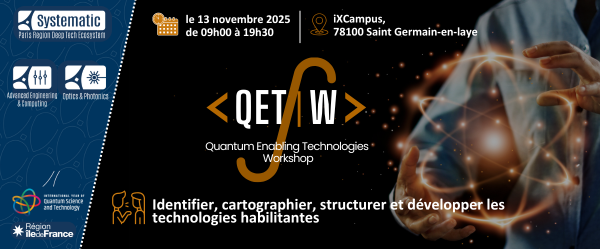
The Quantum Enabling Technologies Workshop (QETw) will take place on November 13, 2025, at iXcampus in Saint-Germain-en-Laye, France. This unique event brings together companies, start-ups, research laboratories, and public stakeholders to explore enabling quantum technologies and their role in driving industrialization and collaboration.

Organized by Systematic Paris Region, Europe’s leading Deep Tech cluster, and its Quantum Hub, QETw is fully embedded in the cluster’s mission to foster innovation, accelerate technology transfer from research to industry, and strengthen its position within European and international initiatives. The Quantum Hub plays a pivotal role in connecting academic and industrial players, shaping collaborative projects, and supporting the growth of a competitive quantum ecosystem.

The program is structured around two main moments. The morning plenary session will feature strategic keynote talks, insights from collaborative projects, and a roundtable addressing public policies, funding opportunities, and industrialization challenges. In the afternoon, thematic matchmaking workshops will provide a space to transform ideas into concrete projects and partnerships, with dedicated sessions on integrated photonics, quantum software and algorithms, sensors and instrumentation, cryogenics and packaging, as well as funding mechanisms.

Beyond scientific and technological discussions, QETw is designed as a platform for meaningful encounters and long-term cooperation. Campus tours and a closing networking cocktail will further enhance opportunities for exchange and collaboration.

Registration page

SnT2025

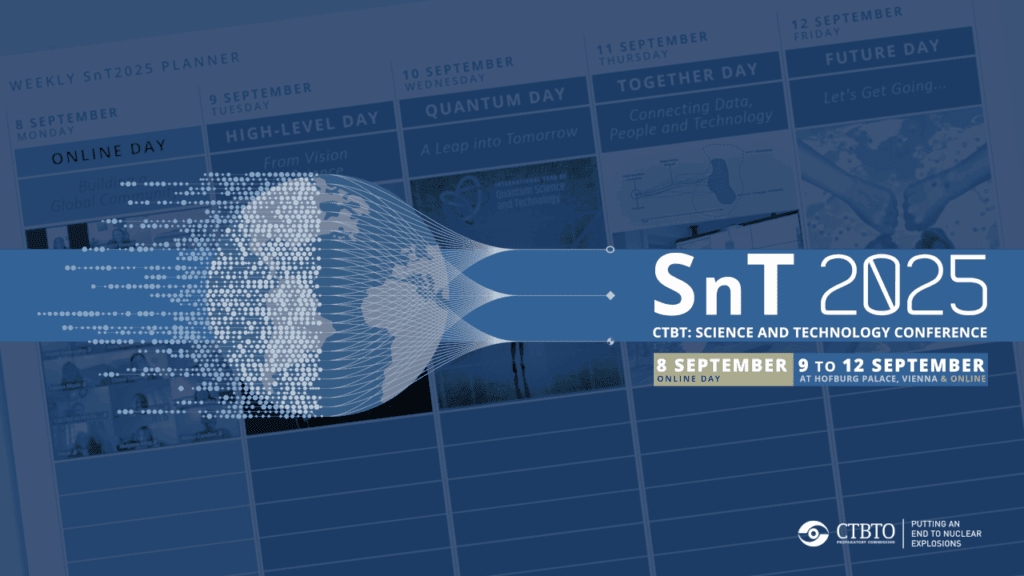
As the eighth event in the CTBT: Science and Technology Conference series, SnT2025 will bring together well over 1000 scientists, technologists, academics, students, and delegates from the CTBTO’s policy-making organs. In addition, representatives from the fields of research and development, science diplomacy, science advisory, media, and advocacy are invited to attend the conference.
On Wednesday, Quantum Day – the program will feature keynotes by Jan-Theodoor Janssen and Vladimír Bůžek.

SnT2025 is scheduled to take place at the Hofburg Palace in Vienna, Austria, and online to create a worldwide inclusive conference with the objective of gathering global support.

Symposium – Quantum Science and Technology in Healthcare

The Quantum Science and Technology in Healthcare symposium is part of the 13th National Congress of AIFM (Italian Association of Medical Physics). This symposium is a plenary session of the Congress, scheduled for Saturday, October 18th, from 10:15 am to 11:45 am. We anticipate between 500 and 600 attendees based on current registrations.

The aim of the event is to increase awareness of QST in the Italian medical physics community, highlighting its potential applications in medicine, particularly in the fields of quantum sensing and quantum computing.

Here is the schedule for the symposium, highlighting its connection to quantum science and technology:

Introduction – Celebration of Quantum Science on the IYQ

  • Carlo Cavedon – President of AIFM (Italian Association of Medical Physics)
  • Oscar Adriani – Member of the INFN Board of Directors (National Institute of Nuclear Physics)

Session 1 – Quantum Sensing in Medical Applications

  • Marco Genovese – Director of the Quantum Optics research sector of INRIM (National Institute of Metrology)
  • Pietro Faccioli – INFN (National Institute of Nuclear Physics)

Session 2 – Quantum Computing in Medical Applications

  • Alberto Quaranta – President of the 5th Scientific Commission of INFN
  • Samuele Cavinato – University of Torino and IOV Padova (Veneto Institute of Oncology)

The symposium will cover various topics, including the potential of quantum computing in radiation therapy real-time optimization, quantum sensors for biomedical applications, quantum-enhanced imaging, quantum magnetometers in cardiology, quantum sensors in brain mapping, and quantum computing for predictive models and personalized medicine.

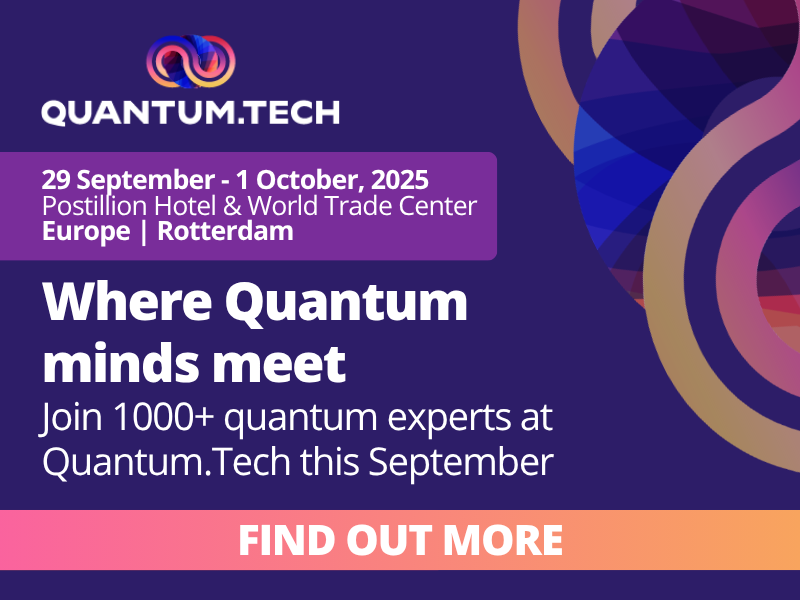
Quantum.Tech Europe

Where quantum minds meet. Join 1,000+ enterprise leaders, researchers, start-ups, and tech giants for three days of actionable insights, strategic networking, and revolutionary innovation.

As quantum technologies move closer to enterprise adoption, this event brings together global leaders from organisations like IBM, Kraft Heinz, Mastercard, NASA, and more for three days of knowledge exchange and collaboration across eight dedicated stages. From cutting-edge AI to quantum-safe security, there’s something here for every sector pushing boundaries.

What to Expect:

  • 100+ Expert Speakers from finance, pharma, aerospace, telecoms, and more
  • 8 Content Stages covering quantum computing, cryptography, AI, sensing, and networking
  • Live Demos & Product Showcases on a buzzing expo floor
  • Start-up Pitch Competition spotlighting the next wave of quantum disruptors
  • Workshops & Masterclasses for deep-dive learning and collaboration

Cumbre 2025: Simbiosis Digital: Convergencia de Tecnologías Cuánticas, de Inteligencia Artificial y Educación Virtual para la Industria Inteligente

La Cumbre QUANTUM AI 2025 es un encuentro académico-tecnológico-empresarial de vanguardia que convoca a líderes, investigadores, visionarios y agentes de cambio a explorar el futuro de la Industria Inteligente, desde una fusión estratégica de la fusión estratégica de las tecnologías (entre otras):


• Computación Cuántica
• Criptografía Cuántica
• Ciberseguridad
• Inteligencia Artificial (IA)
• Educación Virtual, Agentes Virtuales de IA
• IA Generativa en la Educación

Este año, con el respaldo de la ONU, la UNESCO y UNICEF, el 2025 ha sido proclamado como el Año Internacional de la Ciencia y la Tecnología Cuánticas (IYQ), reconociendo su impacto potencial para resolver desafíos globales.

Además, la Cumbre se realizará en el mes de octubre, que es el mes dedicado a la ciberseguridad a nivel mundial.

En este contexto histórico, la Cumbre QUANTUM AI se consolida como un espacio de diálogo, descubrimiento y construcción colectiva de soluciones disruptivas que integren tecnología, conocimiento y sostenibilidad.

Bajo el concepto de realizar una Simbiosis Digital e Industrial, la cumbre plantea cómo la convergencia ética y colaborativa de estas tecnologías puede transformar radicalmente los modelos productivos, educativos y sociales. No se trata solo de usar tecnología, sino de crear ecosistemas donde humanos y máquinas trabajen juntos, de forma inteligente, sostenible y ética.

En la cumbre se considera la simbiosis industrial como puente hacia la industria inteligente, dado que aporta el marco perfecto para acelerar la transición hacia una industria inteligente. A través del intercambio estratégico de recursos, datos, energía y conocimientos entre organizaciones, este enfoque:

  • Digitaliza los flujos de recursos, promoviendo el uso de plataformas con IoT, Blockchain y Big Data para gestionar materiales, energía y residuos de forma eficiente
  • Fomenta ecosistemas colaborativos, donde empresas, incluso de distintos sectores, cooperan para transformar subproductos en oportunidades de negocio.
  • Integra automatización e inteligencia artificial para optimizar procesos industriales en tiempo real, reduciendo desperdicios y mejorando la eficiencia.
  • Impulsa la sostenibilidad inteligente, haciendo que la industria no solo sea más competitiva, sino también respetuosa con el medio ambiente y con la sociedad.
  • Activa nuevos modelos de negocio, conectando empresas en redes productivas digitales basadas en confianza, trazabilidad y transparencia.

Cuando la Simbiosis Industrial se apoya en tecnologías como la IA y la computación cuántica, el resultado es una industria más adaptativa, eficiente, ética y resiliente.

La Cumbre QUANTUM AI 2025 reconoce el modelo de la Cuádruple Hélice como eje para la innovación con impacto:


• La academia genera conocimiento y forma talento
• La industria aplica y escala soluciones disruptivas
• El gobierno regula, incentiva y financia
• La sociedad civil aporta visión ética, creativa y socialmente relevante

Más que un evento, la Cumbre es una experiencia transformadora que tiene un enfoque pedagógico, inspirador e innovador. No se trata solo de compartir conocimiento, sino de encender pasiones, activar ideas, motivar alianzas y cocrear proyectos con impacto real.

Convocatoria abierta


Si eres investigador, docente, estudiante, emprendedor, empresario, tecnólogo, profesional esta es tu oportunidad para ser parte del cambio:
• Presenta ponencias sobre desarrollos innovadores
• Presentación pósters
• Participa como panelista experto – Foro
• Únete como asistente activo y conecta con mentes líderes.
• Puedes ser un aliado estratégico

Fechas Importantes
Plazo de envío de trabajos: septiembre 12 de 2025
Notificación de aceptación: 30 de septiembre de 2025
Día de la Cumbre: 17 de octubre de 2025.


Dudas o más información
:
cumbrequantumai2025@gmail.com

  
La revolución ya comenzó: no vengas solo a observar… Ven a construirla.
Cumbre QUANTUM AI 2025: El epicentro donde la tecnología, el conocimiento y la acción dan forma al futuro.